Link Copied!
Richard Cecil (clergyman) Quotes (1748-1810)
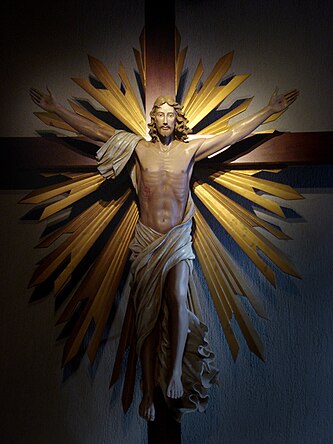
About Richard Cecil (clergyman)
Richard Cecil (8 November 1748 – 15 August 1810) was a leading Evangelical Anglican clergyman of the 18th and 19th centuries.
Best Richard Cecil (clergyman) Quotes
Shortest
Earliest
Explore our curated collection of the most famous and impactful Richard Cecil (clergyman) quotes.
“Providence is a greater mystery than revelation.”


“The Christian's fellowship with God is rather a habit than a rapture.”
“Regeneration is God's disposing the heart to Himself; conversion is the actual turning of the heart to God.”

“The Old and New Testaments contain but one scheme of religion. Neither part of this scheme can be understood without the other.”
“I have often had occasion to observe, that a warm blundering man does more for the world than a frigid wise man.”

“Sin, without strong restraints, would pull God from His throne, make the world the minion of its lusts, and all beings bow down and worship.”

“The very heart and root of sin is in an independent spirit. We erect the idol self; and not only wish others to worship, but worship ourselves.”
“Abraham teaches us the right way of conversing with God: "And Abraham fell on his face, and God talked with him." When we plead with Him, our faces should be in the dust.”

“The history of all the great characters of the Bible is summed up in this one sentence: — they acquainted themselves with God, and acquiesced in His will in all things.”
“The spirit and tone of your home will have great influence on your children. If it is what it ought to be, it will fasten conviction on their minds, however wicked they may become.”
“To know Jesus Christ for ourselves is to make Him a consolation, delight, strength, righteousness, companion, and end.”

“The nurse of infidelity is sensuality. Youth are sensual. The Bible stands in their way. It prohibits the indulgence of the lust of the flesh, the lust of the eye, and the pride of life.”
“Never was there a man of deep piety, who has not been brought into extremities — who has not been put into fire — who has been taught to say, "Though He slay me, yet will I trust in Him."”
“In viewing the scheme of redemption, I seem like one viewing a vast and complicated machine of exquisite contrivance; what I comprehend of it is wonderful, what I do not, is, perhaps, more so still.”
“Duties are ours; events are God's. This removes an infinite burden from the shoulders of a miserable, tempted, dying creature. On this consideration only, can he securely lay down his head, and close his eyes.”

“The man who labors to please his neighbor for his good to edification has the mind that was in Christ. It is a sinner trying to help a sinner. Even a feeble, but kind and tender man, will effect more than a genius, who is rough and artificial.”
“Every man will have his own criterion in forming his judgment of others. I depend very much on the effect of affliction. I consider how a man comes out of the furnace; gold will lie for a month in the furnace without losing a grain.”
“An idle man has a constant tendency to torpidity. He has adopted the Indian maxim — that it is better to walk than to run, and better to stand than to walk, and better to sit than to stand, and better to lie than to sit. He hugs himself into the notion, that God calls him to be quiet.”
“If you are seeking the comforts of religion rather than the glory of our Lord, you are on the wrong track. The Comforter meets us unsought in the path of duty. There is something in religion, when rightly comprehended, that is masculine and grand. It removes those little desires which are the constant hectic of a fool.”

“The Christian will sometimes be brought to walk in a solitary path. God seems to cut away his props, that He may reduce him to Himself. His religion is to be felt as a personal, particular, appropriate possession. He is to feel, that, as there is but one Jehovah to bless, so there seems to him as though there were but one penitent in the universe to be blessed by Him.”

About Richard Cecil (clergyman)
Richard Cecil (8 November 1748 – 15 August 1810) was a leading Evangelical Anglican clergyman of the 18th and 19th centuries.