Link Copied!
Richard Blackmore Quotes (1654-1729)
Writer, Poet
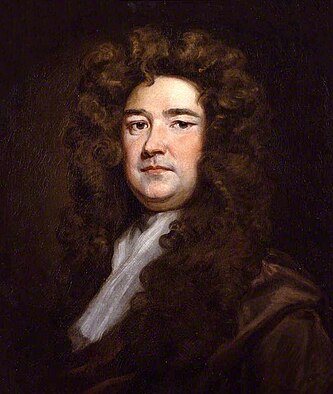

About Richard Blackmore
Sir Richard Blackmore (January 22 1654 – October 9, 1729) was an English poet, religious writer and physician.
Best Richard Blackmore Quotes
Shortest
Earliest
Explore our curated collection of the most famous and impactful Richard Blackmore quotes.
“Man is naturally a proud Animal, and is fond of nothing more than the Breath of Fame to sooth his Vanity, and flatter his Self-Admiration.”
“Fame, which is the opinion the World expresses of any Man's excellent Endowments, is the Idol to which the finest spirits have, in all Ages, burnt their Incense.”

“No more of courts, of triumphs, or of arms,
No more of Valour’s force, or Beauty's charms!
The themes of vulgar lays with just disdain
I leave unsung, the flocks, the amorous swain,
The pleasures of the land, and terrors of the main.
How abject, how inglorious 'tis to lie
Grovelling in dust and darkness, when on high
Empires immense, and rolling worlds of light,
To range their heavenly scenes the muse invite!”
“The Inclinations of Men, in this their degenerate State, carry them with great Force to those voluptuous Objects, that please their Appetites and gratify their Senses; and which not only by their early Acquaintance and Familiarity, but as they are adapted to the prevailing Instincts of Nature, are more esteem'd and pursu'd than all other Satisfactions. As those inferior Enjoyments, that only affect the Organs of the Body are chiefly coveted, so next to these, that light and facetious Qualification of the Mind, that diverts the Hearers and is proper to produce Mirth and Alacrity, has, in all Ages, by the greatest Part of Mankind, been admir'd and applauded. No Productions of Human Understanding are receiv'd with such a general Pleasure and Approbation, as those that abound with Wit and Humour, on which the People set a greater Value, than on the wisest and most instructive Discourses. Hence a pleasant Man is always caress'd above a wise one, and Ridicule and Satyr, that entertain the Laughers, often put solid Reason and useful Science out of Countenance. The wanton Temper of the Nation has been gratify'd so long with the high Seasonings of Wit and Raillery in Writing and Conversation, that now almost all Things that are not accommodated to their Relish by a strong Infusion of those Ingredients, are rejected as the heavy and insipid Performances of Men of a plain Understanding and meer Masters of Sense.”

“Homer excels in Genius, Virgil in Judgment. Homer as conscious of his great Riches and Fullness entertains the Reader with great Splendor and Magnificent Profusion. Virgil's Dishes are well chosen, and tho not Rich and Numerous, yet serv'd up in great Order and Decency. Homer's Imagination is Strong, Vast and Boundless, an unexhausted Treasure of all kinds of Images; which made his Admirers and Commentators in all Ages affirm, that all sorts of Learning were to be found in his Poems. Virgil's Imagination is not so Capacious, tho' his Ideas are Clear, Noble, and of great Conformity to their Objects. Homer has more of the Poetical Inspiration. His Fire burns with extraordinary Heat and Vehemence, and often breaks out in Flashes, which Surprise, Dazle and Astonish the Reader: Virgil's is a clearer and a chaster Flame, which pleases and delights, but never blazes in that extraordinary and surprising manner. Methinks there is the same Difference between these two great Poets, as there is between their Heros. Homer's Hero, Achilles, is Vehement, Raging and Impetuous. He is always on Fire, and transported with an immoderate and resistless Fury, performs every where Miraculous Atchievements, and like a rapid Torrent overturns all things in his way. Æneas, the Hero of the Latine Poet, is a calm, Sedate Warriour. He do's not want Courage, neither has he any to spare: and the Poet might have allowed him a little more Fire, without overheating him. As for Invention, 'tis evident the Greek Poet has mightily the advantage. Nothing is more Rich and Fertile than Homer's Fancy. He is Full, Abundant, and Diffusive above all others. Virgil on the other hand is rather dry, than fruitful. 'Tis plain the Latin Poet in all his famous Æneis, has very little, if any Design of his own ...”
Richard Blackmore Quotes by Topic
Find exactly what you are looking for by browsing this categorized list of Richard Blackmore quotes by topic.
Richard Blackmore on Creationism

Richard Blackmore on Planet
“Copernicus, who rightly did condemn This oldest system, form'd a wiser scheme; In which he leaves the Sun at Rest, and rolls The orb terrestrial on its proper poles; Which makes the night and day by this career, And by its slow and crooked course the year. The famous Dane, who oft the modern guides, To earth and sun their Provinces divides: The earth's rotation makes the night and day, The sun revolving through th'eccliptic way Effects the various seasons of the year, Which in their turn for happy ends appear. This scheme or that, which pleases best, embrace, Still we the fountain of their motion trace. Kepler asserts these wonders may be done By the magnetic vertue of the sun, Which he, to gain his end, thinks fit to place Full in the center of that mighty space, Which does the spheres, where planets roll, include, And leaves him with attractive force endu'd. The sun, thus seated, by mechanic laws, The earth, and every distant planet draws; By which attraction all the planets found Within his reach, are turn'd in ether round.”

What Richard Blackmore Said About Others
Discover personal opinions Richard Blackmore shared regarding contemporaries.
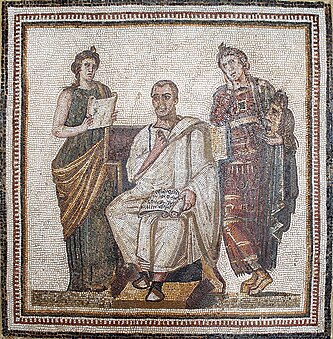
Richard Blackmore on Virgil
“[Homer's] Fire burns with extraordinary Heat and Vehemence … Virgil's is a clearer and a chaster Flame ...”

Quotes About Richard Blackmore
Gain deeper perspective through quotes about Richard Blackmore from others.
Samuel Johnson on Richard Blackmore
“Blackmore by the unremitted enmity of the wits, whom he provoked more by his virtue than his dulness, has been exposed to worse treatment than he deserved.”
About Richard Blackmore
Sir Richard Blackmore (January 22 1654 – October 9, 1729) was an English poet, religious writer and physician.