Link Copied!
Paul Cézanne Quotes (1839-1906)
Artist, Painter

About Paul Cézanne
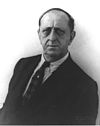
Paul Cézanne (January 19, 1839 – October 22, 1906) was a French Post-Impressionist painter whose work laid the foundations of the transition from the 19th century conception of artistic endeavour to a new and radically different world of art in the 20th century. Cézanne can be said to form the bridge between late 19th century Impressionism and the early 20th century's new line of artistic enquiry, Cubism.
Best Paul Cézanne Quotes
Shortest
Earliest
Explore our curated collection of the most famous and impactful Paul Cézanne quotes.
“You positively paint like a madman.”
“Painting from nature is not copying the object, it is realizing sensations.”


“He (the painter Manet) hits of the tone.. ..but his work lacks unity and temperament too. (ca. 1863)”
“I was very pleased with myself when I discovered that sunlight could not be reproduced; it had to be represented by something else.. ..by colour.”
“See how the light tenderly love the apricots, it takes them over completely, enters into their pulp, light them from all sides! But it is miserly with the peaches and light only one side of them.”

“Don't you think your Corot [to Guilemet the painter] is a little short on temperament? I'm painting a portrait of Vallabreque; the highlight on the nose is pure vermilion [remark of Cezanne ca. 1860]”
“Everybody's going crazy over the Impressionists; what art needs is a Poussin made over according to nature. There you have it in a nutshell.”
“You must forgive me for continually coming back to the same thing; but I believe in the logical development of everything we see and feel through the study of nature and turn my attention to technical questions later.”
“And art puts us, I believe, in a state of grace in which we experience a universal emotion in an, as it were, religious but in the same time perfectly natural way. General harmony, such as we find in colour, is located all around us.”

“It's like Impressionism. They all do it at the Salons. Oh, very discreetly! I too was an Impressionist. I don't conceal the fact. Pissarro had an enormous influence on me. But I wanted to make out of Impressionism something solid and lasting like the art of the museums.”

“You wretch! [Cezanne is portraying the art dealer Vollard who changed his pose during the painter session] You've spoiled the pose. Do I have to tell you again you must sit like an apple? Does an apple move?”

“Here you are, put this somewhere, on your work table. You must always have this before your eyes.. .It's a new order of painting. Our Renaissance starts here.. .There's a pictorial truth in things. This rose and this white lead us to it by a path hitherto unknown to our sensibility..”

“..in my ideal of a good painting; there's unity. The drawing and the colour are no longer distinct; as soon as you paint you draw; the more the colours harmonize, the more precise the drawing becomes. I know that from experience. When the colour is at its richest, the form is at its fullest.”
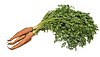
“Yes, a bunch of carrots, observed directly, painted simply in the personal way one sees it, worth more than the Ecole's everlasting slices of buttered bread, that tobacco-juice painting, slavishly done by the book? The day is coming when a single original carrot will give birth to a revolution.”
“That's my great ambition. To be sure! Every time I attack a canvas I feel convinced, I believe that something's going to come of it.. .But I immediately remember that I've always failed before. Then I taste blood.. .I never know where I am going or where I want to go with this damned profession. All the theories mess you up inside.”
“But what an eye Monet has, the most prodigious eye since painting began! I raise my hat to him. As for Courbet, he already had the image in his eye, ready-made. Monet used to visit him, you know, in his early days.. .But a touch of green, believe me, is enough to give us a landscape, just as a flesh tone will translate a face for us..”
“Maybe Delacroix stands for Romanticism. He stuffed himself with too much Shakespeare and Dante, thumbed through too much Faust. His palette is still the most beautiful in France, and I tell you no one under the sky had more charm and pathos combined than he, or more vibration of colour. We all paint in his language, as you all write in Hugo's.”
“I still work with difficulty, but I seem to get along. That is the important thing to me. Sensations form the foundation of my work, and they are imperishable, I think. Moreover, I am getting rid of that devil who, as you know, used to stand behind me and forced me at will to 'imitate'; he's not even dangerous any more. [one week later Cezanne died]”
“Degas isn't enough of a painter; he doesn't have enough of that! With a little bit of temperament one can manage to be a painter, It's enough to have a sense of art, and that sense is no doubt what the bourgeoisie fear most.. .For a painter, sensation is at the bottom of everything. I will go on repeating it forever. Procedures are not what I advocate.”
“When I'am outlining the skin of a lovely peach with soft touches of paint, or a sad old apple, I catch a glimpse in the reflections they exchange of the same mild shadow of renunciation, the same love of the sun, the same recollection of the dew.. .Why do we divide up the world? Does this reflects our egoism?.. .The prism is our first step towards God, our seven beatitudes.”

“Art has a harmony which parallels that of nature. The people who tell you that the artist is always inferior to nature are idiots! He is parallel to it. Unless, of course, he deliberately intervenes. His whole aim must be silence. He must silence all the voices of prejudice within him, he must forget.. .And then the entire landscape will engrave itself on the sensitive plate of his being.”

Paul Cézanne Quotes by Topic
Find exactly what you are looking for by browsing this categorized list of Paul Cézanne quotes by topic.
Paul Cézanne on Impressionism 9 quotes
“I saw Monet and Renoir at about the end of December; they had been on holiday in Genoa, in Italy.”
Paul Cézanne on Abstract art 2 quotes
“Allow me to repeat what I said when you were here: deal with nature by means of the cylinder, the sphere and the cone, all placed in perspective, so that each side of an object or a plane is directed towards a central point. Lines parallel to the horizon give breadth, a section of nature, or if you prefer, of the spectacle spread before our eyes by the 'Pater Omnipotens Aeterne Deus'. Lines perpendicular to that horizon give depth. But for us men, nature has more depth than surface, hence the need to introduce in our vibrations of light, represented by reds and yellows, enough blue tints to give a feeling of air.”

Paul Cézanne on Intelligibility
“With a painter's temperament, all that's needed are the means of expression sufficient to be intelligible to the wide public.”

Paul Cézanne on Carrots
“Yes, a bunch of carrots, observed directly, painted simply in the personal way one sees it, worth more than the Ecole’s everlasting slices of buttered bread, that tobacco-juice painting, slavishly done by the book? The day is coming when a single original carrot will give birth to a revolution”
What Paul Cézanne Said About Others
Discover personal opinions Paul Cézanne shared regarding contemporaries.
Paul Cézanne on Camille Pissarro 5 quotes
“It's like Impressionism. They all do it at the Salons. Oh, very discreetly! I too was an Impressionist. I don't conceal the fact. Pissarro had an enormous influence on me. Bit I wanted to make out of Impressionism something solid and lasting like the art of the museums.”

Paul Cézanne on Édouard Manet 3 quotes
“He [Manet] hits of the tone.. ..but his work lacks unity and temperament too.”

Paul Cézanne on Claude Monet 3 quotes
“Unfortunately, the realization of my sensations is always a very painful process with me. I can't seem to express the intensity which beats in upon my senses. I haven’t at my command the magnificent richness of color which enlivens Nature.. .Look at that cloud; I should like to be able to paint that! Monet could. He had muscle.”
Paul Cézanne on Émile Zola 2 quotes
“I've ripped it to pieces - your portrait, you know. I tried to work on it this morning, but it went from bad to worse, so I destroyed it...”

Paul Cézanne on Jean-Baptiste-Camille Corot 2 quotes
“Don't you think your Corot is a little short on temperament? I'm painting a portrait of Vallabreque; the highlight on the nose is pure vermilion.”
Paul Cézanne on Eugène Delacroix
“The light! [in the paintings of Délacroix].. ..There is more warm light in this interior [probably in the painting 'Woman of Algiers'] of his than in all of Corot's landscapes..'''”

Paul Cézanne on Edgar Degas
“Degas isn't enough of a painter; he doesn't have enough of that! With a little bit of temperament one can manage to be a painter, It's enough to have a sense of art, and that sense is no doubt what the bourgeoisie fear most.. .For a painter, sensation is at the bottom of everything. I will go on repeating it forever. Procedures are not what I advocate.”

Paul Cézanne on Tintoretto
“In that Renaissance (Cellini, Tintoretto, Titian..) there was an explosion of unique truthfulness, a love of painting and form.. ..Then come the Jesuits and everything is formal; everything has to be taught and learned. It required a revolution for nature to be rediscovered; for Delacroix to paint his beach at Etratat, Corot his roman rubble, Courbet his forest scenes and his waves. And how miserable slow that revolution was, how many stages it had to go through!.. ..These artists had not yet discovered that nature has more to do with depth than with surfaces. I can tell you, you can do things to the surface.. ..but by going deep you automatically go to the truth. You feel a healthy need to be truthful. You’d rather strip your canvas right down than invent or imagine a detail. You want to know.”

Quotes About Paul Cézanne
Gain deeper perspective through quotes about Paul Cézanne from others.
Paul Gachet on Paul Cézanne
“..he came to the motif twice a day [a snow scene of Auvers, Cézanne painted in the early 1870's], in the morning and the evening, in gray weather and in clear; it so happened that he often slaved away at a painting from one season to another, from one year to another, so that in the end the Spring of 1873 became the effect of snow.”
Marc de Montifaud on Paul Cézanne
“Like a voluptuous vision, this artificial corner of paradise has left even the most courageous gasping for breath... and Mr Cézanne merely gives the impression of being a sort of madman, painting in a state of delirium tremens.”
Paul Gauguin on Paul Cézanne
“This Cézanne [Still life with Compotier, Fruit and Glass, c. 1879-1882], that you ask me for is a pearl of exceptional quality and I already have refused three hundred francs for it; it is one of my most treasured possessions, and except in absolute necessity, I would give up my last shirt before the picture.”
Lucien Pissarro on Paul Cézanne
“It was then [c. 1873], as I remember that Paul Cézanne began to paint with vertical divisions and Papa [his father, Camille Pissarro adopted the long brush to paint in little comma's. A peasant who had watched them side by side at Auvers, remarked that 'M. Pissarro at working, made little stabs at the canvas ('il piquait'), and M. Cézanne laid on the paint like plaster ('il plaquait'). [Cézanne's painting 'Small house at Auvers' is painted with some of these vertical divisions that Lucien [the son of Camille Pissarro, and later also a painter] noted then.”
Theodore Reff on Paul Cézanne
“..he [Cézanne] never ceased declaring that he was not making pictures, but that he was searching for a technique. Of that technique, each picture contained a portion successfully applied, like a correct phrase of a new language to be created.”
Claude Monet on Paul Cézanne
“I hope that Cezanne will still be here and that he will join us, but he is so shy, so afraid of meeting new people, that I am afraid that he might let us down, even though he wants very much to meet you. How sad it is that this man hasn't had more patronage in his life! This is a true artist who has come to doubt himself far too much. He needs to be cheered up, so he was quite touched by your article.”
Pierre-Auguste Renoir on Paul Cézanne

Clive Bell on Paul Cézanne
“It was because Cézanne could come at reality only through what he saw that he never invented purely abstract forms. Few great artists have depended more on the model. Every picture carried him a little further towards his goal—complete expression; and because it was not the making of pictures but the expression of his sense of the significance of form that he cared about, he lost interest in his work so soon as he had made it express as much as he had grasped. His own pictures were for Cézanne nothing but rungs in a ladder at the top of which would be complete expression. The whole of his later life was a climbing towards an ideal. For him every painting was a means, a step, a stick, a hold, a stepping-stone—something he was ready to discard as soon as it had served his purpose. He had no use for his own pictures. To him they were experiments. He tossed them into bushes, or left them in the open fields to be stumbling-blocks for a future race of luckless critics.”
Fernand Léger on Paul Cézanne
“The Impressionists were the first [painters] to reject the absolute value of the subject and to consider its value to be merely relative.. .In Paul Cezanne's letters I notice ideas like these: 'Objects must turn, recede, and live. I wish to make something lasting from impressionism, like the art in the museums'.. .'For an impressionist, to paint after nature is not to paint the object, but to express sensations'.. .'After having looked at the old masters, one must take haste to leave them and to verify in one’s self the instincts, the sensations that dwell in us.'”

Ambroise Vollard on Paul Cézanne 4 quotes
“[E]very year [he] sent two canvases to the Salon. They were constantly refused, until, in 1882... one of his entries, a portrait, had... been accepted! Of course he got into the Salon by the back door. His friend Guillemet, who was serving on the jury, and who tried in vain to get Cézanne's canvas accepted on the second vote, had put it through pour sa charité for at the time every member of the jury had the privelage of taking into the Salon a canvas by one of his pupils, without any conditions. ...Later, in the interests of equality, the Jury was deprived of this privelage... But the painter was again to have the satisfaction of being represented in... the Universal Exposition of 1889. ...[H]ere again he was accepted through favoritism, or... by means of a "deal." The committee had importuned Monsieur Choquet to send them a... precious piece of furniture... but he made the formal condition that a canvas of Cézanne's should be exhibited... [T]he picture was "skyed" so [high] that none but the owner and the painter noticed it. No matter; imagine Cézanne's joy at seeing a picture of his actually hung once more!”
Juan Gris on Paul Cézanne
“Cézanne made a cylinder out of a bottle. I start from the cylinder to create a special kind of individual object. I make a bottle — a particular bottle — out of a cylinder.”

Marsden Hartley on Paul Cézanne
“No one will ever paint like Cezanne for example, because no one will ever have his peculiar visual gifts; or to put it less dogmatically, will anyone ever appear again with so peculiar and almost unbelievable a faculty for dividing color sensations and making logical realizations of them? Has anyone ever placed his color more reasonably with more of a sense of time and measure than he? I think not, and he furnished for the enthusiast of today new reasons for research into the realm of color for itself.”
About Paul Cézanne
Paul Cézanne (January 19, 1839 – October 22, 1906) was a French Post-Impressionist painter whose work laid the foundations of the transition from the 19th century conception of artistic endeavour to a new and radically different world of art in the 20th century. Cézanne can be said to form the bridge between late 19th century Impressionism and the early 20th century's new line of artistic enquiry, Cubism.