Link Copied!
Otto Neurath Quotes (1882-1945)
Philosopher
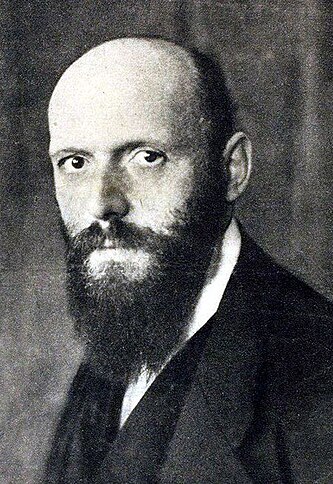

About Otto Neurath
Otto Karl Wilhelm Neurath (December 10, 1882 – December 22, 1945) was an Austrian philosopher of science, sociologist, and political economist. Before he fled his native country in 1934, Neurath was one of the leading figures of the Vienna Circle.
Best Otto Neurath Quotes
Shortest
Earliest
Explore our curated collection of the most famous and impactful Otto Neurath quotes.
“All content of science, and also their protocol statements that are used for verification, are selected on the basis of decisions and can be altered in principle.”
“The motivationless theory of goods [transfers] can bridge the gulf between history and exact research by securing the important continuity of the research, being linked to both.”

“Quite a few political economists advocate the thesis that a Robinson Crusoe — or what amounts to the same thing, a controlled economy — calculates in terms of profits and losses.”
“At first the Vienna Circle analysed ‘physics’ in a narrower sense almost exclusively; now psychology, biology,sociology. The task of this movement is unified science and nothing less.”
“The fiction of an ideal language composed of pure atomic statements is as metaphysical as the fiction of Laplace's 'spirit'. Scientific language, with its ever growing equipment of systematic symbol formations, can by no means be regarded as an approximation to such an ideal language.”

“Finally it should be noted that the picture education, especially the pictorial statistics, are of international importance. Words carry more emotional elements than set pictures, which can be observed by people of different countries, different parties without any protest; Words divide, pictures unite.”

“In the interest of scientific work, more and more formulations in the unified language of unified science are becoming increasingly precise. No term of unified science, however, is free from imprecision, since all terms are based on terms that are essential for protocol statements, whose imprecision must be immediately obvious to everyone.”

“We are like sailors who on the open sea must reconstruct their ship but are never able to start afresh from the bottom. Where a beam is taken away a new one must at once be put there, and for this the rest of the ship is used as support. In this way, by using the old beams and driftwood the ship can be shaped entirely anew, but only by gradual reconstruction.”
“When devotion to men with an urge for new social organization replaces devotion to men with theological illumination and a way of life pleasing to God, then the actions of the innovator and his formulations are often gauged by their significance for human happiness. Behaviour is examined through the happiness it produces, which is an empirical matter; transcendence is overcome.”

“‘History’ and ‘Political Economy’ have not been differentiated on the basis of systematic reflection; rather, they have been quite different in origin and conceptual structure. Only on further development of both disciplines are they set closer together and merged into a single science, namely ‘Sociology’, which for about a hundred years past has been assimilating other fields of science.”
“I do not think the line of division runs between people with secular and those with transcendental creeds, but rather between people with a centralized and dominating zeal which may possibly lead to self-sacrifice and the sacrifice of others, without tolerance in principle, and people who are tolerant on principle, having perhaps some transcendental creed, or because they, as empiricists, see the multiplicity of all arguing.”
“True science consists in systematically examining all possible cases. Exact political economy has not achieved this until now. It does not even encompass all actual cases. This is one of the reason why exact theory finds itself in opposition to the historical school and why it does not have an awful lot to say to those economists who occupy themselves with issues of practical interest, theories of crisis, cartels and trusts.”
“What we have of systematic and orderly action and speech ... seems to go back to primeval systematic orderliness as found in magic. The scientific tendency to link everything with everything else, to regard nothing as indifferent, clearly already belonged to the age of magic. If we reach the dependence of human fate on empirical describable conditions, we are much closer in our way of thinking to the men of the magical times that we are commonly apt to suspect.”
“Science as a system of statements is always an object of discussion. Statements are to be compared with statements, and not with 'experience', or with 'the world', or with something else. All that meaningless doubling belongs to more or less subtle metaphysics and as such must be rejected. Every new statement is to be confronted with existing ones, already brought to a state of harmony between themselves. A statement will be considered correct if it can be joined to them.”
“If one could only fly over the Earth and show everybody, Chinese gardeners live side by side in old fashion. Next to them a capitalist germ cell which puts its feelers out into the country! See the factory chimney smoking! Ships come and go. And in the North, nomads and tribes of hunters who don’t know anything of a capitalist order even though they sell furs to entrepreneurs. A sharpened eye would be able to grasp this. All of this can be grasped and represented in pictures!”

“The universal jargon, in the sense explained above, is the same for the child and for the adult. It is the same for a Robinson Crusoe as for a human society. If Robinson wants to join what is in a protocol of yesterday with what is in his protocol today, that is, if he wants to make use of language at all, he must make use of the ‘intersubjective’ language. The Robinson of yesterday and the Robinson of today stand precisely in the same relation in which Robinson stands to Friday.”
“Carnap, who has so far probably advanced the work of the Vienna Circle the most towards empiricism, made an attempt to create a constitutive constructive system; in this he distinguished two languages: a ‘monologizing’ (phenomenalist) one and an ‘intersubjective’ (physicalist) one. He tries to deduce the physical one from the phenomenalist.”
“Only one language comes into question from the start, and that is the physicalist. One can learn the physicalist language from earliest childhood. If someone makes predictions and wants to check them himself, he must count on changes in the system of his senses, he must use clocks and rulers, in short, the person supposedly in isolation already makes use of the ‘intersensual’ and ‘intersubjective’ language. The forecaster of yesterday and the controller of today are, so to speak, two persons.”
“Overcoming magic often takes the form of theology. From animals and ancestors the path leads to all kinds of spirits. The hypothesis (which already appeared in the magical age) of the little man alongside man, the “soul', and of the special being, 'God', more and more often seeks a parallel process 'behind' processes. Whereas in the magical age, empirically given facts were linked with each other on the basis of primitive theories without the introduction of uncontrollable elements, now their introduction becomes essential.”
“The attempt to construct a fundamental taxonomy of the sciences encounters great difficulties. For instance, logicians and mathematicians disagree among themselves about the objects of their respective research; there is no agreement on the relation of theoretical physics to empirical knowledge and to mathematics. The so-called social sciences are particularly difficult to classify. They have not been demarcated by systematic considerations. In Duhem and Poincarè, general considerations are not only exemplified, but the origins of the concepts and of the problems are traced right from the initial observation of facts if at all possible.”

“The primordial forms of all sciences, taken back beyond the rise of writing, lie ultimately in the magic of prehistory. Just as modern man wants to indicate what consequences his actions will have, so also a man who grows up in the magical way of life seeks to find a ground for everything and to find consequences of his action. Magic as a more or less clearly formulated system of tenets shot through with emotional elements, can become independent only when magicians, acting as specialists, proclaim the consequences of certain customs, either esoterically,. e.g. at certain rituals, or exoterically as popular education. The magicians tell what cases are to count as 'equal', and when certain measures shall be used (if we think them ineffective, we call them ceremonies).”
“Although what is called ‘philosophical speculation’ is undoubtedly on the decline, many of the practically minded have not yet freed themselves from a method of reasoning, which, in the last analysis, has its roots in theology and metaphysics. No science which pretends to be exact can accept an untested theory or doctrine; yet even in an exact science there is often an admixture of magic, theology, and philosophy. It is one of the tasks of our time to aid scientific reasoning to attain its goal without hindrance. Whoever undertakes this is concerned not so much with ‘philosophy,’ properly speaking, as with ‘anti-philosophy.’ For him there is but one science with subdivisions — a unified science of sciences. We have a science that deals with rocks, another that deals with plants, a third that deals with animals, but we need a science that unites them all.”
“The members of the Vienna Circle (Moritz Schlick, Rudolf Carnap, Philipp Frank, Hans Hahn, Herbert Feigl, Fritz Waismann, Kurt Godel, Otto Neurath and others) are working out a ‘Logical Empiricism’. Following Ernst Mach and Poincaré, but above all Russell and Wittgenstein, all the sciences are treated uniformly. Carnap’s Logischer Aufbau der Welt (1928) shows in which direction future systematic work will move. Wittgenstein’s Tractatus Logico-Philosophicus (1921) clarified, among other things, the position of logic and mathematics; besides the statements that make additions to what is meaningful, there are the ‘tautologies’ that show us which transformations are possible within language. By its syntax the language of science excludes anything that is meaningless from the very beginning.”
What Otto Neurath Said About Others
Discover personal opinions Otto Neurath shared regarding contemporaries.
Otto Neurath on Moritz Schlick
“The members of the Vienna Circle (Moritz Schlick, Rudolf Carnap, Philipp Frank, Hans Hahn, Herbert Feigl, Fritz Waismann, Kurt Godel, Otto Neurath and others) are working out a ‘Logical Empiricism’. Following Mach and Poincare, but above all Russell and Wittgenstein, all the sciences are treated uniformly. Carnap’s Logischer Aufbau der Welt (1928) shows in which direction future systematic work will move. Wittgenstein’s Tractatus Logico- Philosophicus (1921) clarified, among other things, the position of logic and mathematics; besides the statements that make additions to what is meaningful, there are the ‘tautologies’ that show us which transformations are possible within language. By its syntax the language of science excludes anything that is meaningless from the very beginning.”

Quotes About Otto Neurath
Gain deeper perspective through quotes about Otto Neurath from others.
Robert N. Proctor on Otto Neurath
“The case of Otto Neurath, first author of the Vienna Circle's manifesto, is a revealing one. In the years before the First World War, the young Austrian economist became interested in eugenics, translating (with his wife, Anna Schapire-Neurath) Francis Galton's Hereditary Genius for the first time into German. His most important early work, however, was his analysis of the war economy. War economics, in his view, was a science with well-defined laws and principles which, like ballistics, are "independent of whether one is for or against the use of guns."”

Adam Schaff on Otto Neurath
“The i was dotted and t crossed by Neurath, the chief promoter of physicalism and of other radical neo-positivist theories. He combined physicalism with the theory of coherence and thereby imparted to the latter a purely linguistic form.
In his paper "Soziologie im Physikalismus" Neurath defended the thesis concerning the unity of science and the unity of the language of that science. For instance, he interpreted sociology as social behaviourism, comprising a component part of physics in a broad sense of the term. And in what was the truth of the theses of that science to consist? In the coherence of its sentences as between themselves. ... In the light of the principle of tolerance, radical conventionalism and physicalism, the conventionalist character of so-called semantic philosophy stands beyond all doubt. Philosophical analysis is confined to the analysis of language, and language is chosen on the strength of arbitrary convention — these are its main theses. As I have indicated already, I do not intend to discuss those theses here since that would above all require the solution of the problem of the relation: language-thinking-reality. It serves our purpose here to demonstrate the idealistic character of semantic philosophy, which is in no wise anti-metaphysical. Every objective reader must admit that this has been done.”
Robert Proctor on Otto Neurath
“The case of Otto Neurath, first author of the Vienna Circle's manifesto, is a revealing one. In the years before the First World War, the young Austrian economist became interested in eugenics, translating (with his wife, Anna Schapire-Neurath) Francis Gallon's Hereditary Genius for the first time into German. His most important early work, however, was his analysis of the war economy. War economics, in his view, was a science with well-defined laws and principles which, like ballistics, are "independent of whether one is for or against the use of guns."”
Friedrich Stadler on Otto Neurath 2 quotes
“Towards the end of his life Neurath referred to the ‘mosaic of the sciences’. In the spirit of this formulation we can arrive at an understanding of his life’s work by means of a kind of collage, employing the regulative idea of the unity of science and society.”
About Otto Neurath
Otto Karl Wilhelm Neurath (December 10, 1882 – December 22, 1945) was an Austrian philosopher of science, sociologist, and political economist. Before he fled his native country in 1934, Neurath was one of the leading figures of the Vienna Circle.