Link Copied!
Omar Bradley Quotes (1893-1981)

About Omar Bradley
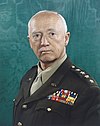
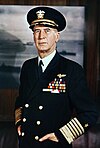
Omar Bradley (February 12, 1893 – April 8, 1981) was one of the main U.S. Army field commanders in North Africa and Europe during the World War II and a General of the United States Army. He was the last surviving five-star officer of the United States.
Best Omar Bradley Quotes
Shortest
Earliest
Explore our curated collection of the most famous and impactful Omar Bradley quotes.
“We are dealing with [veterans], not procedures; with their problems, not ours.”

“But if our afflictions were heavy, we could take comfort in the knowledge that the enemy's outweighed our own. So severe were his losses that none of those divisions committed in the Bulge was ever effective again.”
“Several days previously I had indicated to Patton that I would feel obligated to ask for relief than submit 12th Army Group to Montgomery's command. George clasped me by the arm. "If you quit, Brad," he said, "then I'll be quitting with you."”
“Precisely at 7 Patton boomed in to breakfast. His vigor was always infectious, his wit barbed, his conversation a mixture of obscenity and good humor. He was at once stimulating and overbearing. George was a magnificent soldier.”
“Conscientiously though we have sought to avoid them, the reader may find errors attributable in part to inaccurate sources and to faulty recollection. To those who may feel themselves wronged, I freely acknowledge that this is in part a book of opinion and that the opinion is my own.”
“Like Eisenhower, Patton ordinarily messed with a group of inmates from his headquarters. Breakfast was spirited and talkative. Patton picked up the GI holster in which I carried my 30-year-old Colt .45. "Hell, Brad," he said, "what you need is a social gun. You can't carry that cannon with you everywhere you go."”
“If a soldier would command an army he must be prepared to withstand those who would criticize the manner in which he leads that army. There is no place in a democratic state for the attitude which would elevate each military hero above public reproach simply because he did the job he has been trained and is paid to do.”
“Dependability, integrity, the characteristic of never knowingly doing anything wrong, that you would never cheat anyone, that you would give everybody a fair deal. Character is a sort of an all-inclusive thing. If a man has character, everyone has confidence in him. Soldiers must have confidence in their leader.”

“"But we've got passengers aboard," our skipper shouted through the darkness. "Prisoners?" the deck called; with a note of curiosity. "Stand by to bring the prisoners aboard." I climbed a rope ladder up the Augusta's side and crawled over the rail, cold, wet, hungry, and tired. The crew pressed forward to see its "prisoners". "Oh, hell," a sailor grunted, "it's only General Bradley."”
“The American army has also acquired political maturity it sorely lacked at the outbreak of World War II. At times during that war we forgot that wars are fought for the resolution of political conflicts, and in the ground campaign for Europe we sometimes overlooked political considerations of vast importance. Today, after several years of cold war, we are intensely aware that a military effort cannot be separated from its political objectives.”
“The Yankee invasion had come to England well heeled with American dollars. American privates earned three times as much as their British companions. A U.S. staff sergeant's take-home pay equaled that of a British captain. Since such a substantial share of this wealth was invested in local courting, it is no wonder that Britain's provincial customs were given a fancy whirl. Indeed, it is a tribute to the civility of the British that they endured us with such good will.”
“To tell the story of how and why we chose to do what we did, no one can ignore the personalities and characteristics of those individuals engaged in making decisions. For military command is as much a practice of human relations as it is a science of tactics and a knowledge of logistics. Where there are people, there is pride and ambition, prejudice and conflict. In generals, as in all other men, capabilities cannot always obscure weaknesses, nor can talents hide faults.”
“During the last six years the United States Army has not only matured greatly, but its officers have grown vastly more aware of their world-wide responsibilities as military men. Allied command has become the accepted pattern of military operation, and many of the insular differences that once caused us to question the motives of our allies have now been completely resolved. If we will only remember that from time to time some difficulties do exist, we shall be better prepared to settle them without exaggerating their dangers.”

“We have men of science; too few men of God. We have grasped the mystery of the atom and rejected the Sermon on the Mount. Man is stumbling blindly through a spiritual darkness while toying with the precarious secrets of life and death. The world has achieved brilliance without wisdom, power without conscience. Ours is a world of nuclear giants and ethical infants. We know more about war than we know about peace, more about killing than we know about living.”

“A canvas map lay under my helmet with its four silver stars. Only five years before on May 7, as a lieutenant colonel in civilian clothes, I had ridden a bus down Connecticut Avenue to my desk in the old Munitions building. I opened the mapboard and smoothed out the tabs of the 43 divisions now under my command. They stretched across a 640-mile front of the 12th Army Group. With a china-marking pencil, I wrote in the new date: D plus 335. I walked to the window and ripped open the blackout blinds. Outside the sun was climbing into the sky. The war in Europe had ended.”
“In this book I have tried to achieve one purpose: to explain how war is waged on the field from the field command post. For it is there, midway between the conference table and the foxhole, that strategy is translated into battlefield tactics; there the field commander must calculated the cost of rivers, roads and hills in terms of guns, tanks, tonnage- and most importantly in terms of the lives and limbs of his soldiers. How, then, did we reach our critical decisions? Why and how did we go where we did? These are the critical questions I have been asked most often. And these are the questions that gave me justification for writing this book.”
“I have attempted to write of my long association with George Patton as fairly and as honestly as I could. General Patton was one of my staunchest friends and the most unhesitatingly loyal of my commanders. He was a magnificent soldier, one whom the American people can admire not only as a great commander but as a unique and remarkable man. In recollecting our experiences together, I may offend those who prefer to remember Patton not as a human being but as a heroic-size statue in a public park. I prefer to remember Patton as a man, as a man with all the frailties and faults of a human being, as a man whose greatness is therefore all the more of a triumph.”
“There are those who contend that the best strategist is the commander most distantly removed from his troops. From where units exist merely as symbols on a map the strategist can perform in a vacuum and his judgment cannot be infected by compassion for his troops. If war were fought with push-button devices, one might make a science of command. But because war is as much a conflict of passion as it is of force, no commander can become a strategist until he knows his men. Far from being a handicap to command, compassion is the measure of it. For unless one values the lives of his soldiers and is tormented by their ordeals, he is unfit to command. He is unfit to appraise the cost of an objective in terms of human life. To spend lives, knowingly, deliberately- even cruelly- he has to steel his mind with the knowledge that to do less would only cost more in the end. For if he becomes tormented by the casualties he must endure, he is in danger of losing sight of his strategic objective. Where the objective is lost, he the war is prolonged and the cost becomes infinitely worse.”
“I am under no illusion that our present strategy of using means short of total war to achieve our ends and oppose communism is a guarantee that a world war will not be thrust upon us. But a policy of patience and determination without provoking a world war, while we improve our military power, is one which we believe we must continue to follow....
Under present circumstances, we have recommended against enlarging the war from Korea to also include Red China. The course of action often described as a limited war with Red China would increase the risk we are taking by engaging too much of our power in an area that is not the critical strategic prize.
Red China is not the powerful nation seeking to dominate the world. Frankly, in the opinion of the Joint Chiefs of Staff, this strategy would involve us in the wrong war, at the wrong place, at the wrong time, and with the wrong enemy.
• Variation: "... a wrong war at the wrong place and against a wrong enemy."”
Omar Bradley Quotes by Topic
Find exactly what you are looking for by browsing this categorized list of Omar Bradley quotes by topic.
Omar Bradley on War 2 quotes
“Wars can be prevented just as surely as they can be provoked, and we who fail to prevent them must share the guilt for the dead.”
Omar Bradley on Nuclear war
“We have men of science, too few men of God. We have grasped the mystery of the atom and rejected the Sermon on the Mount. The world has achieved brilliance without conscience. Ours is a world of nuclear giants and ethical infants. We know more about war than we know about peace, more about killing than we know about living. If we continue to develop our technology without wisdom or prudence, our servant may prove to be our executioner.”

Omar Bradley on War and peace
“We have men of science, too few men of God. We have grasped the mystery of the atom and rejected the Sermon on the Mount. The world has achieved brilliance without conscience. Ours is a world of nuclear giants and ethical infants. We know more about war than we know about peace, more about killing than we know about living. If we continue to develop our technology without wisdom or prudence, our servant may prove to be our executioner.”
Omar Bradley on Global catastrophic risk
“We have men of science, too few men of God. We have grasped the mystery of the atom and rejected the Sermon on the Mount. The world has achieved brilliance without conscience. Ours is a world of nuclear giants and ethical infants. We know more about war than we know about peace, more about killing than we know about living. If we continue to develop our technology without wisdom or prudence, our servant may prove to be our executioner.”

What Omar Bradley Said About Others
Discover personal opinions Omar Bradley shared regarding contemporaries.
Omar Bradley on George S. Patton 7 quotes
“Precisely at 7 Patton boomed in to breakfast. His vigor was always infectious, his wit barbed, his conversation a mixture of obscenity and good humor. He was at once stimulating and overbearing. George was a magnificent soldier.”
Omar Bradley on Ivan Konev 3 quotes
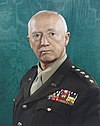
“Konev was waiting with his staff outside the gloomy villa he had commandeered for a CP. A powerfully built man with a huge bald head, Konev took me first to his office for a moment of private conversation through our interpreters. I gave him a map I had prepared for the occasion, showing the disposition of every U.S. division across his group front. The marshal started in surprise but did not volunteer to show me his own dispositions. Had he wanted to, he probably would have had to ask permission from the Kremlin. American lieutenants were delegated greater authority on the Elbe than were Russian division commanders.”
Omar Bradley on Ernest King
“In a caravan of recon cars we serpentined through traffic that churned the Normandy roads into a trail of choking white dust. It parched our throats, watered our eyes, and chalked King's neat blues. From Omaha we turned toward Isigny, past the dry, malodorous tidal basin at Grandcamp-les-Bains where the enemy had destroyed a dozen fishing craft and damaged the tidal gates. From offshore a salvo echoed across the beach as the battleship Texas lobbed its broadsides into the Carentan flats where the enemy had withdrawn behind that city. After having so persistently badgered the Navy for capital ships in the bombardment, I was anxious that King see the effects of his big guns in the streets of Isigny. Hansen had parked two armored cars in the village square to cover our party with their guns. With General Marshall, King, Arnold, and Eisenhower bunched together in three open cars, an enemy sniper could have won immortality as a hero of the Reich.”
Quotes About Omar Bradley
Gain deeper perspective through quotes about Omar Bradley from others.
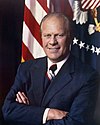
Gerald Ford on Omar Bradley
“Military hero, courageous in battle, and gentle in spirit, friend of the common soldier, General of the Army, first Chairman of the Joint Chiefs of Staff, he embodies the best of the American military tradition with dignity, humanity, and honor.”
David M. Kennedy on Omar Bradley
“Omar Bradley, on the other hand, would assume a command position in Overlord whose growing responsibilities would reflect the growing preponderance of American strength on the ground, just as Montgomery's role would shrink in proportion to the relative role of the British Army. A steady, self-effacing Missourian, Bradley was as loyal as a subordinate as Montgomery was an aggravating one. Like his West Point classmate Eisenhower, Bradley had never seen combat until he arrived in North Africa in 1942. But he had by 1944 already acquired a reputation, nourished by the worshipful dispatches of war correspondent Ernie Pyle, as "the GI's general"- a persona reflected in the title of his postwar memoir, A Soldier's Story.”
S. L. A. Marshall on Omar Bradley
“The Bradley name gets heavy billing on a picture of [a] comrade that, while not caricature, is the likeness of a victorious, glory-seeking buffoon ... Patton in the flesh was an enigma. He so stays in the film. ... Napoleon once said that the art of the general is not strategy but knowing how to mold human nature ... Maybe that is all producer Frank McCarthy and Gen. Bradley, his chief advisor, are trying to say.”
Lt. Col. James Burton on Omar Bradley
“You know what's really ironic? General Omar Bradley was a brilliant tactician, and a great leader. No ego, just did the job. And he always looked out for the morale and safety of his men. And then they go and put his name on this thing. Talk about a kick in the ass.”
About Omar Bradley
Omar Bradley (February 12, 1893 – April 8, 1981) was one of the main U.S. Army field commanders in North Africa and Europe during the World War II and a General of the United States Army. He was the last surviving five-star officer of the United States.