Link Copied!
Numa Denis Fustel de Coulanges Quotes (1830-1889)
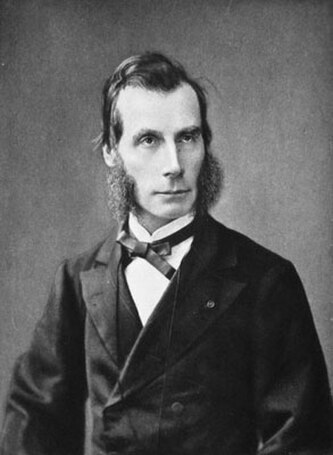
About Numa Denis Fustel de Coulanges
Numa Denis Fustel de Coulanges (18 March 1830 – 12 September 1889) was a French historian with a depth of knowledge in the ancient languages and cultures of the West.
Best Numa Denis Fustel de Coulanges Quotes
Shortest
Earliest
Explore our curated collection of the most famous and impactful Numa Denis Fustel de Coulanges quotes.
“The upper classes among the ancients never had intelligence or ability enough to direct the poor towards labor, and thus help them to escape honorably from their misery and corruption. A few benevolent men attempted it, but they did not succeed. The result was that the cities always floated between two revolutions, one to despoil the rich, the other to enable them to recover their fortunes. This lasted from the Peloponnesian war to the conquest of Greece by the Romans.”

“Thus the ancient city was transformed by degrees. In the beginning it was an association of some hundred chiefs of families. Later the number of citizens increased, because the younger branches obtained a position of equality. Later still, the freed clients, the plebs, all that multitude which during centuries had remained outside the political and religious association, sometimes even outside the sacred enclosure of the city, broke down the barriers which were opposed to them, and penetrated into the city, where they immediately became the masters.”
“"I pour upon the earth of the tomb," says Iphigenia in Euripides, "milk, honey, and wine; for it is with these that we rejoice the dead." ...[The associated] ceremony was still performed in the time of Plutarch, who was enabled to witness the six hundredth anniversary of it. A little later, Lucian, ridiculing these opinions and usages, shows how deeply rooted they were in the common mind. "The dead," says he, "are nourished by the provisions which we place upon their tomb, and drink the wine which we pour out there; so "that one of the dead to whom nothing is offered is condemned to perpetual hunger."”
“The ancient city, like all human society, had ranks, distinctions, and inequalities. We know the distinction originally made at Athens between the Eupatnids and the Thetes; at Sparta we find the class of Equals and that of the Inferiors; and in Euboea, that of the Knights and that of the People. The history of Rome is full, of the struggles between the Patricians and Plebeians, struggles that we find in all the Sabine, Latin, and Etruscan cities. We can even remark that the higher we ascend in the history of Greece and, Italy the more profound and the more strongly marked the distinction appears — a positive proof that the inequality did not grow up with time, but that it existed from the beginning, and that it was contemporary with the birth of cities.”
“The sacred fire was the Providence of the family. The worship was very simple. The first rule was, that there should always be upon the altar a few live coals for if this fire was extinguished a god ceased to exist. At certain moments of the day they placed upon the fire diy herbs and wood; then the god manifested himself in a bright flame. They offered sacrifices to him; and the essence of every sacrifice was to sustain and reanimate the sacred fire, to nourish and develop the body of the god. This was the reason why they gave him wood before everything else; for the same reason they afterwards poured out wine upon the altar, — the inflammable wine of Greece, — oil, incense, and the fat of victims. The god received these offerings, and devoured them; radiant with satisfaction, he rose above the altar, and lighted up the worshipper with his brightness. Then was the moment to invoke him; and the hymn of prayer went out from the heart of man.”

“We do not see that all Greece, or even a Greek city, formally asked for this right of citizenship, so much desired; but men worked individually to acquire it, and Rome bestowed it with a good grace.' Some obtained it through the favor of the emperor; others bought it. It was granted to those who had three children, or who served in certain divisions of the army. An easy and prompt means of acquiring it was to sell one's self as a slave to a Roman citizen, for the act of freeing him according to legal forms conferred the right of citizenship. One who had the title of Roman citizen no longer formed a part of his native city, either civilly or politically. He could continue to live there, but he was considered an alien, he was no longer subject to the laws of the city, he no longer obeyed its magistrates, no longer supported its pecuniary burdens. This was a consequence of the old principle, which did not permit a man to belong to two cities at the same time.”

“The causes of ... [the city's] destruction may be reduced to two. One was the change that took place in the course of time in ideas, resulting from the natural development of the human mind, and which, in effacing ancient beliefs, at the same time caused the social edifice to crumble, which these beliefs had built, and could alone sustain. The other was a class of men who found themselves placed outside this city organization, and who suffered from it. These men had an interest in destroying it, and made war upon it continually.
When, therefore, the beliefs, on which this social regime was founded, became weakened, and the interests of the majority of men were at war with it, the system fell. No city escaped this law of transformation; Sparta no more than Athens, Rome no more than Greece. We have seen that the men of Greece and those of Italy had originally the same beliefs, and that the same series of institutions was developed among both; and we shall now see that all these cities passed through similar revolutions.”
When, therefore, the beliefs, on which this social regime was founded, became weakened, and the interests of the majority of men were at war with it, the system fell. No city escaped this law of transformation; Sparta no more than Athens, Rome no more than Greece. We have seen that the men of Greece and those of Italy had originally the same beliefs, and that the same series of institutions was developed among both; and we shall now see that all these cities passed through similar revolutions.”
“It is a strong proof of the antiquity of this belief, and of these practices, to find them at the same time among men on the shores of the Mediterranean and among those of the peninsula of India. Assuredly the Greeks did not borrow this religion from the Hindus, nor the Hindus from the Greeks. But the Greeks, the Italians, and the Hindus belonged to the same race; their ancestors, in a very distant past, lived together in Central Asia. There this creed originated and these rites were established. The religion of the sacred fire dates, therefore, from the distant and dim epoch when there were yet no Greeks, no Italians, no Hindus; when there were only Aryas. When the tribes separated they carried this worship with them, some to the banks of the Ganges, others to the shores of the Mediterranean. Later, when these tribes had no intercourse with each other, some adored Brahma, others Zeus, and still others Janus; each group chose its own gods; but all preserved, as an ancient legacy, the first religion which they had known and practiced in the common cradle of their race.”

“We should not lose sight of the excessive difficulty which, in primitive times, opposed the foundation of regular societies. The social tie was not easy to establish between those human beings who were so diverse, so free, so inconstant. To bring them under the rules of a community, to institute commandments and insure obedience, to cause passion to give way to reason, and individual right: to public right, there certainly was something necessary, stronger than material force, more respectable than interest, surer than a philosophical theory, more unchangeable than a convention; something that should dwell equally in all hearts, and should be all-powerful there.
This power was a belief. Nothing has more power over the soul. A belief is the work of our mind, but we are not on that account free to modify it at will. It is our own creation, but we do not know it. It is human, and we believe it a god. It is the effect of our power, and is stronger than we are. It is in us; it does not quit us: it speaks to us at every moment. If it tells us to obey, we obey; if it traces duties for us, we submit. Man may, indeed, subdue nature, but he is subdued by his own thoughts.”
This power was a belief. Nothing has more power over the soul. A belief is the work of our mind, but we are not on that account free to modify it at will. It is our own creation, but we do not know it. It is human, and we believe it a god. It is the effect of our power, and is stronger than we are. It is in us; it does not quit us: it speaks to us at every moment. If it tells us to obey, we obey; if it traces duties for us, we submit. Man may, indeed, subdue nature, but he is subdued by his own thoughts.”

“This right of citizenship then became precious, first, because it was complete, and secondly, because it was a privilege. Through it a man figured in the comitia of the most powerful city of Italy; he might be consul and commander of the legions. There was also the means of satisfying more modest ambitions; thanks to this right, one might ally himself, by marriage, to a Roman family; or he might take up his abode at Rome, and become a proprietor there; or he might carry on trade in Rome, which had already become one of the first commercial towns in the world. One might enter the company of farmers of the revenue, —that is to say, take a part in the enormous profits which accrued from the collection of the revenue, or from speculations in the lauds of the ager publicus. Wherever one lived, he was effectually protected; he escaped the authority of the municipal magistrate and was sheltered from the caprices of the Roman magistrates themselves. By being a citizen of Rome, a man gained honor, wealth, and security.
The Latins, therefore, became eager to obtain this title, and used all sorts of means to acquire it.”
The Latins, therefore, became eager to obtain this title, and used all sorts of means to acquire it.”

“Now, before the day on which the city was founded, the family already contained within itself this distinction of classes. Indeed, the family was never dismembered; it was indivisible, like the primitive religion of the hearth. The oldest son alone, succeeding the father, took possession, of the priesthood, the property, and the authority, and his brothers were to him what they had been to their father. From generation to generation, from first-born to first-born, there was never but one family chief. He presided at the sacrifice, repeated the prayer, pronounced judgment, and governed. To him alone originally belonged the title of ''pater'''''; for this word, which signified power, and not paternity, could be applied only to the chief of the family. His sons, his brothers, his servants, all called him by this title.
Here, then, in the inner constitution of the family is the first principle of inequality. The oldest is the privileged one for the worship, for the succession, and for command.''' After several centuries, there were naturally formed, in each of these great families, younger branches, that were, according to religion and by custom, inferior to the older branch, and who, living under its protection, submitted to its authority.”
Here, then, in the inner constitution of the family is the first principle of inequality. The oldest is the privileged one for the worship, for the succession, and for command.''' After several centuries, there were naturally formed, in each of these great families, younger branches, that were, according to religion and by custom, inferior to the older branch, and who, living under its protection, submitted to its authority.”

“The ancient family was a religious rather than a natural association and we shall see presently that the wife was counted in the family only after the sacred ceremony of marriage had initiated her into the worship that the son was no longer counted in it when he had renounced the worship, or had been emancipated; that, on the other hand, an adopted son was counted a real son, because, though he had not the ties of blood, he had something better —a community of worship; that the heir who refused to adopt the worship of this family had no right to the succession; and, finally, that relationship and the right of inheritance were governed not by birth, but by the rights of participation in the worship, such as religion had established them. Religion, it is true, did not create the family; but certainly it gave the family its rules; and hence it comes that the constitution of the ancient family was so different from what it would have been if it had owed its foundation to natural affection.
The ancient Greek language has a very significant word to designate a family... a word which signifies, literally, that which is near a hearth. A family was a group of persons whom religion permitted to invoke the same sacred fire, and to offer the funeral repast to the same ancestors.”
The ancient Greek language has a very significant word to designate a family... a word which signifies, literally, that which is near a hearth. A family was a group of persons whom religion permitted to invoke the same sacred fire, and to offer the funeral repast to the same ancestors.”
“When the kings had been everywhere over-thrown, and the aristocracy had become supreme, the people did not content themselves with regretting the monarchy; they aspired to restore it under a new form. In Greece, during the sixth century, they succeeded generally in procuring leaders; not wishing to call them kings, because this title implied the idea of religious functions, and could only be borne by the sacerdotal families, they called them tyrants.
Whatever might have been the original sense of this word, it certainly was not borrowed from the language of religion. Men could not apply it to the gods as they applied the word king; they did not pronounce it in their prayers. It designated, in fact, something quite new among men—an authority that was not derived from the worship, a power that religion had not established. The appearance of this word in the Greek language marks a principle which the preceding generations had not known—the obedience of man to man. Up to that time there had been no other chiefs of the state than those who had been chiefs of religion; those only governed the city who offered the sacrifices and invoked the gods for it. In obeying them, men obeyed only the religious law, and made no act of submission except to the divinity. Obedience to a man, authority given to this man by other men, a power human in its origin and nature—this had been unknown to the ancient Eupatrids, and was never thought of till the day when the inferior orders threw off the yoke of the aristocracy and attempted a new government.”
Whatever might have been the original sense of this word, it certainly was not borrowed from the language of religion. Men could not apply it to the gods as they applied the word king; they did not pronounce it in their prayers. It designated, in fact, something quite new among men—an authority that was not derived from the worship, a power that religion had not established. The appearance of this word in the Greek language marks a principle which the preceding generations had not known—the obedience of man to man. Up to that time there had been no other chiefs of the state than those who had been chiefs of religion; those only governed the city who offered the sacrifices and invoked the gods for it. In obeying them, men obeyed only the religious law, and made no act of submission except to the divinity. Obedience to a man, authority given to this man by other men, a power human in its origin and nature—this had been unknown to the ancient Eupatrids, and was never thought of till the day when the inferior orders threw off the yoke of the aristocracy and attempted a new government.”

“In every city the rich and the poor were two enemies living by the side of each other, the one coveting wealth, and the other seeing their wealth coveted. 'No relation, no service, no labor united them. The poor could acquire wealth only by despoiling the rich. The lich could defend their property only by extreme skill or by force. They regarded each other with the eyes of hate. There was a double conspiracy in every city the poor conspired from cupidity, the rich from fear. Aristotle says the rich took the following oath among themselves: "I swear always to remain the enemy of the people, and to do them all the injury in my power."
It is impossible to say which of the two parties committed the most cruelties and crimes. Hati-ed effaced in their hearts every sentiment of humanity. There was at Miletus a war between the rich and the poor. At first the latter were successful, and drove the rich from the city; but afterwards, regretting that they had not been able to slaughter them, they took their children, collected them into some threshing-floors, and had them trodden to death under the feet of oxen. The rich afterwards returned to the city, and became masters of it. They took, in their turn, the children of the poor, covered them with pitch, and burnt them alive.
What, then, became of the democracy? They were not precisely responsible for these excesses and crimes; still they were the first to be affected by them. There were no longer any governing rules; now, the democracy could live only under the strictest and best onserved rules. We no longer see any government, but merely factions in power. The magistrate no longer exercised his integrity for the benefit of peace and law, but for the interests and greed of a party. A command no longer had a legitimate title or a sacred character; there was no longer anything voluntary in obedience; always forced, it was always waiting for an opportunity to take its revenge.”
“When this poor class, after several civil wars, saw that victories gained them nothing, that the opposite party always returned to power, and that, after many interchanges of confiscations and restitutions the struggle always recommenced, they dreamed of establishing a monarchical government which should conform to their interests, and which, by forever suppressing the opposite party, should assure them, for the future, the fruits of their victory. And so they set up tyrants. From that moment the parties changed names; they were no longer aristocracy or democracy; they fought for liberty or for tyranny. Under these two names wealth and poverty were still at war. Liberty signified the government where the rich had the rule, and defended their fortunes; tyranny indicated exactly the contrary.
It is a general fact, and almost without exception in the history of Greece and of Italy, that the tyrants sprang from the popular party, and had the aristocracy as enemies. “The mission of the tyrant,” says Aristotle, “is to protect the people against the rich; he has always commenced by being a demagogue, and it is the essence of tyranny to oppose the aristocracy.” “The means of arriving at a tyranny,” he also says, “is to gain the confidence of the multitude, and one does this by declaring himself the enemy of the rich. This was the course of Peisistratus at Athens, of Theagenes at Megara, and of Dionysius at Syracuse.”
The tyrant always made war upon the rich. At Megara, Theagenes surprises the herds of the rich in the country and slaughters them. At Comae, Aristodemus abolishes debts, and takes the lands of the rich to give them to the poor. ...They could maintain their power only while they satisfied the cravings of the multitude, and administered to their passions.”

“The symbols of this religion became modified in the course of ages. When the people of Greece and Italy began to represent their gods as persons, and to give each one a proper name and a human form, the old worship of the hearth-fire submitted to the common law which human intelligence, in that period, imposed upon every religion. The altar of the sacred fire was personified. They called it Vesta; the name was the same in Latin and in Greek, and was the same that in the common and primitive language designated an altar. By a process frequent enough, a common noun had become a proper name. By degrees a legend was formed. They pictured this divinity to themselves as wearing a female form, because the word used for altar was of the feminine gender. They even went so far as to represent this goddess in statues. Still they could never efface the primitive belief, according to which this divinity was simply the fire upon the altar and Ovid himself was forced to admit that Vesta was nothing else than a "living flame."
If we compare this worship of the sacred fire with the worship of the dead, of which wo have already spoken, we shall perceive a close relation between them.
...It is a chaste fire; the union of the sexes must be removed far from its presence. They pray to it not only for riches and health, but also for purity of heart, temperance, and wisdom. "Render us rich and flourishing," says an Orphic hymn; " make us also wise and chaste."
...Still later, when they made the great Vesta of this myth of the sacred fire, Vesta was the virgin goddess. She represented in the world neither fecundity nor power; she was order, but not rigorous, abstract, mathematical order, the imperious and unchangeable law, which was early perceived in physical nature. She was moral order. They imagined her as a sort of universal soul, which regulated the different movements of worlds, as the human soul keeps order in the human system.
Thus are we permitted to look into the way of thinking of primitive generations. The principle of this worship is outside of physical nature, and is found in this little mysterious world, this microcosm — man.”
“[The Plebeian] assemblies did not at first occupy themselves with the general interests of the city; they named no magistrates, and passed no laws. They deliberated only on the interests of their own order, named the plebeian chiefs, and carried plebiscita. There was at Rome, for a long time, a double series of decrees — senatusconsulta for the patricians, plebiscita for the plebs. The plebs did not obey the senatusconsulta, nor the patricians the plebiscita. There were two peoples at Rome.
These two peoples, always in presence of each other, and living within the same walls, still had almost nothing in common. A plebeian could not be consul of the city, nor a patrician tribune of the plebs. The plebeian did not enter the assembly by curies, nor the patrician the assembly of the tribes.
They were two peoples that did not even understand each other, not having — so to speak — common ideas. If the patrician spoke in the name of religion and the laws, the plebeian replied that he did not know this hereditary religion, or the laws that flowed from it. If the patrician alleged a sacred custom, the plebeian replied in the name of the law of nature. They reproached each other with injustice; each was just according to his own principles, and unjust according to the principles and beliefs of the other. The assembly of the curies and the reunion of the patres seemed to the plebeian odious privileges. In the assembly of the tribes the patrician saw a meeting condemned by religion. The consulship was for the plebs an arbitrary and tyrannical authority; the tribuneship, in the eyes of the patrician, was something impious, abnormal, contrary to all principles; be could not understand this sort of chief, who was not a priest, and who was elected without auspices. The tribuneship deranged the sacred order of the city; it was what a heresy is in religion — the public worship was destroyed. "The gods will be against us," said a patrician, "so long as we have among us this ulcer, which is eating us up, and which extends its corruption to the whole social body." ...The duality of the Roman population became from day to day more manifest.”
“The primitive religion, whose symbols were the immovable stone of the hearth, and the ancestral tomb, — a religion which had established the ancient family, and had afterwards organized the city, —changed with time, and grew old. ...Men began to have an idea of immaterial nature; the notion of the human soul became more definite, and almost at the same time that of a divine intelligence sprang up in their minds.
Could they still believe in the divinities of the primitive ages, of those dead men who lived in the tomb, of those Lares who had been men, of those holy ancestors whom it was necessary to continue to nourish with food? Such a faith became impossible. ...Some believed in annihilation, others in a second and entirely spiritual existence in a world of spirits. In these cases they no longer admitted that the dead lived in the tomb, supporting themselves upon offerings. They also began to have too high an idea of the divine to persist in believing that the dead were gods. On the contrary, they imagined the soul going to seek its recompense in the Elysian Fields, or going to pay the penalty of its crimes; and by a notable progress, they no longer deified any among men...
[T]he Lares and Heroes [had] lost the adoration of all who thought. As to the sacred fire, which appears to have had no significance, except so far as it was connected with the worship of the dead, that also lost its prestige. Men continued to have a domestic fire in the house, to salute it, to adore it, and to offer it libations; but this was now only a customary worship, which faith no longer vivified.
[Analogously], [t]he public hearth of the city, or prytaneum, ...they had forgotten...[,] represented the invisible life of the national ancestors, founders, and heroes.
...At the same time a few great sanctuaries, like those of Delphi and Delos, attracted men, and made them forget their local worship. The mysteries and the doctrines which these taught accustomed them to disdain the empty and meaningless religion of the city. ...
Then philosophy appeared, and [finally] overthrew all the rules of the ancient polity.”
“[I]t does not appear that these men aspired at first to share the laws and rights of the patricians. Perhaps they thought, with the patricians themselves, that there could "be nothing in common between the two orders. No one thought of civil and political equality. That the plebeians could raise themselves to the level of the patricians, never entered the minds of the plebeian of the first centuries any more than it occurred to the patricians.
...[T]hese men seem to have preferred, at first, complete separation. In Rome they found no remedy for their sufferings; they saw but one means of escaping from their inferiority — this was to depart from Rome.
...In view of such an act the senate was divided in opinion. The more ardent of the patricians showed clearly that the departure of the plebs was far from afflicting them.. Thenceforth the patricians alone would remain at Rome with the clients that were still faithful to them. Rome would renounce its future grandeur, but the patricians would be masters there. They would no longer have these plebeians to trouble them, to whom the rules of ordinary government could not be applied, and who were an embarrassment to the city.
...But others, less faithful to old principles, or solicitous for the grandeur of Rome, were afflicted at the departure of the plebs. Rome would lose half its soldiers. What would become of it in the midst of the Latins, Sabines, and Etruscans — all enemies? The plebs had good qualities; why could not these be made use of for the interests of the city? These senators desired, therefore, at a cost of a few concessions, of which they did not perhaps see all the consequences, to bring back to the city those thousands of arms that made the strength of the legions.
On the other side, the plebs perceived, at the end of a few months, that they could not live upon the Sacred Mount. They procured, indeed, what was materially necessary for existence, but all that went to make up an organized society was wanting. They could not found a city there, because they could not find a priest who knew how to perform the religious ceremony of the foundation. They could not elect magistrates, for they had no prytaneum with its perpetual fire, where the magistrate might sacrifice. They could find no foundation for social laws, since the only laws of which men then had any idea were derived from the patrician religion. In a word, they had not among them the elements of a city. The plebs saw clearly that by being more independent they were not happier; that they did not form a more regular society than at Rome; and that the problem, whose solution was so important to them, was not solved.
...It was found, therefore, that the plebs and patricians, though they had almost nothing in common, could not live without each other. They came together and concluded a treaty of alliance. This treaty appears to have been made on the same terms as those which terminate a war between two different peoples. Plebeians and patricians were indeed neither the same people nor the same city. By this treaty the patrician did not agree that the plebeian should make a part of the religious and political city; it does not appear that the plebs demanded it. They agreed merely that in the future the plebs, having been organized into something like a regular society, should have chiefs taken from their own number. This is the origin of the tribuneship of the plebs — an entirely new institution, which resembled nothing that the city had known before.”
Numa Denis Fustel de Coulanges Quotes by Topic
Find exactly what you are looking for by browsing this categorized list of Numa Denis Fustel de Coulanges quotes by topic.
Quotes About Numa Denis Fustel de Coulanges
Gain deeper perspective through quotes about Numa Denis Fustel de Coulanges from others.
Marc Andreessen on Numa Denis Fustel de Coulanges 2 quotes
“The Ancient City by Numa Denis Fustel De Coulanges -- the single best book I have found on who we are and how we got here.”

Source on Numa Denis Fustel de Coulanges 3 quotes
“The most fundamental lesson of Fustel de Coulanges’ The Ancient City is a very difficult one to take in: social order results from unanimously shared belief in the origins of that social order. To the extent to which such belief is weakened, it is supplemented by force or wealth, which in turn both further weaken unanimity, and are themselves undermined by the counter-force or the demand for equal distribution of the wealth that has been generated. But shared belief in the origin of social order creates distinctions between those who inherit more, and those who inherit less, or not at all, from property traced back to that origin.”
About Numa Denis Fustel de Coulanges
Numa Denis Fustel de Coulanges (18 March 1830 – 12 September 1889) was a French historian with a depth of knowledge in the ancient languages and cultures of the West.