Niall Ferguson on Heinz Guderian
← Back to Niall Ferguson Profile
“Hitler might have waged his war against the Soviet Union more intelligently. Again, he might have listened to the experts (Halder and Guderian among them), who advised him to concentrate German efforts on capturing Moscow rather than diverting Field Marshal Gerd von Rundstedt's Army Group southwards towards Kiev. In a similar vein, Hitler might not have squandered his 6th Army so profligately at Stalingrad; Alan Brooke's fear was that Paulus might instead conquer the Caucasus, opening the way to the Caspian Sea and Persian Gulf oilfields.”
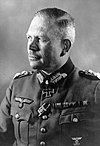
“The good news for Liddell Hart was that his work was hugely influential. The bad news was that it was hugely influential not in Britain but in Germany. With the notable exception of Major-General J. F. C. Fuller, senior British commanders like Field Marshal Earl Haig simply refused to accept that 'the aeroplane, the tank [and] the motor car [would] supersede the horse in future wars', dismissing motorized weapons as mere 'accessories to the man and horse'. Haig's brother concurred: the cavalry would 'never be scrapped to make room for the tanks'. By contrast, younger German officers immediately grasped the significance of Liddell Hart's work. Among his most avid fans was Heinz Guderian, commander of the 19th German Army Corps in the invasion of Poland. As Guderian recalled, it was from Liddell Hart and other British pioneers of 'a new type of warfare on the largest scale' that he learned the importance of 'the concentration of armour'.”