Link Copied!
Muhammad Iqbal Quotes (1877-1938)
Philosopher, Poet, Politician
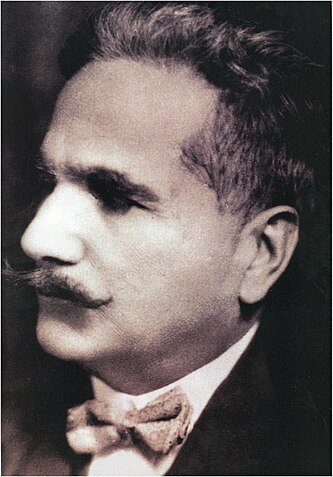



About Muhammad Iqbal
Muhammad Iqbal (9 November 1877 – 21 April 1938), widely known as Allama Iqbal (), was a poet, philosopher, and politician, as well as an academic, barrister and scholar in the British Raj. He is considered one of the most important figures in Urdu literature, with literary work in both the Urdu and Persian languages.
Best Muhammad Iqbal Quotes
Shortest
Earliest
Explore our curated collection of the most famous and impactful Muhammad Iqbal quotes.


“China and Arabia are ours, India is ours,
Muslims we are, the whole world is ours...”
Muslims we are, the whole world is ours...”
“Nations are born in the hearts of poets; they prosper and die in the hands of politicians.”

“O water of the river Ganges, thou rememberst the day
When our torrent flooded thy valleys...”
When our torrent flooded thy valleys...”
“My forefathers were Brahmins. They spent their lives in search of God. I am spending my life in search of Man.”
“Ends and purposes, whether they exist as conscious or subconscious tendencies, form the warp and woof of our conscious experience.”



“Heart – “It is absolutely certain that God does exist.”
Head – “But, my dear boy! Existence is one of my categories, and you have no right to use it.”
Heart – “So much the better, my Aristotle!””
Head – “But, my dear boy! Existence is one of my categories, and you have no right to use it.”
Heart – “So much the better, my Aristotle!””
“The immediacy of mystic experience simply means that we know God just as we know other objects. God is not a mathematical entity or a system of concepts mutually related to one another and having no reference to experience.”

“Every land which belongs to God is our land.
• Variant: "All land belongs to Muslims, because it belongs to their God." in : JPRS Report: Near East & South Asia, 93067 Foreign Broadcast Information Service, 1993 https://books.google.com/books?id=rki6AAAAIAAJ”
• Variant: "All land belongs to Muslims, because it belongs to their God." in : JPRS Report: Near East & South Asia, 93067 Foreign Broadcast Information Service, 1993 https://books.google.com/books?id=rki6AAAAIAAJ”

“You tell us who were they who pulled down the gates of Khyber?
Who were they that reduced the city that was the pride of Caesar?
Fake gods that men had made, who did break and shatter?
Who routed infidel armies and destroyed them with bloody slaughter?
Who put out and made cold the 'sacred' flame in Iran?
Who retold the story of the one God, Yazdan?”
Who were they that reduced the city that was the pride of Caesar?
Fake gods that men had made, who did break and shatter?
Who routed infidel armies and destroyed them with bloody slaughter?
Who put out and made cold the 'sacred' flame in Iran?
Who retold the story of the one God, Yazdan?”
“"I would like to see the Punjab, North-West Frontier Province, Sind and Baluchistan amalgamated into a single State. Self-government within the British Empire, or without the British Empire, the formation of a consolidated North-West Indian Muslim State appears to me to be the final destiny of the Muslims, at least of North-West India.”

“To this convention you must re-state as clearly and as strongly as possible, the political objective of Indian Muslims as a distinct political unit in the country. It is absolutely necessary to tell the world both inside and outside India that the economic problem is not the only problem in the country. From the Muslim point of view the cultural problem is of much greater consequence to most Indian Muslims. At any rate it is not less important than the economic problem.”

“I have already indicated to you the meaning of the word religion, as applied to Islam. The truth is that Islam is not a Church. It is a State conceived as a contractual organism long before Rousseau ever thought of such a thing, and animated by an ethical ideal which regards man not as an earth-rooted creature, defined by this or that portion of the earth, but as a spiritual being understood in terms of a social mechanism, and possessing rights and duties as a living factor in that mechanism.”

“It cannot be denied that Islam, regarded as an ethical ideal plus a certain kind of polity – by which expression I mean a social structure regulated by a legal system and animated by a specific ethical ideal – has been the chief formative factor in the life-history of the Muslims of India. It has furnished those basic emotions and loyalties which gradually unify scattered individuals and groups, and finally transform them into a well-defined people, possessing a moral consciousness of their own.”

“[Iqbal elaborated that nationalism came into conflict with Islam] only when it begins to play the role of a political concept and claims to be a principle of human solidarity demanding that Islam should recede to the background of a mere private opinion and cease to be a living factor in the national life. ... In majority countries, Islam accomodates nationalism, for there Islam and nationalism are practically identical, in minority countries it is justified in seeking self-determination as a cultural unit.”
“[T]he tyranny of imperialism struts abroad, covering its face under the masks of Democracy, Nationalism, Communism, Fascism and heaven knows what else besides. Under these masks, in every corner of the earth, the spirit of freedom and the dignity of man are being trampled underfoot in a way to which not even the darkest period of human history presents a parallel. The so-called statesmen to whom government and leadership of men was entrusted have proved demons of bloodshed, tyranny and oppression. ... After subjugating and establishing their dominion over weaker peoples, they have robbed them of their possessions, of their religions, their morals, of their cultural traditions and their literatures.”

“"Muhammad of Arabia ascended the highest Heaven and returned. I swear by God that if I had reached that point, I should never have returned.” These are the words of a great Muslim saint, ‘Abd al-Quddūs of Gangoh. In the whole range of Sufi literature it will be probably difficult to find words which, in a single sentence, disclose such an acute perception of the psychological difference between the prophetic and the mystic types of consciousness. The mystic does not wish to return from the repose of “unitary experience”; and even when he does return, as he must, his return does not mean much for mankind at large.”
“Shah Alamgir, that high and mighty king,
Pride and renown of Gurgan Timur’s line,
In whom Islam attained a loftier fame
And wider honour graced the Prophet’s Law,
He the last arrow to our quiver left
In the affray of Faith with Unbelief ;
When that the impious seed of heresy,
By Akbar nourished, sprang and sprouted fresh
In Dara’s soul, the candle of the heart
Was dimmed in every breast, no more secure
Against corruption our Community
Continued ; then God chose from India
That humble-minded warrior, Alamgir,
Religion to revive, faith to renew.
The lightning of his sword set all ablaze
The harvest of impiety ; faith’s torch
Once more its radiance o’er our counsels shed.”

“The principle that each group is entitled to its free development on its own lines is not inspired by any feeling of narrow communalism. There are communalisms and communalisms. A community which is inspired by feelings of ill-will towards other communities is low and ignoble. I entertain the highest respect for the customs, laws, religious and social institutions of other communities. Nay, it is my duty, according to the teaching of the Quran, even to defend their places of worship, if need be. Yet I love the communal group which is the source of my life and behaviour; and which has formed me what I am by giving me its religion, its literature, its thought, its culture, and thereby recreating its whole past as a living operative factor, in my present consciousness. Even the authors of the Nehru Report recognise the value of this higher aspect of communalism.”
“Why must I forever lose, forever forgo profit that is my due,
Sunk in the gloom of evenings past, no plans for the morrow pursue.
Why must I all attentive be to the nightingale's lament?
Friend, am I as dumb as a flower? Must I remain silent?
My theme makes me bold, makes my tongue more eloquent.
Dust be in my mouth, against Allah I make complaint.
• Variant:
"Why would I become a loss-causer, would I remain a gain-forgetter?
Would I not think of tomorrow, would I remain absorbed in the grief of yesterday?
Would I listen to the lament of the Nightingale, and would I remain all ears?
Fellow-singer! Am I too some rose, that I would remain silent?
I have my courage-{taught/teaching} power of speech
I have-- dust be in my mouth!-- a complaint against Allah."
From University of Columbia website”
Muhammad Iqbal Quotes by Topic
Find exactly what you are looking for by browsing this categorized list of Muhammad Iqbal quotes by topic.
Muhammad Iqbal on Democracy
Muhammad Iqbal on Divisions of the world in Islam
Muhammad Iqbal on Ganga
“O water of the river Ganges, thou rememberst the day When our torrent flooded thy valleys...”

Muhammad Iqbal on Entity
“The immediacy of mystic experience simply means that we know God just as we know other objects. God is not a mathematical entity or a system of concepts mutually related to one another and having no reference to experience.”

Muhammad Iqbal on Pakistan
“I would like to see the Punjab, North-West Frontier Province, Sind and Baluchistan amalgamated into a single state. Self-government within the British Empire, or without the British Empire, the formation of a consolidated Northwest Indian Muslim state appears to me to be the final destiny of the Muslims, at least of Northwest India.”

Muhammad Iqbal on Nationalism
“[Iqbal elaborated that nationalism came into conflict with Islam] only when it begins to play the role of a political concept and claims to be a principle of human solidarity demanding that Islam should recede to the background of a mere private opinion and cease to be a living factor in the national life. ... In majority countries, Islam accomodates nationalism, for there Islam and nationalism are practically identical, in minority countries it is justified in seeking self-determination as a cultural unit.”

Muhammad Iqbal on Political aspects of Islam
“[Iqbal elaborated that nationalism came into conflict with Islam] only when it begins to play the role of a political concept and claims to be a principle of human solidarity demanding that Islam should recede to the background of a mere private opinion and cease to be a living factor in the national life. ... In majority countries, Islam accomodates nationalism, for there Islam and nationalism are practically identical, in minority countries it is justified in seeking self-determination as a cultural unit.”

Muhammad Iqbal on Communalism (South Asia)
“The principle that each group is entitled to its free development on its own lines is not inspired by any feeling of narrow communalism. There are communalisms and communalisms. A community which is inspired by feelings of ill-will towards other communities is low and ignoble. I entertain the highest respect for the customs, laws, religious and social institutions of other communities. Nay, it is my duty, according to the teaching of the Quran, even to defend their places of worship, if need be. Yet I love the communal group which is the source of my life and behaviour; and which has formed me what I am by giving me its religion, its literature, its thought, its culture, and thereby recreating its whole past as a living operative factor, in my present consciousness. Even the authors of the Nehru Report recognise the value of this higher aspect of communalism.”

What Muhammad Iqbal Said About Others
Discover personal opinions Muhammad Iqbal shared regarding contemporaries.
Muhammad Iqbal on Muhammad 3 quotes
View all 3 quotes on Muhammad →Muhammad Iqbal on Aurangzeb
Muhammad Iqbal on Dara Shukoh
“When that the impious seed of heresy, By Akbar nourished, sprang and sprouted fresh In Dara’s soul, the candle of the heart Was dimmed in every breast, no more secure Against corruption our Community Continued ; then God chose from India That humble-minded warrior, Alamgir...”
Quotes About Muhammad Iqbal
Gain deeper perspective through quotes about Muhammad Iqbal from others.
Zulfikar Ali Bhutto on Muhammad Iqbal
“This is not a letter on Pakistan. If it were, I could have written a small book entitled "Glimpses of Pakistan's history". Time does not permit it. The nation is gripped in her worst crisis, standing in the middle of the road between survival and disintegration. Since the birth of Pakistan, crisis has followed crisis in rapid escalation. Millions of lives were sacrificed to create this country. Pakistan is said to be the dream of Mohammad Iqbal and the creation of Muhammad Ali Jinnah, the Quaid-e-Azam. Was anything wrong with the dream or with the one who made the dream come true? Opinions have differed and continue to differ. The next few years will most probably decide the issue, perhaps once and for all, and not without bloodshed. This process is not inevitable but the present policies of the ruling junta are driving this country towards a sad inevitability”

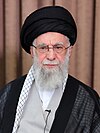
Ali Khamenei on Muhammad Iqbal
“Iqbal is one of the eminent personalities in the history of Islam. His is such a profound and sublime personality that it cannot be described and measured by only one Dimension of his life. Iqbal was a scholar and a philosopher, but at the same time other dimensions of his life are also so bright that if we consider him to be just a philosopher and a scholar, we feel that we have belittled him. Undoubtedly Iqbal is a great poet and is reckoned among the greatest. Those who know Urdu very well and have written about Iqbal’s Urdu poetry maintain that Iqbal's Urdu poems are among the best in Urdu. Of course this may not be a great tribute to him as the poetic Tradition of Urdu is not so rich. But it cannot be disputed that his Urdu poetry made a great impact on large numbers of people, on Hindus and Muslims equally, living in the Subcontinent during the early decades of the twentieth century, and motivated them to participate in the struggle (for freedom) that was reaching its climax.”
Naipaul on Muhammad Iqbal
“Iqbal is buried in the grounds of the Shah Jehan Mosque in Lahore; and soldiers watch his tomb. Rhetoric or sentimentality like that is invariably worrying; it hides things. And the tomb, with its Mogul motifs, would be a kind of artistic sacrilege if, just across the way, the great Mogul fort of Lahore (the emperor’s window there recorded in some of the finest Mogul pictures) wasn’t falling into dust; if, in that same city of Lahore, the Mogul Shalimar Gardens and the tombs of the emperor Jehangir and his consort were not in absolute decay; if, going back four centuries, the delicately colored tiled towers of the thirteenth-century tombs of Uch in Bahawalpur, one of the finest Islamic things in the subcontinent, were not half washed away; if, going back further still, the land just around the Buddhist city of Taxila, known to Alexander the Great, and with once fabulous remains, wasn’t being literally quarried; if Pakistan, still pursuing imperialist Islamic fantasies, hadn’t been responsible for the final looting of the Buddhist treasures of Afghanistan. In its short life Iqbal’s religious state, still half serf, still profoundly uneducated, mangling history in its schoolbooks as well, undoing the polity it was meant to serve, had shown itself dedicated only to the idea of the cultural desert here, with glory—of every kind—elsewhere.”
About Muhammad Iqbal
Muhammad Iqbal (9 November 1877 – 21 April 1938), widely known as Allama Iqbal (), was a poet, philosopher, and politician, as well as an academic, barrister and scholar in the British Raj. He is considered one of the most important figures in Urdu literature, with literary work in both the Urdu and Persian languages.