Link Copied!
Milton Friedman Quotes (1912-2006)
King










About Milton Friedman
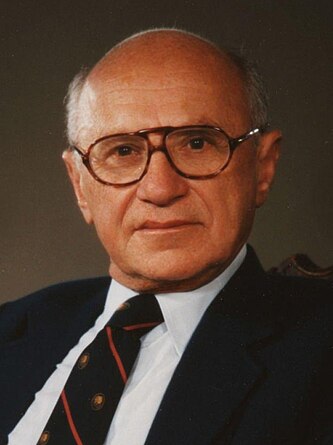
Milton Friedman (31 July 1912 – 16 November 2006) was an American economist noted for his support for free markets and a reduction in the size of government. In 1976 he was awarded a Nobel Prize in Economics.
Best Milton Friedman Quotes
Shortest
Earliest
Explore our curated collection of the most famous and impactful Milton Friedman quotes.

“Nothing is so permanent as a temporary government program.”

“Governments never learn. Only people learn.”

“There's a smokestack on the back of every government program.”

“The key need in policy-setting is to reverse the growth of government!”
“If a tax cut increases government revenues, you haven't cut taxes enough.”
“Inflation is the one form of taxation that can be imposed without legislation.”
“Never underestimate the role of luck in the fate of individuals or of nations.”

“Thank heaven that we don’t get all of the government that we are made to pay for.”
“One reason why money is a mystery to so many is the role of myth or fiction or convention.”
“To paraphrase Clemenceau, money is much too serious a matter to be left to the Central Bankers.”
“The combination of economic and political power in the same hands is a sure recipe for tyranny.”
“Will we read next that government control of prices has created a shortage of sand in the Sahara?”
“The price system transmits only the important information and only to the people who need to know.”
“You must distinguish sharply between being pro free enterprise and being pro business.”
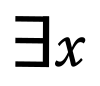
“[A] society which is socialist cannot also be democratic, in the sense of guaranteeing individual freedom.”
“Legalizing drugs would simultaneously reduce the amount of crime and raise the quality of law enforcement.”
“Concentrated power is not rendered harmless by the good intentions of those who create it.”
“The government solution to a problem is usually as bad as the problem and very often makes the problem worse.”

“The basic problem of social organization is how to co-ordinate the economic activities of large numbers of people.”
“The problem in this world is to avoid concentration of power - we must have a dispersion of power.”

Milton Friedman Quotes by Topic
Find exactly what you are looking for by browsing this categorized list of Milton Friedman quotes by topic.
Milton Friedman on Role 4 quotes
“One reason why money is a mystery to so many is the role of myth or fiction or convention.”
Milton Friedman on The Road to Serfdom 3 quotes
“I think the Adam Smith role was played in this cycle by Friedrich Hayek's The Road to Serfdom.”

Milton Friedman on Freedom 3 quotes
“The society that puts equality before freedom will end up with neither. The society that puts freedom before equality will end up with a great measure of both.”
Milton Friedman on Free society 3 quotes
“Because we live in a largely free society, we tend to forget how limited is the span of time and the part of the globe for which there has ever been anything like political freedom: the typical state of mankind is tyranny, servitude, and misery.”

Milton Friedman on Social organization 2 quotes
“The basic problem of social organization is how to co-ordinate the economic activities of large numbers of people.”

Milton Friedman on Great Depression 2 quotes
“The Great Depression, like most other periods of severe unemployment, was produced by government mismanagement rather than by any inherent instability of the private economy.”

Milton Friedman on Negative income tax 2 quotes
“I favor the negative income tax because it would be vastly superior to our present guaranteed annual income. It would cost much less, give more help to the truly poor, avoid interference with personal freedom, preserve some incentives to work, and drastically reduce the present bureaucracy.”
Milton Friedman on The Denationalization of Money 2 quotes
“The element of paradox arises particularly with respect to the views of Hayek [see especially Hayek (1979, vol. 3)]. His latest works have been devoted to explaining how gradual cultural evolution - a widespread invisible hand process - produces institutions and social arrangements that are far superior to those that are deliberately constructed by explicit human design. Yet he recommends in his recent publications on competitive currencies replacing the results of such an invisible hand process by a deliberate construct - the introduction of currency competition. This paradox affects us all. On the one hand, we are observers of the forces shaping society; on the other, we are participants and want ourselves to shape society.”

Milton Friedman on Keynesian economics
“We're all Keynesians now.”

Milton Friedman on Free market
“Underlying most arguments against the free market is a lack of belief in freedom itself.”

Milton Friedman on Socialism
“[A] society which is socialist cannot also be democratic, in the sense of guaranteeing individual freedom.”

Milton Friedman on Organization
“The basic problem of social organization is how to co-ordinate the economic activities of large numbers of people.”
What Milton Friedman Said About Others
Discover personal opinions Milton Friedman shared regarding contemporaries.
Milton Friedman on John Maynard Keynes 6 quotes
“We're all Keynesians now.”

Milton Friedman on Friedrich Hayek 6 quotes
“Friedrich Hayek's influence has been tremendous. His work is incorporated in the body of technical economic theory; has had a major influence on economic history, political philosophy and political science; has affected students of the law, of scientific methodology, and even of psychology.”

Milton Friedman on Leonard Jimmie Savage
“[Leonard Jimmie Savage is] one of the few people I have met whom I would unhesitatingly call a genius.”
Milton Friedman on Ron Paul
“I strongly support Ron Paul, we very badly need to have more Representatives in the House who understand in a principled way the importance of property rights and religious freedom.”
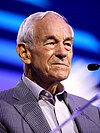
Milton Friedman on John James Cowperthwaite
“I met Cowperthwaite in 1963 on my next visit to Hong Kong. I remember asking him about the paucity of statistics. He answered, "If I let them compute those statistics, they’ll want to use them for planning."”
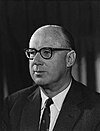
Milton Friedman on James Callaghan
“The most hopeful sign I have seen in Britain was the talk which your Labour prime minister gave to the Labour conference at the end of September [1976]. That was, I think, one of the most remarkable talks – speeches – which any government leader has ever given.”
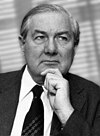
Milton Friedman on John Maynard Keynes and Friedrich Hayek
“One of the things I’m sure you’ve read are the letters in The Collected Writings of John Maynard Keynes between Hayek and Keynes. Hayek comes out very badly in those letters, in my opinion. Keynes comes out like the kindly, generous uncle, and Hayek comes out like a very arrogant, self-centered young man, which he was.”
Milton Friedman on Adam Smith
“The key insight of Adam Smith's Wealth of Nations is misleadingly simple: if an exchange between two parties is voluntary, it will not take place unless both believe they will benefit from it. Most economic fallacies derive from the neglect of this simple insight, from the tendency to assume that there is a fixed pie, that one party can gain only at the expense of another.”

Milton Friedman on Plato
“But it's a false argument, because it assumes somehow that government is a way in which you put unselfish and ungreedy men in charge of selfish and greedy men. But government is an institution whereby the people who have the greatest drive to get power over their fellow men, get in a position of controlling them. Look at the record of government. Where are these philosopher kings that Plato supposedly was trying to develop?”

Milton Friedman on Enoch Powell
“I have met, talked with, and participated in meetings with Enoch Powell on a number of different occasions. He has a better and deeper understanding of economic principles, and a clearer conception of the relation between economic and personal freedom, than any other major political figure I have ever met. And even this is to put it mildly. Broaden the field as widely as you want, and I have met few men who have as sophisticated an intelligence on these matters as Powell.”

Milton Friedman on Lydia Lopokova
“Joan Robinson, a leading Keynesian and radical, produced a specimen for me to analyze. I said something like, "This is obviously the writing of a foreinger, so it's difficult for me to analyze. But I would say it is written by someone who had considerable artistic but not much intellectual talent." It turned out to be the handwriting of Lydia Lopokova, the world-famous Russian ballerina whom Keynes had married. That was surely my greatest triumph of the year at Cambridge!”

Milton Friedman on Henry George
“There's a sense in which all taxes are antagonistic to free enterprise … and yet we need taxes. We have to recognize that we must not hope for a Utopia that is unattainable. I would like to see a great deal less government activity than we have now, but I do not believe that we can have a situation in which we don't need government at all. We do need to provide for certain essential government functions — the national defense function, the police function, preserving law and order, maintaining a judiciary. So the question is, which are the least bad taxes? In my opinion the least bad tax is the property tax on the unimproved value of land, the Henry George argument of many, many years ago.”

Milton Friedman on Oskar R. Lange
“The basic sources of the defects in Lange's theoretical analysis are the emphasis on formal structure, the attempt to generalize without first specifying in detail the facts to be generalized, and the failure to recognize that the ultimate test of the validity of a theory is not conformity to the canons of formal logic but the ability to deduce facts that have not yet been observed, that are capable of being contradicted by observation, and that subsequent observation does not contradict. In consequence, these defects are found in much economic theorizing that is not taxonomic in character. They are, however, especially likely to arise when the taxonomic approach is adopted, as their presence in the writings of so able and careful a theorist as Lange testifies.”
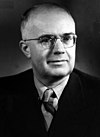
Milton Friedman on Paul Samuelson
“The readers of this space know Paul Samuelson as a witty, informed and often acerbic commentator on current affairs, as a “liberal” supporter of the economic policies of the Kennedy and Johnson years, and as a critic of current Nixon economic policy. Millions of college graduates know Paul Samuelson for his economics textbook, which has been the leading elementary text in the United States for two decades, has sold nearly 3 million copies, and is almost surely the best-selling book on economics ever published in the Western world. Professional economists know Paul Samuelson as a mathematical economist who has ranged widely and deeply, who has helped to reshape and improve the theoretical foundations of our subject. This is the work for which this remarkably versatile man won the Nobel Prize. In the words of the announcement, the prize was awarded “for the scientific work through which he has developed static and dynamic economic theory and actively contributed to raising the level of analysis in economic science.””

Quotes About Milton Friedman
Gain deeper perspective through quotes about Milton Friedman from others.
Kenneth Arrow on Milton Friedman 6 quotes
“The concept of freedom, though it appears in the title of the book, is not analyzed. The commonplace idea that poverty is in many ways a restriction of personal freedom is not even mentioned. Implicitly, there are several not completely compatible strands in the Friedmans' analysis. As the title suggests, the Friedmans' advocate an emotional libertarianism. No action is valid which is not the outcome of voluntary action and agreement, the argument made, for example, by Robert Nozick in Anarchy, State, and Utopia. This position does not rest on economic efficiency at all. Still, the Friedmans' training as economists cannot be shed so easily. Economic progress matters a good deal to them, and economic success is a major argument for laissez-faire. They are also aware that economic theory shows that the market cannot always be successful in achieving efficiency, for there are externalities, such as pollution, with which it does not deal.”

Robert Barro on Milton Friedman
“In fact, the only person to rival Friedman for policy influence in the twentieth century is John Maynard Keynes, who had a strikingly different view of the role of government. Keynes was influential because he advocated more government intervention into what he perceived as poorly functioning private economies caught up in the Great Depression. In contrast to Keynes, Friedman put the main blame for the Depression on government failures, especially of monetary policy. Hence, the Depression did not make Friedman a fan of big government. He also found in the Federal Reserve’s failure to prevent deflation an argument in favor of monetary rules. As the world evolved— with low inflation becoming the major mission of central banks and free markets and secure property rights becoming the main policies to promote economic growth—Friedman surely won the intellectual battle.”
Gary S. Becker on Milton Friedman
“It was actually a gradual process. Certainly Milton Friedman had a great influence on me here. He was by far the greatest living teacher I have ever had. He really opened my eyes to economics as a powerful engine of analysis. Milton Friedman was just number one. He was a great man.”
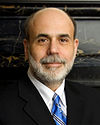
Ben Bernanke on Milton Friedman
“Let me end my talk by abusing slightly my status as an official representative of the Federal Reserve System. I would like to say to Milton and Anna: Regarding the Great Depression. You're right, we did it. We're very sorry. But thanks to you, we won't do it again.”
John Crow on Milton Friedman
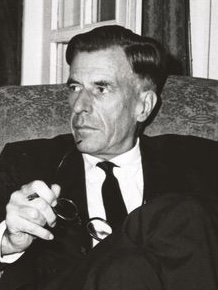
John Kenneth Galbraith on Milton Friedman
“Waiting his time in the 1960s and early 1970s was, however, perhaps the most influential economic figure of the second half of the twentieth century. This was Milton Friedman (1912- ) of the University of Chicago, later of the Hoover Institution on War, Revolution and Peace, a diligent, even indefatigable, advocate of the policy that was to fill the post-Keynesian void, especially in the English-speaking countries. A small, vigorously spoken man, uniquely determined in debate and discussion, entirely free of the doubt that on occasion assails intellectually more vulnerable scholars, Friedman was, as he remains, the leading American exponent of the classical competitive market, which he held still to exist in substantially unimpaired form except as it had suffered from ill-advised government intrusion. Monopoly, oligopoly and imperfect competition played no important part in his thinking. Friedman was a powerful opponent of government regulation and government activity in general. Freedom, he held, was maximized when the individual was left free to deploy his own income as he wished. On the other hand, Friedman, unlike less sophisticated practitioners of his faith, was not wholly indifferent to the freedom that accrues from having income to spend. To this end, he was the author of the most radical welfare proposal in the years following World War II. The income tax, he proposed, should, as always, diminish to zero as the lower income brackets are approached. And then in the lowest brackets it should return income, the amount increasing with increasing impoverishment. This was the negative income tax, a secure minimum income for all. Not many economists of the left could lay claim to such an impressive innovation. Friedman's central contribution to the history of economics was, however, his insistence on the controlling influence of monetary action on the economy and specifically on prices. After a lag of a few months, prices, he held, would always reflect movements in the money supply. So if one controlled the money supply limited its increase to the slowly expanding requirements of trade, the T in Fisher's historic equation prices would remain stable. In a statistically impressive demonstration, Friedman, in company with Anna Jacobson Schwartz, sought to show that this relationship had held, or appeared to have held, long in the past. So, presumably, it must in the future.”
Gerd Gigerenzer on Milton Friedman
“The classical support for as-if models in the social sciences stems from the economist Milton Friedman (1953), who, like the psychologist B. F. Skinner, saw little value in modeling cognitive processes. In contrast, our aim is to understand actual decision processes, not only the outcomes. There is a good reason for this. Without modeling the cognitive blade of Simon's scissors, it is utterly impossible to determine in what environments heuristics succeed, that is, their ecological rationality.”

Alan Greenspan on Milton Friedman

Friedrich Hayek on Milton Friedman 3 quotes
“I don't know what monetarism is. If monetarism just means a good old-fashioned quantity theory, of course it has not failed. If it means the particular version of Milton Friedman, I think it has because he imagines that he can achieve — ascertain — a clear quantity relationship between a measurable quantity of money and the price level. I don't think that is possible. In fact, just about 40 years ago in the opening sentences of my book, Prices and Production, I wrote that it would be a great misfortune if people ever cease to believe in the quantity theory of money. It would be even worse ever to believe it literally. And that's exactly what Milton Friedman does.”
David Cay Johnston on Milton Friedman
“Friedman argued that the sole duty of a company is to its shareholders, not to the interest of workers and surrounding communities. ...Workers may toil their entire lives, communities may tax themselves to create infrastructure a corporation needs, and vendors may invest their entire fortune to supply the corporation—but none of these parties, Friedman said, has significant legal rights or moral claims. The idea was radical. It was not supported by the development of the law, the regulation of business and the advancement of civilization over thousands of years. But in a surprisingly short time, Friedman's ahistorical thinking has come to dominate society.”

Daniel Kahneman on Milton Friedman
“Although Humans are not irrational, they often need help to make more accurate judgments and better decisions, and in some cases policies and institutions can provide that help. These claims may seem innocuous, but they are in fact quite controversial. As interpreted by the important Chicago school of economics, faith in human rationality is closely linked to an ideology in which it is unnecessary and even immoral to protect people against their choices. Rational people should be free, and they should be responsible for taking care of themselves. Milton Friedman, the leading figure in that school, expressed this view in the title of one of his popular books: Free to Choose.”
Nicholas Kaldor on Milton Friedman
“The basic error, which was widespread long before Friedman and the new monetarism, lies in the assumption that regards the money supply as the source of the demand for goods and services.”

Disputed Quotes
Quotes attributed to Milton Friedman that are questionable.
Misattributed Quotes
Quotes mistakenly credited to Milton Friedman
“Corruption is government intrusion into market efficiencies in the form of regulations.”
About Milton Friedman
Milton Friedman (31 July 1912 – 16 November 2006) was an American economist noted for his support for free markets and a reduction in the size of government. In 1976 he was awarded a Nobel Prize in Economics.