Link Copied!
Michel Foucault Quotes (1926-1984)
Philosopher, Writer, Activist











About Michel Foucault
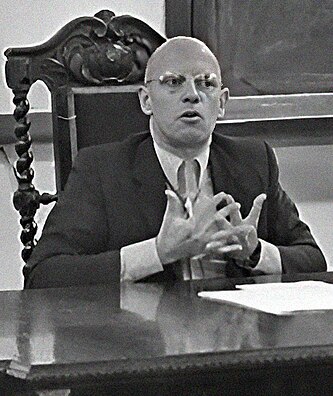
Paul-Michel Doria Foucault (15 October 1926 – 25 June 1984) was a French philosopher, historian of ideas, writer, political activist, literary critic, and Professor of the History of Systems of Thought at the Collège de France from 1970 until his death in 1984. Foucault's theories primarily address the relationship between power and knowledge, and how they are used as a form of social control through societal institutions. He revolutionized the academic study of the history of medicine, sexuality, penality, the liberal state and classical ethics, and contributed to the philosophy of language and aesthetics.
Best Michel Foucault Quotes
Shortest
Earliest
Explore our curated collection of the most famous and impactful Michel Foucault quotes.

“The 'Enlightenment', which discovered the liberties, also invented the disciplines.”
“Is it surprising that prisons resemble factories, schools, barracks, hospitals, which all resemble prisons?”
“In the darkest region of the political field the condemned man represents the symmetrical, inverted figure of the king.”
“The most defenseless tenderness and the bloodiest of powers have a similar need of confession. Western man has become a confessing animal.”

“Absurdity destroys the and of the enumeration by making impossible the in where the things enumerated would be divided up.”
“The disappearance of public executions marks therefore the decline of the spectacle; but it also marks a slackening of the hold on the body.”
“The gesture that divides madness is the constitutive one, not the science that grows up in the calm that returns after the division has been made.”

“In the ceremonies of the public execution, the main character was the people, whose real and immediate presence was required for the performance.”

“Nietzsche was the first to release the desire to know from the sovereignty of knowledge itself: to re-establish the distance and exteriority that Aristotle cancelled.”
“L’important, c’est que le sexe n’ait pas été seulement affaire de sensation et de plaisir, de loi ou d’interdiction, mais aussi de vrai et de faux.”
“It is ugly to be punishable, but there is no glory in punishing. Hence the double system of protection that justice has set up between itself and the punishment it imposes.”

“The public execution is to be understood not only as a judicial, but also as a political ritual. It belongs, even in minor cases, to the ceremonies by which power is manifested.”
“There is no power relation without the correlative constitution of a field of knowledge, nor any knowledge that does not presuppose and constitute at the same time power relations”

“Do not ask who I am and do not ask me to remain the same: leave it to our bureaucrats and our police to see that our papers are in order. At least spare us their morality when we write.”
“This dysfunction of power was related to a central excess: what might be called the monarchical 'super-power', which identified the right to punish with the personal power of the sovereign.”

“We are aware of all the inconveniences of prison, and that it is dangerous when it is not useless. And yet one cannot 'see' how to replace it. It is the detestable solution, which one seems unable to do without.”

“If our intention now is to reveal classical unreason on its own terms, outside of its ties with dreams and error, it must be understood not as a form of reason that is somehow diseased, lost or mad, but quite simply as reason dazzled.”

“Homosexuality appears as one of the forms of sexuality when it was transposed from the practice of sodomy onto a kind of interior androgyny, a hermaphroditism of the soul. The sodomite had been a temporary aberration; the homosexual was now a species.”

Michel Foucault Quotes by Topic
Find exactly what you are looking for by browsing this categorized list of Michel Foucault quotes by topic.
Michel Foucault on Anti-psychiatry 8 quotes
“But when the madman laughs, he already laughs with the laugh of death; the lunatic, anticipating the macabre, has disarmed it.”
Michel Foucault on Power 6 quotes
“Power is everywhere ... because it comes from everywhere.”
Michel Foucault on State 2 quotes
“I don't think that we should consider the "modern state" as an entity which was developed above individuals, ignoring what they are and even their very existence, but, on the contrary, as a very sophisticated structure, in which individuals can be integrated, under one condition: that this individuality would be shaped in a new form and submitted to a set of very specific patterns.”

Michel Foucault on Prison
“Is it surprising that prisons resemble factories, schools, barracks, hospitals, which all resemble prisons?”
Michel Foucault on Thought
“We must free ourselves from the sacralization of the social as the only reality and stop regarding as superfluous something so essential in human life and human relations as thought.”

Michel Foucault on The Constitution of Liberty
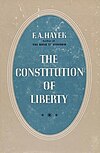
“I think Hayek, in The Constitution of Liberty, best defines what should be understood by the application of the principles of l’État de droit, or of the Rule of law, in the economic order.”
Michel Foucault on Asceticism
“Ascesis is an exercise of self on self; it is a sort of close combat of the individual with himself in which the authority, presence, and gaze of someone else is, if not impossible, at least unnecessary.”

Michel Foucault on Masturbation
“To intervene in this personal, secret activity, which masturbation was, does not represent something neutral for the parents. It is not only a matter of power, or authority, or ethics; it's also a pleasure”

Michel Foucault on Critical theory
Michel Foucault on Man of letters
“The intellectual par excellence used to be the writer: as a universal consciousness, a free subject, he was counterpoised to those intellectuals who were merely competent instances in the service of the state or capital. ... Writing, as the sacralizing mark of the intellectual, has disappeared.”
Michel Foucault on Visibility
“He who is subjected to a field of visibility, and who knows it, assumes responsibility for the constraints of power; he makes them play spontaneously upon himself; he inscribes in himself the power relation in which he simultaneously plays both roles; he becomes the principle of his own subjection.”

What Michel Foucault Said About Others
Discover personal opinions Michel Foucault shared regarding contemporaries.
Michel Foucault on René Descartes 2 quotes
“Descartes, I think, broke with this when he said, "To accede to truth, it suffices that I be any subject that can see what is evident." Evidence is substituted for ascesis at the point where the relationship to the self intersects the relationship to others and the world. The relationship to the self no longer needs to be ascetic to get into relation to the truth. It suffices that the relationship to the self reveals to me the obvious truth of what I see for me to apprehend the truth definitively. Thus, I can be immoral and know the truth. I believe this is an idea that, more or less explicitly, was rejected by all previous culture. Before Descartes, one could not be impure, immoral, and know the truth. With Descartes, direct evidence is enough. After Descartes, we have a nonascetic subject of knowledge. This change makes possible the institutionalization of modern science.”
Michel Foucault on Friedrich Nietzsche
“Nietzsche was the first to release the desire to know from the sovereignty of knowledge itself: to re-establish the distance and exteriority that Aristotle cancelled.”

Michel Foucault on Jean-Paul Sartre
“The Critique de la raison dialectique is a nineteenth-century man's magnificent and pathetic attempt to think the twentieth century. In that sense, Sartre is the last Hegelian and, I would even say, the last Marxist.”

Michel Foucault on John Maynard Keynes
“We can say that around Keynes, around the economic interventionist policy perfected between 1930 and 1960, immediately before and after the war, all these interventions have brought about what we can call a crisis of liberalism, and this crisis manifests itself in a number of re-evaluations, re-appraisals, and new projects in the art of government which were formulated immediately before and after the war in Germany, and which are presently being formulated in America.”

Michel Foucault on Immanuel Kant
“I am obviously schematizing a very long history, which is, however, fundamental. After Descartes, we have a subject of knowledge which poses for Kant the problem of knowing the relationship between the subject of ethics and that of knowledge. There was much debate in the Enlightenment as to whether these two subjects were completely different or not. Kant's solution was to find a universal subject that, to the extent it was universal, could be the subject of knowledge, but which demanded, nonetheless, an ethical attitude-precisely the relationship to the self which Kant proposes in The Critique of Practical Reason.”

Michel Foucault on Friedrich Hayek
“There was someone who is clearly very important who also was not a member of the scientific commission, but whose career and trajectory was ultimately very important for the definition of contemporary neo-liberalism. This is the Austrian von Hayek. He came from Austria and from neo-liberalism; he emigrated at the time of, or just before, the Anschluss. He went to England and also to the United States. He was very clearly one of the inspirations of contemporary American liberalism, or of American anarcho-capitalism if you like, and he returned to Germany in 1962 where he was appointed professor at Freiburg, thus closing the circle.”

Quotes About Michel Foucault
Gain deeper perspective through quotes about Michel Foucault from others.
Gary Becker on Michel Foucault
“Foucault has a very good discussion of what the theory of crime—modern economic theory of crime and punishment—has to say. I didn't have much to disagree with him. I think he was accurate on what it has to say. He goes also into a theory of formation of laws, which I had a lot of sympathy with as well.”
Ronald Beiner on Michel Foucault
“The hope may be entertained that some practitioner of the "sociology of knowledge" will one day have an interesting story to tell about -why the work of Michel Foucault generated such wide enthusiasm among certain intellectual elites for several decades in the latter half of the twentieth century. One or two hypotheses of my own may be hazarded. What is interesting about Foucault's unique rhetoric is that he steadfastly resists pronouncing explicit moral-political judgments, yet of course he is judging all the time. Foucault refuses to come clean on his normative commitments, but rather "insinuates" them throughout his work. This constitutes a kind of radical-left positivism that is somehow potently attractive to what I will call the hyper-liberal ethos of late modernity. The idea here is that one must avoid at all costs spelling out a normative vision, since it would ineluctably become the ground for a repressive regime of "normalization." This is clearly connected to the negativism one associates with postmodern writers.”
Peter Brown on Michel Foucault 2 quotes
“At a crucial moment in my own work, I was fortunate to have had the opportunity to take heart from the humbling serenity and unaffected craftsmanship of Michel Foucault, in what I was not to know were his last years.”
Christopher Bray on Michel Foucault
“And now his own history has been written. What does one learn from these books? Chiefly that Foucault's relativistic outlook can be applied to Foucault himself. He used to say that the 19th century was to Marxism what water is to a fish. Increasingly his own work makes sense only when seen as a product of the Sixties. Not that Foucault would have denied this. He never suggested that he wasn't an interested being too. But one should ask of a body of philosophical work that it has a longer shelf life than a couple of decades. Nine years after his death his achievements, such as they are, are so much historical jetsam, their final worth little more than sweet Foucault.”
Andrew Breitbart on Michel Foucault
“I wanted to read Mark Twain and Emerson and Thoreau, and I remember moments in class where I thought my head was going to explode, going, What the fuck are these people talking about? I don't understand what this deconstructive semiotic bullshit is. Who the fuck is Michel Foucault?”
Judith Butler on Michel Foucault
“I continue to be very strongly influenced by Foucault's History of Sexuality, in which he warns us against imagining a complete liberation from power. There can never be a total liberation from power, especially in relation to the politics of sexuality.”

Noam Chomsky on Michel Foucault
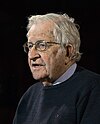
“Foucault is an interesting case because I'm sure he honestly wants to undermine power but I think with his writings he reinforced it.”
Deborah Cook on Michel Foucault
“Following Kant, Foucault criticized the practices that impede maturity, issuing a powerful warning against blind submission to the will of authorities. With Kant, he also insisted that the subject has a “right to question truth concerning its power effects and to question power about its discourses of truth”. Indeed, Foucault notes that his view of critique resembles Kant's idea of enlightenment: both involve “the art of voluntary inservitude, of reflective indocility”. For Foucault, moreover, philosophy as a whole exemplifies this art. The history of philosophy is a history of parrěsia, of the courageous practice of speaking truth to power. By the end of his regrettably short life, then, Foucault recognized that he belonged to the tradition of critical philosophy that runs from Kant and Hegel “to the Frankfurt School, passing through Nietzsche, Max Weber and so on”. As a critical thinker, he promoted maturity by encouraging his readers to engage in sustained – critical and self-critical – reflection on the historical conditions that have made them what they are. For by understanding how they are entangled in these conditions, readers might be able to rise above them and resist them. And, for Foucault, whatever freedom we can meaningfully be said to possess consists in resistance to prevailing forms of power.”
Angela Y. Davis on Michel Foucault
“The history of the very institution of the prison is a history of reform. Foucault points this out.”
J. Bradford DeLong on Michel Foucault
“I openly avow myself the pupil of that mighty thinker Michel Foucault, and even here and there coquette with the modes of expression peculiar to him. But at least for my purposes his useful ideas suffer a certain mystification in his hands: he presents them upside-down, as it were. They must be turned right side up again, if you would discover the rational kernel within the mystical shell.”

Daniel Drezner on Michel Foucault
“From a conservative perspective, the great thing about Foucault's writing is that it is more plastic than Marx, and far less economically subversive. Academics rooted in Foucauldian thought are far more compatible with neoliberalism than the old Marxist academics.”
François Ewald on Michel Foucault
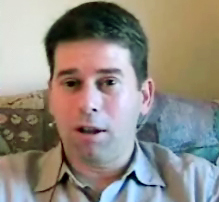
“I have been thinking a lot about this question. Foucault always subscribed to a number of social projects. And in his texts he was talking to readers in an ongoing transformative process. Over the past year I edited his 1971–1972 lectures at the Collège de France, together with Bernard Harcourt, and it became clear to me that his thinking revolved around the idea of change, of transformation, of individuals and collectives. In the stale climate of the 1960s we thought the transformation could occur only through literature and art. And in the early 1970s, when things were opening up, Foucault thought that social change was possible merely by changing a small number of very important relations of power — for example, the prison system. But already in 1976 he realized that this project of social change was a failure, and that people are much more easily mobilized by religious motives or nationalistic ones. The great movements weren't social. He didn't give up on his project of social change. But it had gotten more complicated.”
About Michel Foucault
Paul-Michel Doria Foucault (15 October 1926 – 25 June 1984) was a French philosopher, historian of ideas, writer, political activist, literary critic, and Professor of the History of Systems of Thought at the Collège de France from 1970 until his death in 1984. Foucault's theories primarily address the relationship between power and knowledge, and how they are used as a form of social control through societal institutions. He revolutionized the academic study of the history of medicine, sexuality, penality, the liberal state and classical ethics, and contributed to the philosophy of language and aesthetics.