Link Copied!
Meister Eckhart Quotes (1260-1328)
Philosopher, Theologian


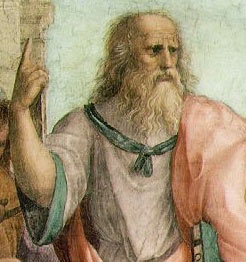

About Meister Eckhart
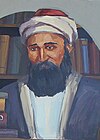
Meister Eckhart (c. 1260 – 1328) was a German Monist philosopher, mystic, and theologian of the Catholic Church.
Best Meister Eckhart Quotes
Shortest
Earliest
Explore our curated collection of the most famous and impactful Meister Eckhart quotes.
“Gott kann uns ebensowenig entbehren wie wir ihn.”
“We shall find God in everything alike, and find God always alike in everything.”
“Now rejoice, all ye powers of my soul, that you are so united with God that no one may separate you from Him. I cannot fully praise nor love Him therefore must I die, and cast myself into the divine void, till I rise from non-existence to existence.”

“The moral task of man is a process of spiritualization. All creatures are go-betweens, and we are placed in time that by diligence in spiritual business we may grow liker and nearer to God. The aim of man is beyond the temporal — in the serene region of the everlasting Present.”

“The everlasting and paternal wisdom saith, "Whoso heareth Me is not ashamed." If he is ashamed of anything he is ashamed of being ashamed. Whoso worketh in Me sineth not. Whoso confesseth Me and feareth Me, shall have eternal life. Whoso will hear the wisdom of the Father must dwell deep, and abide at home, and be at unity with himself.”

“A man may go into the field and say his prayer and be aware of God, or, he may be in Church and be aware of God; but, if he is more aware of Him because he is in a quiet place, that is his own deficiency and not due to God, Who is alike present in all things and places, and is willing to give Himself everywhere so far as lies in Him. He knows God rightly who knows Him everywhere.”

“This passage from nothingness to real being, this quitting of oneself is a birth accompanied by pain, for by it natural love is excluded. All grief except grief for sin comes from love of the world. In God is neither sorrow, nor grief, nor trouble. Wouldst thou be free from all grief and trouble, abide and walk in God, and to God alone. As long as love of the creature is in us, pain cannot cease.”

“When God has sent his angel to me, then I know of a surety. ... When God sends his angel to the soul it becomes the one who knows for sure. Not for nothing did God give the keys into St. Peter's keeping, for Peter stands for knowledge, and knowledge is the key that unlocks the door, presses forward and breaks in, to discover God as he is.”
“The inner work is first of all the work of God's grace in the depth of the soul which subsequently distributes itself among the faculties of the soul, in that of Reason appearing as Belief, in that of Will as Love, and in that of Desire as Hope. When the Divine Light penetrates the soul, it is united with God as light with light. This is the light of faith. Faith bears the soul to heights unreachable by her natural senses and faculties.”

“Now the Father draws us from the evil of sin to the goodness of His grace with the might of His measureless power, and He needs all the resources of His strength in order to convert sinners, more than when He was about to make heaven and earth, which He made with His own power without help from any creature. But when He is about to convert a sinner, He always needs the sinner's help. "He converts thee not without thy help," as St. Augustine says.”

“As the peculiar faculty of the eye is to see form and colour, and of the ear to hear sweet tones and voices, so is aspiration peculiar to the soul. To relax from ceaseless aspiration is sin. This energy of aspiration directed to and grasping God, as far as is possible for the creature, is called Hope, which is also a divine virtue. Through this faculty the soul acquires such great confidence that she deems nothing in the Divine Nature beyond her reach.”
“The most powerful prayer, one wellnigh omnipotent, and the worthiest work of all is the outcome of a quiet mind. The quieter it is the more powerful, the worthier, the deeper, the more telling and more perfect the prayer is. To the quiet mind all things are possible. What is a quiet mind? A quiet mind is one which nothing weighs on, nothing worries, which, free from ties and from all self-seeking, is wholly merged into the will of God and dead to its own.”

“A question arises regarding the angels who dwell with us, serve us and protect us, whether their joys are equal to those of the angels in heaven, or whether they are diminished by the fact that they protect and serve us. No, they are certainly not; for the work of the angels is the will of God, and the will of God is the work of the angels; their service to us does not hinder their joy nor their working. If God told an angel to go to a tree and pluck caterpillars off it, the angel would be quite ready to do so, and it would be his happiness, if it were the will of God.”

“Grace is from God, and works in the depth of the soul whose powers it employs. It is a light which issues forth to do service under the guidance of the Spirit. The Divine Light permeates the soul, and lifts it above the turmoil of temporal things to rest in God. The soul cannot progress except with the light which God has given it as a nuptial gift; love works the likeness of God into the soul. The peace, freedom and blessedness of all souls consist in their abiding in God's will. Towards this union with God for which it is created the soul strives perpetually.”
Meister Eckhart Quotes by Topic
Find exactly what you are looking for by browsing this categorized list of Meister Eckhart quotes by topic.
Meister Eckhart on God 3 quotes
“We are all meant to be mothers of God, for God is always needing to be born.”
Meister Eckhart on Love 2 quotes
View all 2 quotes on Love →Meister Eckhart on Knowledge 2 quotes
“The eye with which I see God is the same with which God sees me. My eye and God's eye is one eye, and one sight, and one knowledge, and one love.”
Meister Eckhart on Godhead 2 quotes
“All that the Eternal Father teaches and reveals is His being, His nature, and His Godhead, which He manifests to us in His Son, and teaches us that we are also His Son.”

Meister Eckhart on Angels 2 quotes
“When God has sent his angel to me, then I know of a surety. … When God sends his angel to the soul it becomes the one who knows for sure. Not for nothing did God give the keys into St. Peter's keeping, for Peter stands for knowledge, and knowledge is the key that unlocks the door, presses forward and breaks in, to discover God as he is.”
Meister Eckhart on Introspection
Meister Eckhart on Theosophical mysticism
Meister Eckhart on Perennial philosophy
Meister Eckhart on Laxity
“As the peculiar faculty of the eye is to see form and color, and of the ear to hear sweet tones and voices, so is aspiration peculiar to the soul. To relax from ceaseless aspiration is sin.”
Meister Eckhart on Relaxation
“As the peculiar faculty of the eye is to see form and color, and of the ear to hear sweet tones and voices, so is aspiration peculiar to the soul. To relax from ceaseless aspiration is sin.”

Meister Eckhart on Door
“When God sends his angel to the soul it becomes the one who knows for sure. Not for nothing did God give the keys into St. Peter's keeping, for Peter stands for knowledge, and knowledge is the key that unlocks the door, presses forward and breaks in, to discover God as he is.”

Meister Eckhart on Key
“When God has sent his angel to me, then I know of a surety. … When God sends his angel to the soul it becomes the one who knows for sure. Not for nothing did God give the keys into St. Peter's keeping, for Peter stands for knowledge, and knowledge is the key that unlocks the door, presses forward and breaks in, to discover God as he is.”

Meister Eckhart on Religiousness
“A man may go into the field and say his prayer and be aware of God, or, he may be in Church and be aware of God; but, if he is more aware of Him because he is in a quiet place, that is his own deficiency and not due to God, Who is alike present in all things and places, and is willing to give Himself everywhere so far as lies in Him. He knows God rightly who knows Him everywhere.”

Meister Eckhart on Monism
“The man who abides in the will of God wills nothing else than what God is, and what He wills. If he were ill he would not wish to be well. If he really abides in God's will, all pain is to him a joy, all complication, simple: yea, even the pains of hell would be a joy to him. He is free and gone out from himself, and from all that he receives, he must be free. If my eye is to discern colour, it must itself be free from all colour. The eye with which I see God is the same with which God sees me. My eye and God's eye is one eye, and one sight, and one knowledge, and one love.”

Meister Eckhart on Religious views on love
“All true morality, inward and outward, is comprehended in love, for love is the foundation of all the commandments. All outward morality must be built upon this basis, not on self-interest. As long as man loves something else than God, or outside God, he is not free, because he has not love. Therefore there is no inner freedom which does not manifest itself in works of love. True freedom is the government of nature in and outside man through God; freedom is essential existence unaffected by creatures. But love often begins with fear; fear is the approach to love: fear is like the awl which draws the shoemaker's thread through the leather.”
Quotes About Meister Eckhart
Gain deeper perspective through quotes about Meister Eckhart from others.
Claud Field on Meister Eckhart
“Meister Eckhart, who has been called the “Father of German thought”, was a Dominican monk, and one of the most profound thinkers of the Middle Ages. ... The importance of Eckhart in the history of scholastic philosophy is considerable. At that period all the efforts of religious philosophy were directed to widen theology, and to effect a reconciliation between reason and faith. The fundamental idea of Eckhart's philosophy is that of the Absolute or Abstract Unity conceived as the sole real existence. His God is the θεο αγνωστο [Theo Agnosto (Unknown God)] of the neoplatonists: He is absolutely devoid of attributes which would be a limitation of His Infinity. God is incomprehensible; in fact, with regard to our limited intelligence, God is the origin and final end of every being.”
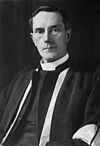
William Ralph Inge on Meister Eckhart 3 quotes
“The attempt to prove Eckhart a mere scholastic is a failure; the audacities of his German discourses cannot be explained as an accommodation to the tastes of a peculiar audience. For good or evil Eckhart is an original and independent thinker, whose theology is confined by no trammels of authority.”
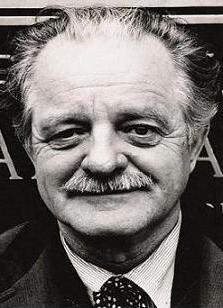
Kenneth Rexroth on Meister Eckhart
“The influence of Meister Eckhart is stronger today than it has been in hundreds of years. Eckhart met the problems of contingency and omnipotence, creator-and-creature-from-nothing by making God the only reality and the presence or imprint of God upon nothing, the source of reality in the creature. Reality in other words was a hierarchically structured participation of the creature in the creator. From the point of view of the creature this process could be reversed. If creatureliness is real, God becomes the Divine Nothing. God is not, as in scholasticism, the final subject of all predicates. He is being as unpredicable. The existence of the creature, in so far as it exists, is the existence of God, and the creature's experience of God is therefore in the final analysis equally unpredicable. Neither can even be described; both can only be indicated. We can only point at reality, our own or God's. The soul comes to the realization of God by knowledge, not as in the older Christian mysticism by love. Love is the garment of knowledge. The soul first trains itself by systematic unknowing until at last it confronts the only reality, the only knowledge, God manifest in itself. The soul can say nothing about this experience in the sense of defining it. It can only reveal it to others.”
Pope Saint John Paul II on Meister Eckhart
“I think of the marvellous history of Rheno-Flemish mysticism of the thirteenth and especially of the fourteenth centuries... Did not Eckhart teach his disciples: “All that God asks you most pressingly is to go out of yourself … and let God be God in you” [cf Walshe Sermon 13b]? One could think that in separating himself from creatures the mystic leaves his brother humanity behind. The same Eckhart affirms that on the contrary the mystic is marvelously present to them on the only level where he can truly reach them, that is, in God.”
Disputed Quotes
Quotes attributed to Meister Eckhart that are questionable.
“However a quote very similar to this one can actually be found in his works. In Sermon XXVII (Walshe translation/in Quint Sermon XXXIV) we can read:”
“And suddenly you know: It's time to start something new and trust the magic of beginnings.”
About Meister Eckhart
Meister Eckhart (c. 1260 – 1328) was a German Monist philosopher, mystic, and theologian of the Catholic Church.