Max Boisot on New institutional economics
← Back to Max Boisot Profile
“Following the lead given by new institutional economics, we shall take the transaction as our unit of analysis. For our purposes, a transaction can be thought of as any act of social exchange that depends on information flows for its accomplishment. Transactions can be as simple and brief as the purchase of a packet of cigarettes, or as complex as and extended as those which bind a Zen master to his disciples. Like institutional economists, we are interested in the relationship that can be established between different transactional characteristics and the phenomenon of institutionalization. Our use of the term transaction, however, will extend beyond that of institutional economics where the focus has tended to be primarily on transaction costs and efficiency considerations. These, to be sure, are relevant. But, as we shall see, they are not the whole story.”
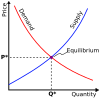
“In spite of such limitations, the New Institutional Economics research programme, given its willingness to acknowledge the central role played by information in the economic process, constitutes a marked advance over what is on offer from the neoclassical orthodoxy. There, information retains the status of the luminiferous ether of classical physics before Einstein: a ubiquitous medium that admitted of a mechanical account of action at a distance and kept the world conveniently Newtonian. Institutional economics, however, needs a more explicit and dynamic theory of information flows if it is to make more than a dent in the neoclassical defences. Having established that there exists credible institutional alternatives to markets, it needs to show how information production and exchange underpins them all, shaping their internal evolution as well as how they collaborate and compete. In effect, what is needed is a theory of social learning that extends beyond the individual or the organization to encompass more complex institutional settings. Such as theory, I believe, is foreshadowed in Douglas North’s historical studies of institutions. It now needs further development.”