Link Copied!
Mary Renault Quotes (1905-1983)
Writer

About Mary Renault
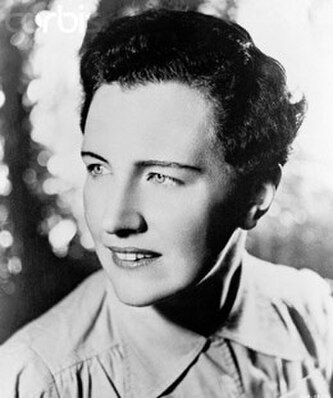
Mary Renault (born Mary Challans, 4 September 1905 – 13 December 1983) was an English writer most famous for her historical novels set in ancient Greece.
Best Mary Renault Quotes
Shortest
Earliest
Explore our curated collection of the most famous and impactful Mary Renault quotes.
“To hate excellence is to hate the gods.”


“Miss Searle had always considered boredom an intellectual defeat.”

“It is bitter to lose a friend to evil, before one loses him to death.”
“But it is not for the perfect vase or the polished gem to choose their owners.”




“Don't you understand even seedtime and reaping? How can people trust the harvest, unless they see it sown?”
“He kept telling me I was queer, and I didn't like it. The word, I mean. Shutting you away, somehow; roping you off with a lot of people you don't feel much in common with, half of whom hate the other half anyway, and just keep together so that they can lean up against each other for support.”
“So now, for mercy and honor shown to my people, my lord is barbarous; a tyrant, because he punished his would-be murderers, the right of their meanest citizen; a mere vaunting soldier, though wherever he went he brought Greece with him, the Greece he honored, of which these liars are the unworthy heirs.”

“He sees himself in his lover as if in a mirror, not knowing whom he sees, And when they are together, he too is released from pain, and when apart, he longs as he himself is longed for; for reflected in his heart is love's image, which is love's answer. But he calls it, and believes it, not love but friendship…”
“Do not believe that others will die, not you.... I have wrestled with Thanatos knee to knee and I know how death is vanquished. Man's immortality is not to live forever; for that wish is born of fear. Each moment free from fear makes a man immortal.”

“He had come back a man, and faithless like a man. He knew that he had longed for her; that true friends share everything, except the past before they met. If only she would weep, even that, and let him comfort her; but she would not humble herself before a man. if only he would run to her side and cling to her; but his manhood was hard-won, no mortal should make him a child again.”

“Each man in his life honors, and imitates as well as he can, that god to whose choir he belonged, while he is uncorrupted in his first incarnation here; and in the fashion he has thus learned, he bears himself to his beloved as well as to the rest. So, then, each chooses from among the beautiful a love conforming to his kind, and then, as if his chosen were his god, he sets him up and robes him for worship.”

“It is better to believe in men too rashly, and regret, than believe too meanly. Men could be more than they are, if they would try for it. He has shown them that. How many have tried, because of him? Not only those I have seen; there will be men to come. Those who look in mankind only for their own littleness, and make them believe in that, kill more than he ever will in all his wars.”
“You may keep your ten thousand talents; I am not in want of money, I have taken enough. Why only the half of your kingdom to the Euphrates? You offer me the part in exchange for the whole. Your daughter whom you speak of, I shall marry if I choose, whether given by you or not. Your family is safe; no ransom is required of you; come here yourself and make your suit to me, you shall have them free. If you desire our friendship, you have only to ask.”

“Christianity and Islam have changed irrevocably the moral reflexes of the world. The philosopher Herakleitos said with profound truth that you cannot step twice into the same river. The perpetual stream of human nature is formed into ever-changing shallows, eddies, falls and pools by the land over which it passes. Perhaps the only real value of history lies in considering this endlessly varied play between the essence and the accidents.”

“You mustn't get so upset about what you feel, Spud. No one's a hundred per cent consistent all the time. We might like to be. We can plan our lives along certain lines. But you know, there's no future in screwing down all the pressure valves and smashing in the gauge. You can do it for a bit and then something goes. Sometimes it gets so that the only thing is just to say, 'That's what I'd like to feel twenty-four hours a day; but, the hell with it, this is how I feel now.'
“After some years of muddled thinking on the subject, he suddenly saw quite clearly what it was he had been running away from; why he had refused Sandy's first invitation, an what the trouble had been with Charles. It was also the trouble, he perceived, with nine-tenths or the people here tonight. They were specialists. They had not merely accepted their limitations, as Laurie was ready to accept his, loyal to his humanity if not to his sex, and bringing an extra humility to the hard study of human experience. They had identified themselves with their limitations; they were making a career of them. They had turned from all other reality, and curled up in them snugly, as in a womb.”
“Men who hover over their opponents have no cause to evolve a science of wrestling; and Theseus is conventionally shown in combat with hulking of monstrous enemies, living by his wits. The tradition that he emulated the feats of Herakles may well embalm some ancient sneer at the over-compensation of a small assertive man. Napoleon comes to mind.
If one examines the legend in this light, a well-defined personality emerges. It is that of a light-weight; brave and aggressive, physically tough and quick; highly sexed and rather promiscuous; touchily proud, but with a feeling for the underdog; resembling Alexander in his precocious competence, gift of leadership, and romantic sense of destiny.”
If one examines the legend in this light, a well-defined personality emerges. It is that of a light-weight; brave and aggressive, physically tough and quick; highly sexed and rather promiscuous; touchily proud, but with a feeling for the underdog; resembling Alexander in his precocious competence, gift of leadership, and romantic sense of destiny.”
Mary Renault Quotes by Topic
Find exactly what you are looking for by browsing this categorized list of Mary Renault quotes by topic.
Mary Renault on Regret
“It is better to believe in men too rashly, and regret, than believe too meanly.”

Mary Renault on Love
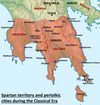
Mary Renault on Sparta
“Men are not born equal in themselves, so I think it beneath a man to postulate that they are. If I thought myself as good as Sokrates I should be a fool; and if, not really believing it, I asked you to make me happy by assuring me of it, you would rightly despise me. So why should I insult my fellow-citizens by treating them as fools and cowards? A man who thinks himself as good as everyone else will be at no pains to grow better. On the other hand, I might think myself as good as Sokrates, and even persuade other fools to agree with me; but under a democracy, Sokrates is there in the Agora to prove me wrong. I want a city where I can find my equals and respect my betters, whoever they are; and where no one can tell me to swallow a lie because it is expedient, or some other man's will.”
What Mary Renault Said About Others
Discover personal opinions Mary Renault shared regarding contemporaries.
Mary Renault on Alexander the Great 2 quotes
“I have wrestled with Thanatos knee to knee and I know how death is vanquished. Man's immortality is not to live forever; for that wish is born of fear. Each moment free from fear makes a man immortal.”

Mary Renault on William Golding
“The way you have sounded the universal elements in this horror strikes me as masterly.”
Mary Renault on Theseus
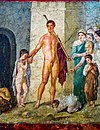
“Men who hover over their opponents have no cause to evolve a science of wrestling; and Theseus is conventionally shown in combat with hulking of monstrous enemies, living by his wits. The tradition that he emulated the feats of Herakles may well embalm some ancient sneer at the over-compensation of a small assertive man. Napoleon comes to mind. If one examines the legend in this light, a well-defined personality emerges. It is that of a light-weight; brave and aggressive, physically tough and quick; highly sexed and rather promiscuous; touchily proud, but with a feeling for the underdog; resembling Alexander in his precocious competence, gift of leadership, and romantic sense of destiny.”
About Mary Renault
Mary Renault (born Mary Challans, 4 September 1905 – 13 December 1983) was an English writer most famous for her historical novels set in ancient Greece.