The written word has taught me to listen to the human voice, much as the great unchanging statues have taught me to appreciate bodily motions.
• p. 21
• p. 21
“
La lettre écrite m'a enseigné à écouter la voix humaine, tout comme les grandes attitudes immobiles des statues m'ont appris à apprécier les gestes.
— Marguerite Yourcenar
What It Means
This is a placeholder explanation generated by the low-overhead model. It interprets "La lettre écrite m'a enseigné à écouter la voix humaine, tout comme les grandes attitudes immobiles des statues m'ont appris à apprécier les gestes." in the context of "The written word has taught me to listen to the human voice, much as the great unchanging statues have taught me to appreciate bodily motions.
• p. 21" to mean that wisdom is timeless.
Source: Wikiquote: "Marguerite Yourcenar" (Quotes, Memoirs of Hadrian (1951): Mémoires d'Hadrien, English translation by Grace Frick in collaboration with Marguerite Yourcenar (1984), The page numbers below are from the English translation.)
The 'What it means' explanation text was generated by Google Gemini Flash (accessed January 18, 2026). https://gemini.google.com/app
Tags
About Marguerite Yourcenar
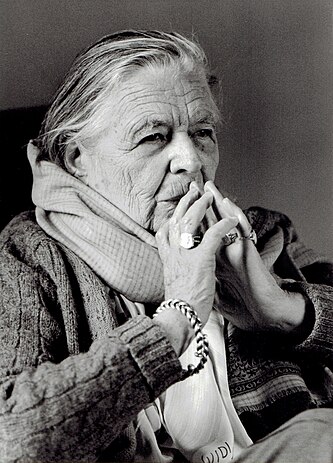
Marguerite Cleenewerck de Crayencour (June 8 1903 – December 17 1987) was a Belgian-born French novelist who wrote under the pseudonym Marguerite Yourcenar. She was the first woman to be elected to the Académie française.
About Marguerite Yourcenar
Marguerite Cleenewerck de Crayencour (June 8 1903 – December 17 1987) was a Belgian-born French novelist who wrote under the pseudonym Marguerite Yourcenar. She was the first woman to be elected to the Académie française.
View all quotes →