• Paul Gilk questioned this anecdote in The Kingdom of God Is Green (2012): "...from the pulpit, a gentle and well-meaning mainstream Protestant pastor could tell a little Margaret Mead story about a healed femur, link that healed femur with the origins of civilization, and then be a little miffed when challenged (I think gently—perhaps not) on his use of concepts."
• In the episode "Mortification and Civilization" of his podcast The Anthropocene Reviewed, author John Green questioned this quote, saying "...versions of this story show up in many different places — in sermons, and in self-help books and newspaper stories. I didn't yet know whether Margaret Mead had really said this, but it was clear to me that a lot of people wanted her to have said it."
• Versions of the anecdote have been attributed to Margaret Mead in:
• Paul Brand and Philip Yancey's Fearfully and Wonderfully Made (1980)
• Paul Brand and Philip Yancey's Pain: The Gift Nobody Wants (1993)
• John C. Bowling's A Way with Words: Finding Wonder and Meaning in the Language of Life (1998)
• Charles Francis' Wisdom Well Said (2009)
• Leslie Parrott's Trading Places: The Best Move You'll Ever Make in Your Marriage (2009)
• Ira Byock's The Best Care Possible: A Physician's Quest to Transform Care Through the End of Life (2012)
• Ronald Schleifer's Pain and Suffering (2014)
• Natesan Ramalingam Iyer's A Path to Discover (2020)
I [Paul Brand] was soon to be reminded of a lecture given by anthropologist Margaret Mead, who spent much of her life studying primitive cultures. She asked the question, "What is the earliest sign of civilization?" A clay pot? Iron? Tools? Agriculture? No, she claimed. To her, evidence of the earliest true civilization was a healed femur, a leg bone, which she held up before us in the lecture hall. She explained that such healings were never found in the remains of competitive, savage societies. There, clues of violence abounded: temples pierced by arrows, skulls crushed by clubs. But the healed femur showed that someone must have cared for the injured person—hunted on his behalf, brought him food, and served him at personal sacrifice. Savage societies could not afford such pity.
What It Means
This is a placeholder explanation generated by the low-overhead model. It interprets "I [Paul Brand] was soon to be reminded of a lecture given by anthropologist Margaret Mead, who spent much of her life studying primitive cultures. She asked the question, "What is the earliest sign of civilization?" A clay pot? Iron? Tools? Agriculture? No, she claimed. To her, evidence of the earliest true civilization was a healed femur, a leg bone, which she held up before us in the lecture hall. She explained that such healings were never found in the remains of competitive, savage societies. There, clues of violence abounded: temples pierced by arrows, skulls crushed by clubs. But the healed femur showed that someone must have cared for the injured person—hunted on his behalf, brought him food, and served him at personal sacrifice. Savage societies could not afford such pity." in the context of "This anecdote, published after Mead's death, is contradicted by Mead herself in an interview she gave in Talks with Social Scientists, published in 1968. Mead was asked "When does a culture become a civilization?" She replied, "Well, this is a matter of definition. Looking at the past we have called societies civilizations when they have had great cities, elaborate division of labor, some form of keeping records. These are the things that have made civilization. Some form of script, not necessarily our kind of script, but some form of script or record keeping; ability to build great, densely populated cities and to divide up labor so that they could be maintained. Civilization, in other words, is not simply a word of approval, as one would say 'he is uncivilized,' but it is technical description of a particular kind of social system that makes a particular kind of culture possible."
• Paul Gilk questioned this anecdote in The Kingdom of God Is Green (2012): "...from the pulpit, a gentle and well-meaning mainstream Protestant pastor could tell a little Margaret Mead story about a healed femur, link that healed femur with the origins of civilization, and then be a little miffed when challenged (I think gently—perhaps not) on his use of concepts."
• In the episode "Mortification and Civilization" of his podcast The Anthropocene Reviewed, author John Green questioned this quote, saying "...versions of this story show up in many different places — in sermons, and in self-help books and newspaper stories. I didn't yet know whether Margaret Mead had really said this, but it was clear to me that a lot of people wanted her to have said it."
• Versions of the anecdote have been attributed to Margaret Mead in:
• Paul Brand and Philip Yancey's Fearfully and Wonderfully Made (1980)
• Paul Brand and Philip Yancey's Pain: The Gift Nobody Wants (1993)
• John C. Bowling's A Way with Words: Finding Wonder and Meaning in the Language of Life (1998)
• Charles Francis' Wisdom Well Said (2009)
• Leslie Parrott's Trading Places: The Best Move You'll Ever Make in Your Marriage (2009)
• Ira Byock's The Best Care Possible: A Physician's Quest to Transform Care Through the End of Life (2012)
• Ronald Schleifer's Pain and Suffering (2014)
• Natesan Ramalingam Iyer's A Path to Discover (2020)" to mean that wisdom is timeless.
Tags
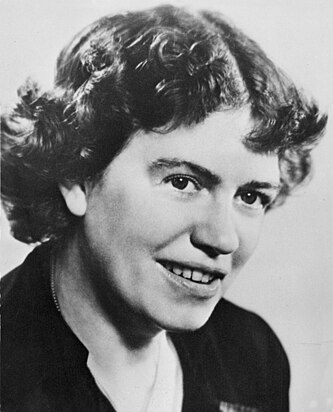
About Margaret Mead