Link Copied!
Margaret Fuller Quotes (1810-1850)
Author, Activist
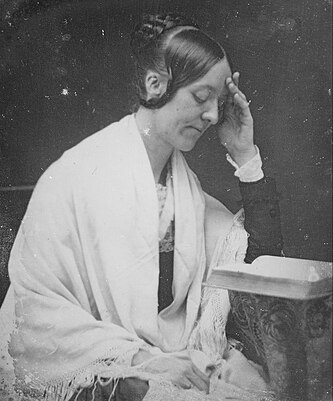

About Margaret Fuller
Sarah Margaret Fuller Ossoli (23 May 1810 – 19 June 1850) was an American author, journalist, critic and women's rights activist. She, her husband, and their child all died at the end of a five week voyage from Europe in a shipwreck just off of Fire Island.
Best Margaret Fuller Quotes
Shortest
Earliest
Explore our curated collection of the most famous and impactful Margaret Fuller quotes.


“The use of criticism, in periodical writing, is to sift, not to stamp a work.”


“Men disappoint me so, I disappoint myself so, yet courage, patience, shuffle the cards ...”


“To me, our destinies seem flower and fruit
Born of an ever-generating root...”
Born of an ever-generating root...”
“Your prudence, my wise friend, allows too little room for the mysterious whisperings of life.”

“I now know all the people worth knowing in America, and I find no intellect comparable to my own.”

“Art can only be truly art by presenting an adequate outward symbol of some fact in the interior life.”

“It is astonishing what force, purity, and wisdom it requires for a human being to keep clear of falsehoods.”
“The especial genius of Woman I believe to be electrical in movement, intuitive in function, spiritual in tendency.”
“There are to whom each symbol is a mask;
The life of love is a mysterious task;
They want no answer, for they would not ask.”
The life of love is a mysterious task;
They want no answer, for they would not ask.”
“Essays, entitled critical, are epistles addressed to the public, through which the mind of the recluse relieves itself of its impressions.”
“Genius will live and thrive without training, but it does not the less reward the watering-pot and pruning-knife.”
Margaret Fuller Quotes by Topic
Find exactly what you are looking for by browsing this categorized list of Margaret Fuller quotes by topic.
Margaret Fuller on Inspiration 3 quotes
“It is with just that hope that we welcome everything that tends to strengthen the fibre and develop the nature on more sides. When the intellect and affections are in harmony; when intellectual consciousness is calm and deep; inspiration will not be confounded with fancy.”
Margaret Fuller on Nature
“Nature provides exceptions to every rule.”

Margaret Fuller on Body
Margaret Fuller on Egotism
“I now know all the people worth knowing in America, and I find no intellect comparable to my own.”

Margaret Fuller on Symmetry
“Her dreams, of course, partook of this symmetry. The same dream returns to her periodically, annually, and punctual to its night.”

Margaret Fuller on Armour
“To me it seems that it is madder never to abandon oneself, than often to be infatuated; better to be wounded, a captive, and a slave, than always to walk in armor.'''”
Margaret Fuller on Mercury (planet)
“My Seal-Ring Mercury has cast aside The signs of intellectual pride, Freely offers thee the soul: Art thou noble to receive? Canst thou give or take the whole, Nobly promise and believe? Then thou wholly human art, A spotless, radiant, ruby heart, And the golden chain of love Has bound thee to the realm above”

Margaret Fuller on Mercury (mythology)
“My Seal-Ring Mercury has cast aside The signs of intellectual pride, Freely offers thee the soul: Art thou noble to receive? Canst thou give or take the whole, Nobly promise and believe? Then thou wholly human art, A spotless, radiant, ruby heart, And the golden chain of love Has bound thee to the realm above”
Margaret Fuller on American literature
“It does not follow because many books are written by persons born in America that there exists an American literature. Books which imitate or represent the thoughts and life of Europe do not constitute an American literature. Before such can exist, an original idea must animate this nation and fresh currents of life must call into life fresh thoughts along its shores.”

Margaret Fuller on Son of man
“I only know one prayer — "Give me the truth, Give me that colored whiteness, ancient youth, Complex and simple, seen in joy and ruth.Let me not by vain wishes bar my claim, Nor soothe my hunger by an empty name, Nor crucify the Son of man by hasty blame.But in the earth and fire, water and air, Live earnestly by turns without despair, Nor seek a home till home be every where!"”
Margaret Fuller on Radicalism
“Male and female represent the two sides of the great radical dualism. But, in fact, they are perpetually passing into one another. Fluid hardens to solid, solid rushes to fluid. There is no wholly masculine man, no purely feminine woman. History jeers at the attempts of physiologists to bind great original laws by the forms which flow from them. They make a rule; they say from observation what can and cannot be. In vain! Nature provides exceptions to every rule. She sends women to battle, and sets Hercules spinning; she enables women to bear immense burdens, cold, and frost; she enables the man, who feels maternal love, to nourish his infant like a mother.”
Margaret Fuller on Dualism
“Male and female represent the two sides of the great radical dualism. But, in fact, they are perpetually passing into one another. Fluid hardens to solid, solid rushes to fluid. There is no wholly masculine man, no purely feminine woman. History jeers at the attempts of physiologists to bind great original laws by the forms which flow from them. They make a rule; they say from observation what can and cannot be. In vain! Nature provides exceptions to every rule. She sends women to battle, and sets Hercules spinning; she enables women to bear immense burdens, cold, and frost; she enables the man, who feels maternal love, to nourish his infant like a mother.”
Quotes About Margaret Fuller
Gain deeper perspective through quotes about Margaret Fuller from others.
Susan B. Anthony on Margaret Fuller

Charles T. Congdon on Margaret Fuller
“In American literature she will remain a remarkable biographic phenomenon, while the tragic death of this Lycidas of women, a most painful personal story of shipwreck, was intensified by so many melancholy incidents that whoever, long years hence, may read them, will wonder how the gods could have been so pitiless, and why the life of new happiness and larger intellectual achievement which was before her should so suddenly have ended upon that savage and inhospitable shore.”
Joseph Jay Deiss on Margaret Fuller
“Without doubt Margaret Fuller stood first among women of the nineteenth century. … Though today almost forgotten, Margaret Fuller still probably holds more firsts than any other American woman who ever lived. As editor of the transcendentalist Dial, she was the first woman editor of an important intellectual magazine. She was the first woman to write a book about the West and such experiences as sleeping in a barroom, shooting rapids in an Indian canoe, and witnessing maltreatment of the red man by the white man. She was the first woman to break the taboo against the female sex in the Harvard College Library. As columnist for Horace Greeley’s New York Tribune, she was the first U.S. woman journalist and and the first professional literary critic of cither sex in the United States.”
Ralph Waldo Emerson on Margaret Fuller 4 quotes
“I remember that she made me laugh more than I liked; for I was, at that time, an eager scholar of ethics, and had tasted the sweets of solitude and stoicism, and I found something profane in the hours of amusing gossip into which she drew me...”

Gerda Lerner on Margaret Fuller
“Feminist literary critics have shown how in the 19th century women writers began to acknowledge women as their muses and their role models. Margaret Fuller and Sarah Orne Jewett acknowledged their indebtedness to Madame de Staël, the author of Corinne...The list could be indefinitely extended to show the almost desperate search of writing women for authoritative female predecessors.”

Mary Livermore on Margaret Fuller
“It is more than fifty years since Margaret Fuller, standing, as she said, “in the sunny noon of life,” wrote a little book, which she launched on the current of thought and society. It was entitled “Women in the Nineteenth Century”; and as the truths it proclaimed and the reforms it advocated were far in advance of public acceptance, its appearance was the signal for an immediate widespread newspaper controversy, that raged with great violence. I was young then, and as I took the book from the hands of the bookseller, wondering what the contents of the thin little volume could be, to provoke so wordy a strife, I opened the first page. My attention was immediately arrested, and a train of thought started”
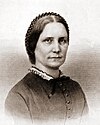
Margaret S. Marsh on Margaret Fuller
“Because if the anarchist-feminists' rejection of a belief in inherent differences between the sexes automatically barred their use of feminist arguments that relied on the reinterpretation of conventional feminine stereotypes in the interests of equality, they were forced to revert to a simpler polemical position. Deriving their analytic framework from the work of an earlier generation of feminists, particularly such singular rebels as Mary Wollstonecraft and Sarah Grimké, the anarchist women insisted that the humanity of women was all the justification their cause required. For them the issue was uncomplicated: "Woman's emancipation means freedom, liberty. ...pure and simple." And when the Individualist Marie Louise announced that what women needed was "Liberty to act Liberty to live, Liberty to feel that our own acquired emancipation and happiness are not soiled by the aid of jealous proxies," her words were strikingly similar to the appeals to a common humanity voiced earlier by the Grimké sisters and Margaret Fuller.”
Bayard Taylor on Margaret Fuller
“Just before the forecastle sunk, the remaining sailors determined to leave. The steward, with whom the child had always been a great favorite, took it, almost by main force, and plunged with it into the sea; neither reached the shore alive. The Marquis Ossoli was soon afterwards washed away, but his wife remained in ignorance of his fate. The cook, who was the last person that reached the shore alive, said that the last words he heard her speak were: "I see nothing but death before me, — I shall never reach the shore." It was between two and three o'clock in the afternoon, and after lingering for about ten hours, exposed to the mountainous surf that swept over the vessel, with the contemplation of death constantly forced upon her mind, she was finally overwhelmed as the foremast fell.”

Elizabeth Sherman Hoar on Margaret Fuller
William James on Margaret Fuller
“"I accept the universe" is reported to have been a favorite utterance of our New England transcendentalist, Margaret Fuller; and when some one repeated this phrase to Thomas Carlyle, his sardonic comment is said to have been: "Gad! she'd better!" At bottom the whole concern of both morality and religion is with the manner of our acceptance of the universe. Do we accept it only in part and grudgingly, or heartily and altogether? Shall our protests against certain things in it be radical and unforgiving, or shall we think that, even with evil, there are ways of living that must lead to good? If we accept the whole, shall we do so as if stunned into submission — as Carlyle would have us — "Gad! we'd better!" — or shall we do so with enthusiastic assent? Morality pure and simple accepts the law of the whole which it finds reigning, so far as to acknowledge and obey it, but it may obey it with the heaviest and coldest heart, and never cease to feel it as a yoke. But for religion, in its strong and fully developed manifestations, the service of the highest never is felt as a yoke. Dull submission is left far behind, and a mood of welcome, which may fill any place on the scale between cheerful serenity and enthusiastic gladness, has taken its place.”

Adam Mickiewicz on Margaret Fuller 2 quotes
“After having admired the women of Rome, say to yourself, ‘I too am beautiful!’ … In you I met a real person. I need not give you any other praise.”

Perry Miller on Margaret Fuller 3 quotes
“Margaret had done her strenuous work under fire while her husband stood in daily peril of death and while she herself was cut off from all communication with her baby. Only after it was all over might Emerson even begin to measure the depth of the distress out of which she wrote him from Rome, “Let me feel, that, amid the fearful agitations of the world, there are pure hands, with healthful, even pulse, stretched out toward me, if I claim their grasp.” In fact, we do not know whether the heart that beat with this healthful, even pulse ever did comprehend.”
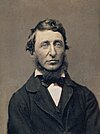
Henry David Thoreau on Margaret Fuller
“The ship struck at ten minutes after four A.M., and all hands, being mostly in their nightclothes, made haste to the forecastle, the water coming in at once. There they remained; the passengers in the forecastle, the crew above it, doing what they could. Every wave lifted the forecastle roof and washed over those within. The first man got ashore at nine; many from nine to noon. At flood-tide, about half past three o'clock, when the ship broke up entirely, they came out of the forecastle, and Margaret sat with her back to the foremast, with her hands on her knees, her husband and child already drowned. A great wave came and washed her aft. The steward had just before taken her child and started for shore. Both were drowned.”
Misattributed Quotes
Quotes mistakenly credited to Margaret Fuller
About Margaret Fuller
Sarah Margaret Fuller Ossoli (23 May 1810 – 19 June 1850) was an American author, journalist, critic and women's rights activist. She, her husband, and their child all died at the end of a five week voyage from Europe in a shipwreck just off of Fire Island.