Link Copied!
Luz María Umpierre Quotes (1947-)
Poet
About Luz María Umpierre
Luz María "Luzma" Umpierre-Herrera (born in 1947) is a Puerto Rican human rights advocate, New-Humanist educator, poet, and scholar. Umpierre-Herrera works on the topics of activism and social equality, encompassing the immigrant experience, and bilingualism in the United States, and Lesbian, Gay, Bisexual, and Transgender (LGBT) issues. Umpierre has published ten poetry books and has had numerous essays published in academic journals.
Best Luz María Umpierre Quotes
Shortest
Earliest
Explore our curated collection of the most famous and impactful Luz María Umpierre quotes.
“I have always thought that my poetry is a reflection of my life in all its many capacities.”

“In summary, this is our collection. And to all who ruminate these pages: luz y mar.”
“I feel that self promotion of one's misfortunes for gain is highly deplorable and a treason to the self.”

“I have also been called and labeled "crazy" for daring to break stereotypes and taboos-for questioning white women on their racism.”
“I don't write anything in life, be they poems or articles, out of wanting to impress people with "volume" but out of thought, perception and feeling.”

“When one "steals" a dress code from another gender, one is crossing a line in this country and walking into the realm of irrational fears living in people's minds.”
“What I needed to verbalize is the fact that I am, among many other things, a Lesbian. Second, I wanted to communicate in some viable form with some One who came to represent all women to me.”
“I want to suggest to the readers that taboos are not something foreign to "intellectuals" reading this piece or attending the MLA. On the contrary, the taboos within academia are probably more harmful to Lesbian women than those associated with mountaineer men in Kentucky or low class white "Americans."”
“Being an Open Lesbian, a vocal female, a woman with "an attitude," as they say, has made and continues to make life in academia miserable for me-many times, I would say, by men within my own culture. But it is not all men; only those whose minds are engraved with the fear of the myth/illogical" castrating bitch.”
“What I have seen as it deals with mental health in this country has made me believe in a need for advocacy towards a greater human understanding of emotional illness. I ask of anyone reading this book to devote some of their energies, time and moneys to explore, help, seek information, assist people in endeavors toward de-mystifying mental illness.”

“When I read, for the first time my collection The Margarita Poems (at rutgers university)...a young Latino male, as soon as I read my poem, "Immanence," stood up and left the room, only to go and see the Dean the next morning to ask him "How could the university have allowed an open Lesbian poem to be read within its confines?" The organizer of the conference, a remarkable white woman, had the perfect answer for the Dean: "The university is the place where one loses one's virginity and I guess that young man lost his yesterday."”
“I had long ago found courage in Audre Lorde's Sister Outsider when she says: “I find I am constantly being encouraged to pluck out some one aspect of myself and present this as a meaningful whole, eclipsing or denying the other parts of self. But this is a destructive and fragmenting way to live. My fullest concentration of energy is available to me only when I integrate all the parts of who I am, openly, allowing power from particular sources of my living to flow back and forth freely through all my different selves, without the restrictions of externally imposed definition. Only then can I bring myself and my energies as a whole to the service of those struggles which I embrace as part of my living"”
“Listening to or reading about Lesbian writers and their works does not make anyone of us less fearful of taboos, crossing gender lines or trespassing male/female hierarchies. On the contrary, I have felt more acceptance of my voice, writings and Self while working in jails for youths, cultural centers in barrios, or teaching Appalachian university students. Perhaps, in the midst of this essay, we should start questioning ourselves as to whose taboos we are talking about or referring to. I, for one, can say that our taboos in academia have provoked more emotional and career harm to me than those held by what we, as academicians, call the "others"-"theirs"-the street people, the illiterate, the white trash, youths in jails.”
“I do not wish anyone to think that I am a saint and that people project on me their insecurities and that is how I deal with life. But, unlike some of these people, I have spent countless hours in introspection, alone and in therapy. I am very happy with who I am, but that took years of pain, suicidal thoughts, tears, panic attacks, and insecurities to develop. I have dealt with many of my problems as a Lesbian, as an abused child, and as an anorexic teenager. I am, indeed, not perfect, but I am happy with who I am. And, if maintaining my happiness and the happiness I can bring to others through my voice and writings means that I will be the object of persecution, banned, ignored and left out, I am willing to pay that price.”

“When we speak of gender taboos in the USA, Lati* or Latin American culture, or taboos within any one of our cultures in general, let us not, as academicians, assume a lily white and pristine innocence because of an M.A. or Ph.D. after our names. The "P" in Ph.D. may well stand for "prejudice." Let us address the taboos that are "ours" and which are more harmful in real ways and practical ways than those of Jesse Helms. Jesse Helms can be fought openly through ballots, political campaigns, and organized movements of opposition. He is open about his taboos. But the taboos engendered in our men, in our women, as Lati*or Latin American academicians or scholars of any Minority group do us far more harm on a daily basis as Latina Lesbian writers and academicians.”
“I have been a Pariah in academia but to all those who sought my destruction I always had one answer: "I'm Still Standing." The hymn from Sir Elton John is the best description of how I feel about my survival and triumph over a system that should not be called part of the Humanities since it is hardly humane in its treatment of difference. I have also found deplorable the treatment of students in academia. My former students are the people I miss the most about teaching. But, as one of my former students told me once and I have found it to be true: "You will always have students." So we bring this compendium to you: the totality of a life of poetry. May you feel an embrace from me as you read them. To everyone who reads these pages: I'm Still Standing! Yeah, Yeah, Yeah!”

“The collection is also a question: who is Margarita? Margarita is an intoxicating drink, a flower back home in Puerto Rico, the title of a traditional "danza" that was a favorite of my mother and the name of a woman I love. Margarita is all of these and none. Margarita is my muse, Margarita is my poetry, Margarita is my imaginary lover, Margarita is my Self. And as you read these you may ask yourself: who is Julia? Julia de Burgos is our greatest woman poet in Puerto Rico, Julia is a teacher, Julia is an idol, Julia is a friend. But Julia is, most of all, Margarita. We are all Margaritas and have a Julia within. In writing about Margarita and Julia, I received a sign in the fall of 1986 that these poems were complete and ready to emerge. I met two women poets who have these names and who have had an impact in my life: Margaret Randall and Julia Álvarez.”
“My first collection: Una puertorriqueña en Penna came out of those years and the racism I experienced while being a graduate student at Bryn Mawr College. Some of the poems are also a defense of my Puerto Rican culture and language. It is sad to say that the poems were not accepted by a Latino publishing house at the time because I did not write "like a woman." In other words, I was supposed to write about flowers, gardening and domestic chores. This first anthology was amplified to be the final book, En el país de las maravillas, which my dearest Chicana sister, Norma Alarcón, agreed to publish as the first book from her established press: Third Woman. Third Woman Press gave me a platform from which to publish without pressure from the establishment on thematics. They also published my next two books: ...Y otras desgracias and The Margarita Poems. The day I received a hand written note from Maya Angelou, stating that she had read The Margarita Poems and I should consider her another Margarita, was a private moment of recognition.”
What Luz María Umpierre Said About Others
Discover personal opinions Luz María Umpierre shared regarding contemporaries.
Luz María Umpierre on Cherríe Moraga 2 quotes
“This book is an answer to Cherrie Moraga's valiant Loving In The War Years.”
Luz María Umpierre on Audre Lorde 2 quotes
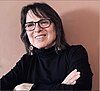
“Who am I today is a composite of many aspects; I am a Puerto Rican woman, I am also a lesbian, a woman of color, and a human rights advocate. Excluding one identity in lieu of the other does not tell the whole story. After I met the poet Audre Lorde I realized I had to embrace all this in order to have a holistic view. Audre said: "you can only empower yourself when you join all the parts of your own Self." So I had to join all the pieces of the puzzle so it could be read.”
Luz María Umpierre on Maya Angelou
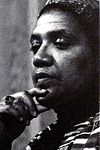
“The day I received a hand written note from Maya Angelou, stating that she had read The Margarita Poems and I should consider her another Margarita, was a private moment of recognition.”
Luz María Umpierre on Jewelle Gomez
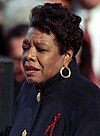
“We realized we were on our own and started bonding together, Latina women writers like Cherrie Moraga, Jewelle Gómez, black writers like Audre Lorde and Ntozake Shange, we understood we had to support each other or nobody would.”
Luz María Umpierre on Margaret Randall

Luz María Umpierre on Julia Alvarez
Luz María Umpierre on Ntozake Shange
“We realized we were on our own and started bonding together, Latina women writers like Cherrie Moraga, Jewelle Gomez, black writers like Audre Lorde and Ntozake Shange, who wrote For Colored Women, we understood we had to support each other or nobody would.”

Luz María Umpierre on Julia de Burgos
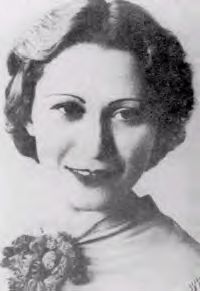
“The collection is also a question: who is Margarita? Margarita is an intoxicating drink, a flower back home in Puerto Rico, the title of a traditional "danza" that was a favorite of my mother and the name of a woman I love. Margarita is all of these and none. Margarita is my muse, Margarita is my poetry, Margarita is my imaginary lover, Margarita is my Self. And as you read these you may ask yourself: who is Julia? Julia de Burgos is our greatest woman poet in Puerto Rico, Julia is a teacher, Julia is an idol, Julia is a friend. But Julia is, most of all, Margarita. We are all Margaritas and have a Julia within.”
Luz María Umpierre on Jesse Helms
“when we speak of gender taboos in the USA, Lati* or Latin American culture, or taboos within any one of our cultures in general, let us not, as academicians, assume a lily white and pristine innocence because of an M.A. or Ph.D. after our names. The "P" in Ph.D. may well stand for "prejudice." Let us address the taboos that are "ours" and which are more harmful in real ways and practical ways than those of Jesse Helms. Jesse Helms can be fought openly through ballots, political campaigns, and organized movements of opposition. He is open about his taboos. But the taboos engendered in our men, in our women, as Lati*or Latin American academicians or scholars of any Minority group do us far more harm on a daily basis as Latina Lesbian writers and academicians.”

Luz María Umpierre on Elton John
“I have been a Pariah in academia but to all those who sought my destruction I always had one answer: "I'm Still Standing." The hymn from Sir Elton John is the best description of how I feel about my survival and triumph over a system that should not be called part of the Humanities since it is hardly humane in its treatment of difference. I have also found deplorable the treatment of students in academia. My former students are the people I miss the most about teaching. But, as one of my former students told me once and I have found it to be true: "You will always have students." So we bring this compendium to you: the totality of a life of poetry. May you feel an embrace from me as you read them. To everyone who reads these pages: I'm Still Standing! Yeah, Yeah, Yeah!”

Luz María Umpierre on Norma Alarcón
“My first collection: Una puertorriqueña en Penna came out of those years and the racism I experienced while being a graduate student at Bryn Mawr College. Some of the poems are also a defense of my Puerto Rican culture and language. It is sad to say that the poems were not accepted by a Latino publishing house at the time because I did not write "like a woman." In other words, I was supposed to write about flowers, gardening and domestic chores. This first anthology was amplified to be the final book, En el país de las maravillas, which my dearest Chicana sister, Norma Alarcón, agreed to publish as the first book from her established press: Third Woman. Third Woman Press gave me a platform from which to publish without pressure from the establishment on thematics. They also published my next two books: ...Y otras desgracias and The Margarita Poems”
Quotes About Luz María Umpierre
Gain deeper perspective through quotes about Luz María Umpierre from others.
Sandra Maria Esteves on Luz María Umpierre
“So your name isn't María Cristina,/but you forgot to tell me if you understood/she was just one person,/one Borinqueña within our universal identity.”
Faythe Turner on Luz María Umpierre
“Luzma Umpierre is a poet and scholar who has taken a particularly heroic stance on the question of the rights of gays and lesbians, and "minorities" in educational institutions.”
Source on Luz María Umpierre 7 quotes
“At 63, she stories her identity to be that of a Puerto Rican lesbian poet and human rights advocate. "Who am I today is a composite of many aspects; I am a Puerto Rican woman, I am also a lesbian, a woman of color, and a human rights advocate. Excluding one identity in lieu of the other does not tell the whole story. After I met the poet Audre Lorde I realized I had to embrace all this in order to have a holistic view. Audre said: "you can only empower yourself when you join all the parts of your own Self." So I had to join all the pieces of the puzzle so it could be read."”
About Luz María Umpierre
Luz María "Luzma" Umpierre-Herrera (born in 1947) is a Puerto Rican human rights advocate, New-Humanist educator, poet, and scholar. Umpierre-Herrera works on the topics of activism and social equality, encompassing the immigrant experience, and bilingualism in the United States, and Lesbian, Gay, Bisexual, and Transgender (LGBT) issues. Umpierre has published ten poetry books and has had numerous essays published in academic journals.