Link Copied!
Lillian Wald Quotes (1867-1940)
Author
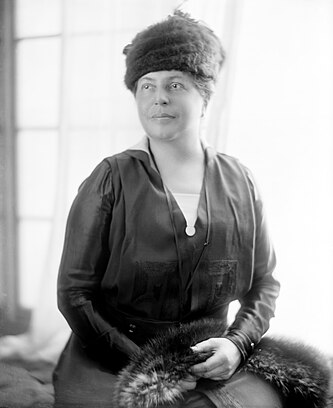

About Lillian Wald
Lillian D. Wald (March 10, 1867 – September 1, 1940) was an American Jewish nurse, humanitarian and author. She was known for contributions to human rights and was the founder of American community nursing. She founded the Henry Street Settlement in New York City and was an early advocate to have nurses in public schools.
Best Lillian Wald Quotes
Shortest
Earliest
Explore our curated collection of the most famous and impactful Lillian Wald quotes.
“Militaristic propaganda cloaked under the reasonable name of “preparedness.””


“At the base our plan for getting the people of the two countries into instant actual contact with an understanding of each other would always prevent this.”

“At a stage in history when women were first organizable they came together to protest against war and to offer reasonable substitutes for settling international disagreements.”
“Musicales, private theatricals, and the varied undertakings that bring gayety and zest into the social life are successful with us. We are fond of saying that next to nursing typhoid fever we love to give a ball!”
“The movement for public playgrounds is now well known. They have been valiantly fought for and their need wonderfully told by Mr. Jacob A. Riis, that best friend of, and most lovable fighter for, the children of the poor.”
“Though the hatred and the enmity that have been stirred up are not real, the suffering and the desolation and the outrages that have come to men and to the women and the children are real. These pitiless sacrifices must stop.”
“Men who love their homes and their children are roused to war fervor “to protect their homes’ ‑but to destroy other homes; “to wave their wives and children” – by starving and impoverishing other women and children.”

“When war and human sacrifice of the many have been banished, as that of the individual has been, eyes will be opened and ears unstopped, and men and women will understand all the wrongs of Society, and work together, nations with nations.”

“Florence Nightingale lifted the vague, casual, though kindly and devoted, feeling of women into organized, efficient and invaluable service; she enlarged the nurse’s vision to sympathy for great groups outside her family or particular tribe.”

“It is good from this point of view that the patient should know the home of the nurse, and that the nurse should be intelligent about the housing conditions, the educational provisions, and the social life of the neighborhood in which she works and lives.”
“In discussions throughout the country of the problems of immigration it is significant that few, if any, of the men and women who have had extended opportunity for social contact with the foreigner favor a further restriction of immigration. (chapter 16 p290)”

“The conception of religion has extended from the individual to society; a true religion fills the need of both. Economics and government and a rational view of religion are based on human needs; and fundamental human needs underlie the so-called labor and women’s movements.”

“The planting of roots in the new soil can best be accomplished through an intercourse with the immigrant in which the dignity of the individual and of the family is recognized. Heroic measures may be necessary to establish a satisfactory system of distribution, and these measures must be based on a philosophic understanding of democracy. (p292)”
“We intend to continue our own peculiar methods, peculiar they are said to be for “pacifist.” I am told that we are violating the popular conception of this group, and one newspaper which strongly disapproved of our aggressiveness against preparedness hysteria, said that, judging from our belligerency, we were the ones who “put the fist in pacifist.””
“The horrors of war that stir the thinking world have been least noticed by the historians. The violation of women, and even children, is hardly included in the term “atrocity.” Yet so abhorrent are these things that the brutality of war passeth understanding, and men and women must so dedicate themselves to tis cause that it can never come into the world again.”

“As I look back, it seems to me that our efforts toward peace, even in the midst of war, bulk large in the story I have set myself to tell; they show, that a small group having profound and selfless interest in the going world is not useless, and its position and its influence may without embarrassing publicity contribute to the clarification of problems of the day. (chapter XII p285)”
“The final abolition of war and the establishment of permanent peace must depend upon the convictions of men and women, who are equally responsible as they must be in the final analysis for all measures affecting Society. But never before, during the time of any great conflict, have women been so organized or so self-conscious as now, and it is fitting that the world should ring with their outcry against this blasphemy upon all the things that they hold most sacred.”

“The small group that directed this committee, and the enormous number of men and women who have affiliated themselves in one way or another with its propaganda, consider themselves true patriots of America, — patriotism that is borne of the passionate love for the best that is in America, not for rich America nor for successful America, but for the America of democracy, of ideals, and the America that stand for the things essential to a world of love and law and order.”

“Women more than men can strip war of its glamour and its out-of-date heroisms and patriotisms, and see it as a demon of destruction and hideous wrong — murder devastating home and happiness. Women are here to reaffirm their protest against war, to restate their unalterable faith in the righteousness of Peace, the practicality of mediation — a protest against the outrage upon the moral convictions of long developed social sentiments, and to offer their profound sympathy and compassion for the victims of the European war.”

“The task of organizing human happiness needs the active cooperation of man and woman: it cannot be relegated to one half of the world. And active cooperation for such noble ends cannot be secured unless men and women really work together. The women have been experiencing the growth of a new consciousness, an integral element in the evolution of self government, and as a result many women believe that they can best represent the human interests in government, at least that they can best represent themselves in those measures that immediately concern them and for which tradition and experience have fitted them.”
“Internationally the outlook is more disturbing. Despite the united front against war among the plain people of the earth, as expressed through conferences not only of pacifists, but of college faculty and students, of labor bodies, of women's associations, of radical and temperate organizations, the cloud of war darkens the horizon and the German influence cannot be ignored. Many people regard the Chancellor as insane or neurotic, perhaps in part because through all his denunciations and illogical conclusions he has shown no gleam of humor; nevertheless his leadership seems for the moment to sway the German nation. (p323)”
“The state, as employer, alone determines the terms upon which its new canal shall be built. It defines in great detail its standard of materials and workmanship, but takes no thought for the workmen who must operate in great transient groups. It does not leave to chance the realization of its material standard, but sends inspectors to make tests and provides a staff of engineers. It does leave to chance (in the ignorance and cupidity of padroni) the quality and price of foods and care of the men. It takes great care to prevent the freezing of cement, but permits any kind of houses to be used for its laborers. (p296)”

“Suddenly, without the consent of the people involved, all the structures of civilization, so painstakingly built upon, are swept away, and hatred, destruction and contempt for human life take their place. Multitudes of men and women and children in the countries at war are helpless victims, and their judgments concerning wars, and this war, can not be known, at least not until they are recorded in history. We, the fortunate dwellers upon a neutral land, are, through sympathy and actual suffering, involved in their tragedy. Those who suffer call across the waters, and their cry is heard — the cries of little children and those yet unborn.”
Lillian Wald Quotes by Topic
Find exactly what you are looking for by browsing this categorized list of Lillian Wald quotes by topic.
Lillian Wald on Human sacrifice
“When war and human sacrifice of the many have been banished, as that of the individual has been, eyes will be opened and ears unstopped, and men and women will understand all the wrongs of Society, and work together, nations with nations.”

What Lillian Wald Said About Others
Discover personal opinions Lillian Wald shared regarding contemporaries.
Lillian Wald on Eleanor Roosevelt
“such courageous spirits as Mrs. Franklin D. Roosevelt.”

Lillian Wald on Helen Keller
Lillian Wald on Florence Nightingale
“Florence Nightingale lifted the vague, casual, though kindly and devoted, feeling of women into organized, efficient and invaluable service; she enlarged the nurse’s vision to sympathy for great groups outside her family or particular tribe.”

Lillian Wald on Frances Perkins
“Frances Perkins brings to the Cabinet as Secretary of Labor the many years of training and experience which step by step have rounded out the preparation for her great responsibility. Even with the contribution of her vivid personality, the press, generally speaking, pays her the tribute of reporting the wisdom of the words and acts rather than idle "gossip" about the "first woman Cabinet member."”

Lillian Wald on Florence Kelley
“irresistible has been the influence exercised by Mrs. Florence Kelley, now and for many years a member of the settlement family. She has long consecrated her energies to securing protective legislation throughout the country for children compelled to labor and, with the late Edgar Gardner Murphy, of Alabama, suggested the creation of the National Child Labor Committee. In its ten years' existence it has affected legislation in forty-seven states, which have enacted new or improved child labor laws. On this and on the New York State Committee Mrs. Kelley and I have served since their creation.”

Lillian Wald on Adolf Hitler
“Internationally the outlook is more disturbing. Despite the united front against war among the plain people of the earth, as expressed through conferences not only of pacifists, but of college faculty and students, of labor bodies, of women's associations, of radical and temperate organizations, the cloud of war darkens the horizon and the German influence cannot be ignored. Many people regard the Chancellor as insane or neurotic, perhaps in part because through all his denunciations and illogical conclusions he has shown no gleam of humor; nevertheless his leadership seems for the moment to sway the German nation.”
About Lillian Wald
Lillian D. Wald (March 10, 1867 – September 1, 1940) was an American Jewish nurse, humanitarian and author. She was known for contributions to human rights and was the founder of American community nursing. She founded the Henry Street Settlement in New York City and was an early advocate to have nurses in public schools.