Link Copied!
Leon Trotsky Quotes (0-)
Revolutionary















About Leon Trotsky
Leon Trotsky (Лев Давидович Троцкий; born Lev Davidovich Bronstein; Лев Давидович Бронштейн; 7 November (O.S. 26 October) 1879 – 21 August 1940) was a Russian Marxist, intellectual, and revolutionary. In the early Soviet Union, he founded the Politburo, served as People's Commissar for Foreign Affairs, and created and led the Red Army. After Lenin's death, Trotsky was exiled for his opposition to Joseph Stalin's policies. His 1940 assassination (with an ice axe) in Mexico was carried out by a Soviet agent (Ramón Mercader) at Stalin's behest.
Best Leon Trotsky Quotes
Shortest
Earliest
Explore our curated collection of the most famous and impactful Leon Trotsky quotes.
“referencesmark
”
“Economic accounting is unthinkable without market relations.”
“A sledgehammer breaks glass but forges steel.”
“Bureaucracy and social harmony are inversely proportional to each other.”

“The completion of the socialist revolution within national limits is unthinkable.”
“No one yet has learned to drive a locomotive sitting in his study.”
“Old age is the most unexpected of all the things that happen to a man.”
“Independent character is like independent thought, it cannot be developed without criticism.”
“In a serious struggle there is no worse cruelty than to be magnanimous at an inopportune time.”
“We Marxist communists are profoundly opposed to the anarchist doctrine. This doctrine is erroneous”
“Repression for the attainment of economic ends is a necessary weapon of the socialist dictatorship.”

“The Constituent Assembly placed itself across the path of the revolutionary movement, and was swept aside.”
“The peasantry, having lifted itself up out of its medieval status, cannot politically generate its own rage.”
“It was as the supreme expression of the mediocrity of the apparatus that Stalin himself rose to his position.”
“The life of a revolutionary would be quite impossible without a certain amount of "fatalism."”
“Fascism is nothing but capitalist reaction; from the point of view of the proletariat the difference between the types of reaction is meaningless.”
“Root out the counterrevolutionaries without mercy, lock up suspicious characters in concentration camps... Shirkers will be shot, regardless of past service.”
“The [Soviet Union] bureaucracy not only has not disappeared, yielding its place to the masses, but has turned into an uncontrolled force dominating the masses.”

“Stalinism and fascism, in spite of a deep difference in social foundations, are symmetrical phenomena. In many of their features they show a deadly similarity.”
“Every revolutionary party finds its chief support in the younger generation of the rising class. Political decay expresses itself in a loss of ability to attract youth.”
“Stalin's Problems of Leninism constitutes a codification of this ideological garbage, an official manual of narrow-mindedness, an anthology of enumerated banalities.”
Leon Trotsky Quotes by Topic
Find exactly what you are looking for by browsing this categorized list of Leon Trotsky quotes by topic.
Leon Trotsky on Fascism 3 quotes
“Stalinism and fascism, in spite of a deep difference in social foundations, are symmetrical phenomena. In many of their features, they show a deadly similarity.”

Leon Trotsky on Freemasonry 3 quotes
“The revolution in industry has been much more far-reaching than it has in ideas, where piecework is preferred to new structures. That is why the French parliamentarians of the petty bourgeoisie could find no better way of creating moral ties to hold the people together against the disruptiveness of modern relations than to put on white aprons and arm themselves with a pair of compasses or a plumbline. They were really thinking less of erecting a new building than of finding their way back into the old one of parliament or ministry.”

Leon Trotsky on Dictatorship of the proletariat 2 quotes
“Repression for the attainment of economic ends is a necessary weapon of the socialist dictatorship.”

Leon Trotsky on Fascism's relationship with other political and economic ideologies 2 quotes
“Stalinism and fascism, in spite of a deep difference in social foundations, are symmetrical phenomena. In many of their features they show a deadly similarity.”
Leon Trotsky on War 2 quotes
“The struggle against war, properly understood and executed, presupposes the uncompromising hostility of the proletariat and its organizations, always and everywhere, toward its own and every other imperialist bourgeoisie...”
Leon Trotsky on Terrorism 2 quotes
“The terror of tsarism was directed against the proletariat. Our Extraordinary Commissions shoot landlords, capitalists, and generals who are striving to restore the capitalist order. Do you grasp this... distinction? Yes? For us communists it is quite sufficient.”

Leon Trotsky on Ageing
“Old age is the most unexpected of things that can happen to a man.”

Leon Trotsky on Bureaucracy
“Bureaucracy and social harmony are inversely proportional to each other.”
Leon Trotsky on Government
“Bureaucracy and social harmony are inversely proportional to each other.”

Leon Trotsky on Old age
“Old age is the most unexpected of all the things that can happen to a man.”

Leon Trotsky on Socialism
“A nationalized planned economy needs democracy, as the human body needs oxygen.”

Leon Trotsky on Democratic socialism
“A nationalized planned economy needs democracy, as the human body needs oxygen.”

What Leon Trotsky Said About Others
Discover personal opinions Leon Trotsky shared regarding contemporaries.
Leon Trotsky on Benito Mussolini 2 quotes
“[Mussolini] was the only man who could have brought about the revolution of the proletariat in Italy.”

Leon Trotsky on Baruch Spinoza 2 quotes
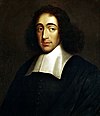
“Let him who wishes weep bitter tears because history moves ahead so perplexingly: two steps forward, one step back. But tears are of no avail. It is necessary according to Spinoza's advice, not to laugh, not to weep, but to understand!”
Leon Trotsky on Joseph Stalin 2 quotes
“The dialectics of history have already hooked him and will raise him up. He is needed by all of them; by the tired radicals, by the bureaucrats, by the NEP-men, the upstarts, by all the worms that are crawling out of the upturned soil of the manured revolution. He knows how to meet them on their own ground, he speaks their language and he knows how to lead them. He has the deserved reputation of an old revolutionist, which makes him invaluable to them as a blinder on the eyes of the country. He has will and daring. He will not hesitate to utilize them and to move them against the Party. Right now he is organising himself around the sneaks of the party, the artful dodgers.”

Leon Trotsky on Simone Weil
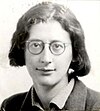
“I knew her very well, I have had long discussions with her. For a period of time she was more or less in sympathy with our cause, but then she lost faith in the proletariat and in Marxism. It's possible that she will turn toward the left again.”
Leon Trotsky on Sergey Nechayev
“In revolutionary circles, the word Nechaevism was long to be a term of harsh condemnation, a synonym for risky and reprehensible methods of attaining revolutionary goals. Lenin was to hear himself accused hundreds of times of ‘Nechaevist’ methods by his opponents.”
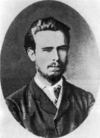
Leon Trotsky on Vladimir Lenin
“This most powerful machinist of the revolution... was irrevocably controlled by one and the same idea, the goal. He was probably the most extreme utilitarian whom the laboratory of history has produced. But his utilitarianism was of the broadest historical scope. His personality did not grow flat or poor thereby, but on the contrary developed and enriched itself in extent, as his experience of life and sphere of activity grew.”

Leon Trotsky on Vladimir Mayakovsky
“He stands with one foot on Mont Blanc and with the other on the Elbrus. His voice out-thunders thunder. What is the wonder that…the proportions of earthly things vanish and that no difference is left between the small and the great?…No doubt this hyperbolic style reflects in some measure the frenzy of our time. But this does not provide it with an overall artistic justification. It is impossible to out-clamour war and revolution, but it is easy to get hoarse in the attempt.”

Leon Trotsky on Abraham Lincoln
“We leave to some Emil Ludwig or his ilk the drawing of Abraham Lincoln's portrait with rosy little wings. Lincoln's significance lies in his not hesitating before the most severe means once they were found to be necessary in achieving a great historic aim posed by the development of a young nation. The question lies not even in which of the warring camps caused or itself suffered the greatest number of victims. History has different yardsticks for the cruelty of the Northerners and the cruelty of the Southerners in the Civil War. A slave-owner who through cunning and violence shackles a slave in chains, and a slave who through cunning or violence breaks the chains — let not the contemptible eunuchs tell us that they are equals before a court of morality!”

Leon Trotsky on Karl Radek
“History has prepared our party for various tasks. However defective our state machinery or our economic activity may be, still the whole past of the party has psychologically prepared it for the work of creating a new order of economy and a new state apparatus. History has even prepared us for diplomacy. It is scarcely necessary to mention that world politics have always occupied the minds of Marxists. But it was the endless negotiations with the Mensheviki that perfected our diplomatic technique; and it was during these old struggles that Comrade Chicherin learned to draw up diplomatic notes. We are just beginning to learn the miracle of economics. Our state machinery creaks and groans. In one thing, however, we have been eminently successful – in our Red Army. Its creator, its central will, is Comrade L.D. Trotsky.”

Leon Trotsky on Carl von Clausewitz
“We must renounce attempts at building an absolute revolutionary strategy out of the elements of our limited experience of the three years of civil war, during which units of a particular quality fought under particular conditions. Clausewitz warned very well against this. "What could be more natural," he wrote, "than the fact that war of the French Revolution had its characteristic style, and what theory could have been expected to accommodate it? The danger is that this kind of style, developed out of a single case, can easily outlive the situation that gave rise to it: for conditions change imperceptibly. That danger is the very thing a theory should prevent by lucid, rational criticism. In 1806 the Prussian generals were under the sway of this methodism", and so on. Alas! Prussian generals are not the only ones with an inclination towards methodism, that is, towards stereotypes and conventional patterns.”

Leon Trotsky on Friedrich Nietzsche
“It would certainly not be difficult to unearth in Nietzsche’s voluminous works a few pages which, outside their context, might serve to illustrate any preconceived thesis, particularly within the framework of a global exegesis which, parenthetically, would be quite useful to the works of Nietzsche, which are more obscure than profound. This is what the anarchists of Western Europe did, who hastened to consider Nietzsche one of them and who received a cruel rebuff: the philosopher of the master’s morality rejected them with all the rudeness he was capable of. It is clear to the reader, we hope, that we find sterile such a literary and textual attitude towards the writings rich in paradoxes of the recently deceased German thinker, whose aphorisms are often contradictory and in general allow for dozens of interpretations. The natural road towards a correct clarification of Nietzschean philosophy is the analysis of the social base that gave birth to this complex product. The present article strove to carry out an analysis of this kind. The base revealed itself to be rotten, pernicious, and poisoned. From which this conclusion: let them invite us as much as they want to dive in all confidence into Nietzscheism, to breathe deeply in his works the fresh air of proud individualism. We will not answer these appeals and, without fearing facile reproaches of narrowness and exclusivism, will reply with skepticism the way Nathaniel did in the gospel: “Can anything good come out of Nazareth?””

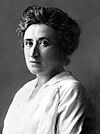
Leon Trotsky on Rosa Luxemburg
“Rosa Luxemburg’s name is less well-known in other countries than it is to us in Russia. But one can say with all certainty that she was in no way a lesser figure than Karl Liebknecht. Short in height, frail, sick, with a streak of nobility in her face, beautiful eyes and a radiant mind she struck one with the bravery of her thought. She had mastered the Marxist method like the organs of her body. One could say that Marxism ran in her blood stream. I have said that these two leaders, so different in nature, complemented each other. I would like to emphasize and explain this. If the intransigent revolutionary Liebknecht was characterized by a feminine tenderness in his personal ways then this frail woman was characterized by a masculine strength of thought. Ferdinand Lassalle once spoke of the physical strength of thought, of the commanding power of its tension when it seemingly overcomes material obstacles in its path. That is just the impression you received talking to Rosa, reading her articles or listening to her when she spoke from the tribune against her enemies. And she had many enemies! I remember how, at a congress at Jena I think, her high voice, taut like a wire, cut through the wild protestations of opportunists from Bavaria, Baden and elsewhere. How they hated her! And how she despised them! Small and fragilely built she mounted the platform of the congress as the personification of the proletarian revolution. By the force of her logic and the power of her sarcasm she silenced her most avowed opponents. Rosa knew how to hate the enemies of the proletariat and just because of this she knew how to arouse their hatred for her. She had been identified by them early on. From the first day, or rather from the first hour of the war, Rosa Luxemburg launched a campaign against chauvinism, against patriotic lechery, against the wavering of Kautsky and Haase and against the centrists’ formlessness; for the revolutionary independence of the proletariat, for internationalism and for the proletarian revolution...By the force of the strength of her theoretical thought and her ability to generalize Rosa Luxemburg was a whole head above not only her opponents but also her comrades. She was a woman of genius. Her style, tense, precise, brilliant and merciless, will remain for ever a true mirror of her thought.”
Quotes About Leon Trotsky
Gain deeper perspective through quotes about Leon Trotsky from others.
Perry Anderson on Leon Trotsky
“The international disputes which united and divided Luxemburg, Lenin, Lukács, Gramsci, Bordiga or Trotsky on these issues represent the last great strategic debate in the European workers’ movement. Since then, there has been little significant theoretical development of the political problems of revolutionary strategy in metropolitan capitalism that has had any direct contact with the masses. The structural divorce between original Marxist theory and the main organizations of the working class in Europe has yet to be historically resolved. The May-June revolt in France, the upheaval in Portugal, the approaching dénouement in Spain, presage the end of this long divorce, but have not accomplished it. The classical debates, therefore, still remain in many respects the most advanced limit of reference we possess today. It is thus not mere archaism to recall the strategic confrontations which occurred four or five decades ago. To reappropriate them, on the contrary, is a step towards a Marxist discussion that has the—necessarily modest—hope of assuming an ‘initial shape’ of correct theory today. Régis Debray has spoken, in a famous paragraph, of the constant difficulty of being contemporary with our present. In Europe at least, we have yet to be sufficiently contemporary with our past.”

Martin Amis on Leon Trotsky
“Reading Trotsky, one is often impressed with how much dishonesty he can pack into a paragraph.”

Angelica Balabanoff on Leon Trotsky
“Trotsky's own tragic fate was to illustrate all that I felt and thought about my own inability either to work with or compete with the Comintern leaders on their own ground. If, after the Soviet Republic was consolidated and the factional struggle first began against him, after the Central Committee decided that the time had come to lessen the popularity and self-confidence of the former Menshevik, Trotsky had shown his own superiority to the Jesuitry of his rivals, by refusing to use their methods, how different his fate might have been! It is far more likely that when the moment of disillusion with the bureaucracy came, he would have become the leader of a revolutionary labour movement throughout the world, and that the authority and the number of his disciples would be many times greater than they are now. If from the beginning, he had defended party democracy, fought the repression of honest dissent, the calumny of political opponents by the Party machine, how much more sympathy and solidarity he would have found in Russia from the first day of his persecution to the last shameful campaign against him! But to have denounced those methods consistently, Trotsky should have fought them from the very beginning when he was most powerful, when he was a part of the bureaucracy, and when the Russians themselves were still convinced that the country could not be saved without him. He could not have eradicated the disease, perhaps-this was too inherent in Bolshevism itself-but he could have avoided some of its most monstrous applications and he could have protested far more successfully and aroused others to protest-when he himself became the victim. But not only was Trotsky himself, after 1917, a good Bolshevist, a hundred-per-cent "Leninist," he was also too weak and too self-conscious to have made such a fight while still part of the ruling group. "Too weak?" How can I use that word to describe a man whom I consider one of the most powerful intellects of our time-a man who has done for Russia what no other modern statesman has done for his country (because none has had to work, to destroy and reconstruct under such complicated and unprecedented conditions); who has faced danger and death without hesitation, endured heroically persecution on an unprecedented scale? Yet, there are different ways of being courageous, or rather of being indifferent to what may come. One may defy death but be unable to face reproach or a threat to one's popularity. This was, and still is, the case with Trotsky. He was daring enough, with Lenin, to face the hostile opinion of the whole world. But he was not sufficiently independent to fight those tendencies exemplified in Lenin's puppet, Zinoviev, nor to refuse an alliance with Zinoviev even after the latter had first capitulated to and become the puppet of Stalin. He was afraid of being thought less "revolutionary" than those who attacked him and in the field of demagogy and political shrewdness he was no match for Zinoviev, Stalin, and the whole party apparatus. This fear of being suspected of not having wholly abnegated his original sin-Menshevism-and his immeasurable self-confidence, have continuously projected themselves like a shadow between this brilliant man and the situations in which he is personally involved, so that he has failed to apply to his own movement the criteria he applies to others. It is as though history and logic and the laws of causality which he understands and knows how to handle so well, stopped short before his own personality. It is an attitude which was encouraged, of course, by his matchless success in the early years of the Revolution, the overwhelming popularity he enjoyed. He was so sure in those days that, whatever might be the fate of others, whatever the dangers of popularity and success, for him-Leon Trotsky-life would make an exception. Instead, he has become the foremost victim of the perversion of the Revolution!”
Tony Benn on Leon Trotsky
“I asked him [Bob Edwards] about Trotsky and Stalin. He maintained that the argument wasn't only over the necessity for a world revolution. Stalin believed that the only way to safeguard the Russian revolution was to build heavy industry at tremendous cost and to be able to defend the country. Trotsky believed that a European revolution, particularly in Britain and Germany, would safeguard the Russian revolution. But he also believed that the Russian people should be allowed access to more consumer goods, and this would have been at the cost of building up heavy industry. "Actually," said Bob, "Stalin was right in the event and not Trotsky."”

Jeremy Black on Leon Trotsky
“The pressure in the Soviet Union for a realpolitik in international relations that represented the normalisation of relations with other states was not linked to the abandonment of the Communist cause, but, rather, to a focus on the pursuit of Socialism (ie. Communism) in one state (the Soviet Union). This was a course presented as leading to the strengthening of the cause. This emphasis was associated with Stalin who dominated the state after Lenin’s death in 1924. However, Stalin was also interested in world revolution and committed to the spread of Communism. Thus, his difference with the more volatile Leon Trotsky’s demand for permanent and global revolution was more one of tactics than goals, although that was still a highly significant difference. At a meeting of the Politburo in 1926, Trotsky accused his rival Stalin of becoming ‘the gravedigger of the revolution’. Trotsky was to be forced into exile, first internal (1927), and then external (1929), by Stalin. A major element of Stalinist policy, both before and after World War Two, was suppressing those held to be Trotskyites. This was a rift that fed Stalinist paranoia and gave potent force to the idea of the enemy within. This idea was brutally enforced in Communist and allied movements abroad, as with the hunting down of those in the Republican camp considered suspect during the Spanish Civil War (1936–9). Sentenced to death in absentia in 1937, Trotsky himself was murdered in Mexico in 1940 in a plot by Soviet Intelligence, the NKVD.”
Alain Brossat on Leon Trotsky 3 quotes
“It is not true, however, that the solutions proposed by the Zionists, of whatever shade, represented historical realism as against the inconsistent utopianism of the Bund. Certainly the prophets were not numerous, but they have to be given their due: Kurt Tucholsky, for example, who already in the mid-1920s sounded the alarm, in a Weimar Republic prey to the demons of order, nationalism, xenophobia and dreams of revanchism; Leon Trotsky, who in the late 1920s warned that the fate of Europe was being played out in Germany, and understood that the bankruptcy of German communism in the face of Hitler bore within it the inexorable unfurling of horror. At this time they were preaching in the desert, including the desert of Judaea. The rabbis who called for obedience to the temporal power in all circumstances, and the inspirers of Menachem Begin and Ariel Sharon who at the time paraded in black shirts, are not best placed to cast the first stone at these Jewish visionaries and militants who were struggling at this time for a better world.”
Earl Browder on Leon Trotsky
“This ego-maniac firebrand is running through a world full of war-explosives, applying his torch wherever he may, hoping for nothing so much as a new world war from which alone he sees his hopes of glory and power.”
James Burnham on Leon Trotsky
“According to Leon Trotsky, in an article published in late 1939, and to my personal knowledge based on a careful collation and analysis of statistics published in the Soviet press, the upper 11% or 12% of the Soviet population now receives approximately 50% of the national income. This differentiation is sharper than in the United States, where the upper 10% of the population receives approximately 35% of the national income.”
Francis Stewart Campbell on Leon Trotsky
“The Jews practically always backed the wrong horse. The Jews of Russia who worked for the destruction of monarchy found themselves finally in the grips of a brutal religious persecution which hit them harder than the Christians. Their most brilliant exponents among the Communists were exiled, slaughtered, or assassinated in exile. The fate of Trotzki [sic] is symbolic for Russian Jewry. The Jews, with their ardent sympathies for the Soviet Union, had the same grim awakening when they learned of the Stalin Hitler pacts as the Spanish Jews who had backed the Moors instead of the Christians.”
Cohn-Bendit on Leon Trotsky
“On reading Trotsky's History of the Russian Revolution we are struck by a fundamental contradiction: as an honest historian he shows us just how much the Party lagged behind the masses, and as a Bolshevik theorist he must reaffirm that the Party was necessary for the succession of the revolution.”
Eugene V. Debs on Leon Trotsky
“Lenin and Trotsky were the men of the hour and under their fearless, incorruptible and uncompromising leadership the Russian proletariat has held the fort against the combined assaults of all ruling class powers of earth. It is a magnificent spectacle . It stirs the blood and warms the heart of every revolutionist, and it challenges the admiration of all the world.”

Isaac Deutscher on Leon Trotsky 2 quotes
“Proof of Trotsky's farsightedness is that none of his predictions have come true yet.”

About Leon Trotsky
Leon Trotsky (Лев Давидович Троцкий; born Lev Davidovich Bronstein; Лев Давидович Бронштейн; 7 November (O.S. 26 October) 1879 – 21 August 1940) was a Russian Marxist, intellectual, and revolutionary. In the early Soviet Union, he founded the Politburo, served as People's Commissar for Foreign Affairs, and created and led the Red Army. After Lenin's death, Trotsky was exiled for his opposition to Joseph Stalin's policies. His 1940 assassination (with an ice axe) in Mexico was carried out by a Soviet agent (Ramón Mercader) at Stalin's behest.