Link Copied!
Karl Popper Quotes (1902-1994)
Philosopher








About Karl Popper
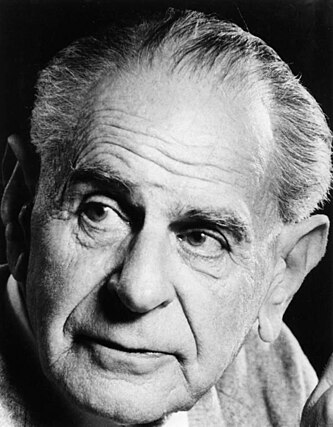
Sir Karl Raimund Popper (28 July 1902 – 17 September 1994) was an Austrian-British philosopher, academic and social commentator. One of the 20th century's most influential philosophers of science, Popper is known for his rejection of the classical inductivist views on the scientific method in favour of empirical falsification. According to Popper, a theory in the empirical sciences can never be proven, but it can be falsified, meaning that it can (and should) be scrutinised with decisive experiments. Popper was opposed to the classical justificationist account of knowledge, which he replaced with critical rationalism, namely "the first non-justificational philosophy of criticism in the history of philosophy".
Best Karl Popper Quotes
Shortest
Earliest
Explore our curated collection of the most famous and impactful Karl Popper quotes.



“Scientific Method... [is] even less existent than some other non-existent subjects.”
“...non-reproducible single occurrences are of no significance to science.”

“By 'arguing...' I mean... criticizing... inviting... criticism; and trying to learn from it.”

“[A]rgument is a... form of the art of fighting—with words... inspired by... getting nearer to... truth...”

“It seems to me certain that more people are killed out of righteous stupidity than out of wickedness.”
“I... believe in the rationalist tradition of a commonwealth of learning, and in the urgent need to preserve this tradition.”


“Science may be described as the art of systematic over-simplification — the art of discerning what we may with advantage omit.”

“...no matter how many instances of white swans we may have observed, this does not justify the conclusion that all swans are white.”

“Always remember that it is impossible to speak in such a way that you cannot be misunderstood: there will always be some who misunderstand you.”
“Scientists try to eliminate their false theories, they try to let them die in their stead. The believer—whether animal or man—perishes with his false beliefs.”
“The open society is one in which men have learned to be to some extent critical of taboos, and to base decisions on the authority of their own intelligence.”

“Whenever a theory appears to you as the only possible one, take this as a sign that you have neither understood the theory nor the problem which it was intended to solve.”

Karl Popper Quotes by Topic
Find exactly what you are looking for by browsing this categorized list of Karl Popper quotes by topic.
Karl Popper on Suffering-focused ethics 4 quotes
“We should realize that from the moral point of view suffering and happiness must not be treated as symmetrical; that is to say, the promotion of happiness is in any case much less urgent than the rendering of help to those who suffer, and the attempt to prevent suffering.”

Karl Popper on Freedom 3 quotes
“We must plan for freedom, and not only for security, if for no other reason than only freedom can make security more secure.”

Karl Popper on Intellectual 3 quotes
“Why do I think that we, the intellectuals, are able to help? Simply because we, the intellectuals, have done the most terrible harm for thousands of years. Mass murder in the name of an idea, a doctrine, a theory, a religion — that is all our doing, our invention: the invention of the intellectuals. If only we would stop setting man against man — often with the best intentions — much would be gained. Nobody can say that it is impossible for us to stop doing this.”

Karl Popper on Deference 2 quotes
“If your civilization is to survive, we must break with the habit of deference to great men. Great men make mistakes.”

Karl Popper on Creationism 2 quotes
“The theory of natural selection may be so formulated that it is far from tautological. In this case it is not only testable, but it turns out to be not strictly universally true.”

Karl Popper on Negative utilitarianism 2 quotes
“We should realize that from the moral point of view suffering and happiness must not be treated as symmetrical; that is to say, the promotion of happiness is in any case much less urgent than the rendering of help to those who suffer, and the attempt to prevent suffering.”
Karl Popper on Acceptance 2 quotes
“It is often asserted that discussion is only possible between people who have a common language and accept common basic assumptions. I think that this is a mistake. All that is needed is a readiness to learn from one's partner in the discussion, which includes a genuine wish to understand what he intends to say. If this readiness is there, the discussion will be the more fruitful the more the partner's backgrounds differ.”

Karl Popper on Equality
Karl Popper on Ignorance
Karl Popper on Irrationality
“Irrationalism will use reason too, but without any feeling of obligation.”
Karl Popper on Security
Karl Popper on Science
“No matter how many instances of white swans we may have observed, this does not justify the conclusion that all swans are white.”

What Karl Popper Said About Others
Discover personal opinions Karl Popper shared regarding contemporaries.
Karl Popper on Friedrich Hayek 5 quotes
“I think that I have learned more from you than from any other living thinker, except perhaps Alfred Tarski … but not even excepting Russell.”

Karl Popper on Plato 2 quotes
“Socrates had refused to compromise his personal integrity. Plato, with all his uncompromising canvas-cleaning, was led along a path on which he compromised his integrity with every step he took. He was forced to combat free thought and the pursuit of truth. He was led to defend lying, political miracles, tabooistic superstition, the suppression of truth, and ultimately, brutal violence. …The lesson which we thus should learn from Plato is the exact opposite of what he tries to teach us. It is a lesson which must not be forgotten. Excellent as Plato's sociological diagnosis was, his own development proves that the therapy he recommended is worse than the evil he tried to combat.”

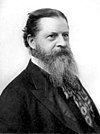
Karl Popper on Charles Sanders Peirce
“One of the greatest philosophers of all time.”
Karl Popper on Alfred Tarski
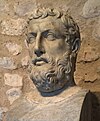
Karl Popper on Parmenides
“It was, for all I know, the first deductive theory of the world, the first deductive cosmology: One further step led to theoretical physics, and to the atomic theory.”
Karl Popper on Niels Bohr
“[Bohr was] a marvelous physicist, one of the greatest of all time, but he was a miserable philosopher, and one couldn't talk to him. He was talking all the time, allowing practically only one or two words to you and then at once cutting in.”

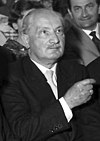
Karl Popper on Martin Heidegger
“I appeal to the philosophers of all countries to unite and never again mention Heidegger or talk to another philosopher who defends Heidegger. This man was a devil. I mean, he behaved like a devil to his beloved teacher [i.e., Husserl ], and he has a devilish influence on Germany. … One has to read Heidegger in the original to see what a swindler he was.”
Karl Popper on Immanuel Kant
“Individualism, united with altruism, has become the basis of our western civilization. It is the central doctrine of Christianity ('love your neighbor,' say the Scriptures, not 'love your tribe'); and it is the core of all ethical doctrines which have grown from our civilization and stimulated it. It is also, for instance, Kant's central practical doctrine ("always recognize that human individuals are ends, and do not use them as mere means to your end.")”

Karl Popper on Karl Marx
“The Marxist theory of history, in spite of the serious efforts of some of its founders and followers, ultimately adopted this soothsaying practice [of evading testability]. In some of its earlier formulations (for example in Marx's analysis of the character of the 'coming social revolution') their predictions were testable, and in fact falsified. Yet instead of accepting the refutations the followers of Marx re-interpreted both the theory and the evidence in order to make them agree. In this way they rescued the theory from refutation; but they did so at the price of adopting a device which made it irrefutable. They thus gave a 'conventionalist twist' to the theory; and by this stratagem they destroyed its much advertised claim to scientific status.”

Karl Popper on Rudolf Carnap
“Put in a nut-shell, my thesis amounts to this. The repeated attempts made by Rudolf Carnap to show that the demarcation between science and metaphysics coincides with that between sense and nonsense have failed. The reason is that the positivistic concept of 'meaning' or 'sense' (or of verifiability, or of inductive confirmability, etc.) is inappropriate for achieving this demarcation — simply because metaphysics need not be meaningless even though it is not science. In all its variations demarcation by meaninglessness has tended to be at the same time too narrow and too wide: as against all intentions and all claims, it has tended to exclude scientific theories as meaningless, while failing to exclude even that part of metaphysics which is known as 'rational theology'.”

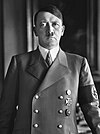
Karl Popper on Adolf Hitler
“Nazism and Fascism are thoroughly beaten, but I must admit that their defeat does not mean that barbarism and brutality have been defeated. On the contrary, it is no use closing our eyes to the fact that these hateful ideas achieved something like a victory in defeat. I have to admit that Hitler succeeded in degrading the moral standards of our Western world, and that in the world of today there is more violence and brutal force than would have been tolerated even in the decade after the first World war. And we must face the possibility that our civilization may ultimately be destroyed by those new weapons which Hitlerism wished upon us, perhaps even within the first decade after the second World war; for no doubt the spirit of Hitlerism won its greatest victory over us when, after its defeat, we used the weapons which the threat of Nazism had induced us to develop.”
Karl Popper on Albert Einstein
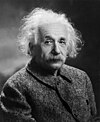
“I tried to persuade him to give up his determinism, which amounted to the view that the world was a four-dimensional Parmenidean block universe in which change was a human illusion, or very nearly so. (He agreed that this had been his view, and while discussing it I called him "Parmenides".) I argued that if men, or other organisms, could experience change and genuine succession in time, then this was real. It could not be explained away by a theory of the successive rising into our consciousness of time slices which in some sense coexist; for this kind of "rising into consciousness" would have precisely the same character as that succession of changes which the theory tries to explain away. ... I tried to present to Einstein-Parmenides as strongly as I could my conviction that a clear stand must be made against any idealistic view of time. And I also tried to show that, though the idealistic view was compatible with both determinism and indeterminism, a clear stand should be made in favor of an "open" universe — one in which the future was in no sense contained in the past or the present, even though they do impose severe restrictions on it. I argued that we should not be swayed by our theories to give up realism (for which the strongest arguments were based on common sense), though I think that he was ready to admit, as I was, that we might be forced one day to give it up if very powerful arguments (of Gödel's type, say) were to be brought against it. I therefore argued that with regard to time, and also to indeterminism (that is, the incompleteness of physics), the situation was precisely similar to the situation with regard to realism. Appealing to his own way of expressing things in theological terms, I said: if God had wanted to put everything into the world from the beginning, He would have created a universe without change, without organisms and evolution, and without man and man's experience of change. But He seems to have thought that a live universe with events unexpected even by Himself would be more interesting than a dead one.”
Quotes About Karl Popper
Gain deeper perspective through quotes about Karl Popper from others.
Alan Chalmers on Karl Popper
“I referred above to the Popperian school as a school, and yet it was not until I came to Sydney from London that I fully realised the extent to which I had been in a school. I found, to my surprise, that there were philosophers influenced by Wittgenstein or Quine or Marx who thought that Popper was quite wrong on many issues, and some who even thought that his views were positively dangerous. I think I have learnt much from that experience. One of the things that I have learnt is that on a number of major issues Popper is indeed wrong, as is argued in the latter portions of this book. However, this does not alter the fact that the Popperian approach is infinitely better than the approach adopted in most philosophy departments that I have encountered.”
Alan Ebenstein on Karl Popper
“The first article republished in Studies in Philosophy, Politics and Economics, "Degrees of Explanation," originally published in 1955, was largely consistent with Popper's methodology. Hayek embraced Popper's "hypothetico-deductive" approach to science: "The conception of science as a hypothetico-deductive system has been expounded by Karl Popper in a manner which brings out clearly some very important points." Here, as elsewhere in his work, Hayek distinguished between the facts of the natural and social sciences primarily on the basis of their complexity.”
John Eccles on Karl Popper 2 quotes
“I learned from Popper what for me is the essence of scientific investigation—how to be speculative and imaginative in the creation of hypotheses, and then to challenge them with the utmost rigor, both by utilizing all existing knowledge and by mounting the most searching experimental attacks. In fact, I learned from him even to rejoice in the refutation of a cherished hypothesis, because that, too, is a scientific achievement and because much has been learned by the refutation.”
John Horgan on Karl Popper
“[T]he paradox lurking at the heart of Karl Popper's career... Everyone says this opponent of dogmatism is almost pathologically dogmatic. ...Popper scoffs at scientists’ hope that they can achieve a final theory of nature. "...I think we have gone very far, but we are much further away." He... returns with his book Conjectures and Refutations... [and] reads his own words with reverence: "In our infinite ignorance we are all equal." ...Can a skeptic avoid self-contradiction... the Popper paradox? And if he doesn’t, if he preaches but fails to practice intellectual doubt and humility, does that negate his work? Not at all. Such paradoxes corroborate the skeptic’s point... the quest for truth is endless, twisty and riddled with pitfalls, into which even sharp-eyed seekers tumble. In our infinite ignorance we are all equal.”

James Ladyman on Karl Popper
“The leading critic of the positivists in their heyday was of course Popper. There has been a tendency for philosophers of science to regard Popper as something of an embarrassment. However, naturalistic philosophers should take it as an interesting fact about science that Popper has long been the favourite philosopher of science among scientists; and it would be condescending to attribute this entirely to the fact that Popper's philosophy is relatively non-complex, self-contained, and flattering to scientists.”
Tim Maudlin on Karl Popper
“Popper was kind of an egocentric jerk.”

Stanley Rosen on Karl Popper
“Socrates (and so Plato) makes it quite clear that the rule of wisdom is tyrannical, and that it cannot tolerate words or deeds, laws or traditional institutions, and certainly political theories that impinge upon its rule. In this sense, modern enemies of Plato's political thought, of whom the most prominent in our time is no doubt Karl Popper, are correct in their objections, although they are ingenuous or let us say insufficiently rigorous in their consideration of the political consequences of theoretical truth. In Popper's case, this is probably due to his conviction that we can establish the falsehood of a proposition but not its truth. This conviction may well be more compatible with democracy in the modern sense of the term than the conviction that genuine philosophers know the truth. The argument of the Republic on the other hand is that, if we did know the truth, we would be led to support a city very much like the one constructed in the Republic under the leadership of Socrates.”
John Maynard Smith on Karl Popper
“I do have a great respect for Popper. I mean, I think... he's nearer to... I mean, Popper's ambition, in relation to science, at least, was to discriminate between, sort of, science and what he called pseudo-science.”
Nassim Nicholas Taleb on Karl Popper
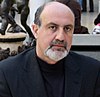
“Popper believed that any idea of Utopia is necessarily closed owing to the fact that it chokes its own refutations. The simple notion of a good society that cannot be left open for falsification is totalitarian. I learned from Popper, in addition to the difference between an open and a closed society, that between an open and a closed mind.”
Margaret Thatcher on Karl Popper
“I read Karl Popper's The Open Society and its Enemies. Popper, whose analysis in many ways complemented that of Hayek, approached Marxism from the point of view of the philosopher of the natural sciences. This meant that he was ideally equipped to expose the fraudulent claim of Marxists to have discovered immutable laws of history, social development or "progress" – laws which were comparable to the laws of natural science. It was not just that the "inevitable" course of events which Marx had prophesied had not occurred and showed no signs of occurring. Marx and Marxists had not even understood the scientific method, let alone practised it in their analysis. Unlike the Marxists – whether historians, economists or social scientists – who tried to "prove" their theories by accumulating more and more facts to sustain them, "the method of science is rather to look out for facts which may refute the theory... and the fact that all tests of the theory are attempted falsifications of predictions derived with its help furnishes the clue to scientific method". The political consequences of this basic error – perhaps more properly described as basic fraud – were summed up by Popper in the dedication of his later book The Poverty of Historicism: "In memory of the countless men, women and children of all creeds or nations or races who fell victims to the fascist and communist belief in Inexorable Laws of Historical Destiny."”

Bryan Magee on Karl Popper
“I got to know Bertrand Russell in the last years of his life. I knew Karl Popper quite well, and they were a whole class above me in intelligence. It wasn’t that I was jealous, it was that I was trying to grapple with these problems with inadequate weaponry… Popper had this originality, Russell had it, and Einstein had it in spades.”
Misattributed Quotes
Quotes mistakenly credited to Karl Popper
“The deepest, the only theme of human history, compared to which all others are of subordinate importance, is the conflict of skepticism with faith.”
“Leadership is solving problems. The day soldiers stop bringing you their problems is the day you have stopped leading them. They have either lost confidence that you can help or concluded you do not care. Either case is a failure of leadership.”
“When we enter a new situation in life and are confronted by a new person, we bring with us the prejudices of the past and our previous experiences of people. These prejudices we project upon the new person. Indeed, getting to know a person is largely a matter of withdrawing projections; of dispelling the smoke screen of what we imagine he is like and replacing it with the reality of what he is actually like.”
“A theory that explains everything, explains nothing.”
About Karl Popper
Sir Karl Raimund Popper (28 July 1902 – 17 September 1994) was an Austrian-British philosopher, academic and social commentator. One of the 20th century's most influential philosophers of science, Popper is known for his rejection of the classical inductivist views on the scientific method in favour of empirical falsification. According to Popper, a theory in the empirical sciences can never be proven, but it can be falsified, meaning that it can (and should) be scrutinised with decisive experiments. Popper was opposed to the classical justificationist account of knowledge, which he replaced with critical rationalism, namely "the first non-justificational philosophy of criticism in the history of philosophy".