Link Copied!
Joseph Priestley Quotes (1733-1804)
King, Scientist, Theologian
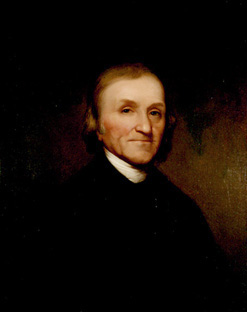
About Joseph Priestley
Joseph Priestley (13 March 1733 – 6 February 1804) was an English Unitarian clergyman, theologian, political theorist, and the scientist who is usually credited with the discovery of oxygen, as he was the first to isolate it in its gaseous state.
Best Joseph Priestley Quotes
Shortest
Earliest
Explore our curated collection of the most famous and impactful Joseph Priestley quotes.

“When we say there is a GOD, we mean that there is an intelligent designing cause of what we see in the world around us, and a being who was himself uncaused.”
“We more easily give our assent to any proposition when the person who contends for it appears, by his manner of delivering himself, to have a perfect knowledge of the subject of it.”

“From the fame opinion of a soul distinct from the body came the practice of praying, first for the dead, and then to them with a long train of other absurd opinions, and superstitious practices.”
“It is hardly possible not to suspect the truth of this doctrine of atonement, when we consider that the general maxims to which it may be reduced, are nowhere laid down, or asserted, in the Scriptures, but others quite contrary to them.”

“If the power of government be very extensive, and the subjects of it have, consequently, little power over their own actions, that government is tyrannical, and oppressive; whether, with respect to its form, it be a monarchy, an aristocracy, or even a republic.”

“All hereditary Government is in its nature tyranny. An heritable crown, or an heritable throne, or by what other fanciful name such things may be called, have no other significant explanation than that mankind are heritable property. To inherit a Government, is to inherit the people, as if they were flocks and herds.”
“The mind of man can never be wholly barren. Through our whole lives we are subject to successive impressions; for, either new ideas are continually flowing in, or traces of the old ones are marked deeper. If, therefore, you be not acquiring good principles be assured that you are acquiring bad ones; if you be not forming virtuous habits you are, how insensibly soever to yourselves, forming vicious ones…”
“And since every man retains, and can never be deprived of his natural right (founded on a regard to the general good) of relieving himself from all oppression, that is, from every thing that has been imposed upon him without his own consent; this must be the only true and proper foundation of all the governments subsisting in the world, and that to which the people who compose them have an unalienable right to bring them back.”
“If any person, discouraged by these difficulties, should think to relieve himself by rejecting all religion, natural and revealed, he will find, if he reflect at all, that he has miserably deceived himself, and that he is involved in greater perplexity than ever; the scheme he has adopted not only filling his mind with great darkness and distress, but being contrary to some of the plainest appearances in nature, and therefore manifestly irrational and absurd.”
“It is sufficiently evident from many circumstances, that the doctrine of the divinity of Christ did not establish itself without much opposition, especially from the unlearned among the Christians, who thought that it savoured of Polytheism, that it was introduced by those who had had a philosophical education, and was by degrees adopted by others, on account of its covering the great offence of the cross, by exalting the personal dignity of our Saviour.”
“Most of the early Christian writers thought the text "I and my Father are one," was to be understood of an unity or harmony of disposition only. Thus Tertullian observes, that the expression is unum, one thing, not one person; and he explains it to mean unity, likeness, conjunction, and of the love that the Father bore to the Son. Origen says, "let him consider that text, 'all that believed were of one heart and of one soul,' and then he will understand this, 'I and my Father are one.'"”

“It is known to all persons who are conversant in experimental philosophy, that there are many little attentions and precautions necessary to be observed in the conducting of experiments, which cannot well be described in words, but which it is needless to describe, since practice will necessarily suggest them; though, like all other arts in which the hands and fingers are made use of, it is only much practice that can enable a person to go through complex experiments, of this or any kind, with ease and readiness.”
“We find upon all occasions, the early Christian writers speak of the Father as superior to the Son, and in general they give him the title of God, as distinguished from the Son; and sometimes they expressly call him, exclusively of the Son, the only true God; a phraseology which does not at all accord with the idea of the perfect equality of all the persons in the Trinity. But it might well be expected, that the advances to the present doctrine of the Trinity should be gradual and slow. It was, indeed, some centuries before it was completely formed.”

“I am sorry... to have occasion to admonish Mr. Gibbon, that he should have distinguished better than he has done between christianity itself, and the corruptions of it. ...He should not have taken it for granted, that the doctrine of three persons in one God, or the doctrine of atonement for the sins of all mankind, by the death of one man, were any parts of the christian system; when, if he had read the New Testament for himself, he must have seen the doctrine of the proper unity of God, and also that of his free mercy to the penitent, in almost every page of it.”

“[The doctrine of air] I was led into in consequence of inhabiting a house adjoining to a public brewery, where I at first amused myself with making experiments on the fixed air [carbon dioxide] which I found ready made in the process of fermentation. When I removed from that house I was under the necessity of making the fixed air for myself; and one experiment leading to another, as I have distinctly and faithfully noted in my various publications on the subject, I by degrees contrived a convenient apparatus for the purpose, but of the cheapest kind.”

“Great as Bacon was, he was far from being free from the mistakes and prejudices of those who went before him. Even some of the most wild and absurd opinions of the antients have the sanction of his approbation and authority. He does not hesitate to assent to an opinion... that visual rays proceed from the eye; giving this reason for it, that every thing in nature is qualified to discharge its proper functions by its own powers, in the same manner as the sun, and other celestial bodies. He acknowledges, however, that the presence of light, as well as several other circumstances, is necessary to vision.”
“It is the earnest wish of my heart, that your minds may be well established in the sound principles of religious knowledge, because I am fully persuaded, that nothing else can be a sufficient foundation of a virtuous and truly respectable conduct in life, or of good hope in death. A mind destitute of knowledge (and, comparatively speaking, no kind of knowledge, besides that of religion, deserves the name) is like a field on which no culture has been bestowed, which, the richer it is, the ranker weeds it will produce, If nothing good be sown in it, it will be dccupied by plants that are useless or noxious.”
“As I conceive this doctrine to be a gross misrepresentation of the character and moral government of God, and to affect many other articles in the scheme of Christianity, greatly disfiguring and depraving it; I shall show, in a fuller manner than I mean to do with respect to any other corruption of Christianity, that it has no countenance whatever in reason, or the Scriptures; and, therefore, that the whole doctrine of atonement, with every modification of it, has been a departure from the primitive and genuine doctrine of Christianity.”

“Whenever our Lord speaks of the object of his mission and death, as he often does, it is either in a more general way, as for the salvation of the world, to do the will of God, to fulfil the scripture prophecies … or more particularly, to give the fullest proof of his mission by his resurrection from the dead, and an assurance of a similar resurrection of all his followers. He also compares his being raised upon the cross to the elevation of the serpent in the wilderness, and to seed buried in the ground, as necessary to its future increase. But all these representations are quite foreign to anything in the doctrine of atonement.”

“Having thought it right to leave behind me some account of my friends and benefactors, it is in a manner necessary that I also give some account of myself; and as the like has been done by many persons, and for reasons which posterity has approved, I make no further apology for following their example. If my writings in general have been useful to my contemporaries, I hope that this account of myself will not be without its use to those who may come after me, and especially in promoting virtue and piety, which, I hope I may say, it has been my care to practise myself, as it has been my business to inculcate them upon others.”

“The mind of man will never be able to contemplate the being, perfections, and providence of God without meeting with inexplicable difficulties. We may find sufficient reason for acquiescing in the darkness which involves these great subjects, but we must never expect to see them set in a perfectly clear light. But notwithstanding this, we may know enough of the divine being, and of his moral government, to make us much better and happier beings than we could be without such knowledge; and even the consideration of the insuperable difficulties referred to above is not without its use, as it tends to impress the mind with sentiments of reverence, humility, and submission.”

“I married a daughter of Mr. Isaac Wilkinson, an ironmaster, near Wrexham, in Wales, with whose family I had become acquainted, in consequence of having the youngest son, William, at my school at Nantwich. This proved a very suitable and happy connexion, my wife being a woman of an excellent understanding, much improved by reading, of great fortitude and strength of mind, and of a temper in the highest degree affectionate and generous; feeling strongly for others, and little for herself. Also, greatly excelling in every thing relating to household affairs, she entirely relieved me of all concern of that kind, which allowed me to give all my time to the prosecution of my studies, and the other duties of my station.”

“The friends of genuine, and I will add of rational Christianity, have not, however, on the whole, much reason to regret that their enemies have not made these distinctions; since by this means, we have been taught to make them ourselves; so that Christianity is perhaps as much indebted to its enemies, as to its friends, for this important service. In their indiscriminate attacks, whatever has been found to be untenable has been gradually abandoned, and I hope the attack will be continued till nothing of the wretched outworks be left; and then, I doubt not, a safe and impregnable fortress, will be sound in the center, a fortress built upon a rock, against which the gates of death will not prevail.”
Joseph Priestley Quotes by Topic
Find exactly what you are looking for by browsing this categorized list of Joseph Priestley quotes by topic.
Joseph Priestley on History of chemistry 2 quotes
“It was in consequence of living for some time in the neighbourhood of a public brewery, a little after Midsummer in 1767, that I was induced to make experiments on fixed air...”

Joseph Priestley on History of science 2 quotes
“Let us not... contend about merit, but let us all be intent on forwarding the common enterprize, and equally enjoy any progress we may make towards succeeding in it; and above all, let us acknowledge the guidance of that Great Being, who has put a spirit in man, and whose inspiration giveth him understanding.”

Joseph Priestley on Idolatry 2 quotes
“The unity of God is a doctrine on which the greatest stress is laid in the whole system of revelation. To guard this most important article was the principal object of the Jewish religion; and, notwithstanding the proneness of the Jews to idolatry, at length it fully answered its purpose in reclaiming them, and in impressing the minds of many persons of other nations in favour of the same fundamental truth.”

Joseph Priestley on Existence of God
“When we say there is a GOD, we mean that there is an intelligent designing cause of what we see in the world around us, and a being who was himself uncaused.”

Joseph Priestley on Lightning
“To demonstrate, in the completest manner possible, the sameness of the electric fluid with the matter of lightning, Dr. Franklin, astonishing as it must have appeared, contrived actually to bring lightning from the heavens, by means of an electrical kite, which he raised when a storm of thunder was perceived to be coming on.”

Joseph Priestley on Phlogiston theory
“In the course of my inquiries I was... soon satisfied that atmospherical air is not an unalterable thing; for that, according to my first hypothesis, the phlogiston with which it becomes loaded from bodies burning in it, and animals breathing it, and various other chemical processes, so far alters and depraves it, as to render it altogether unfit for inflammation, respiration, and other purposes to which it is subservient; and I had discovered that agitation in water, the process of vegetation, and probably other natural processes, restore it to its original purity.”

Joseph Priestley on Optics
“Contemporary with Vitellio and Peccam was... Roger Bacon, a man of almost universal genius, and who wrote on almost every branch of science. He frequently quotes Alhazen on the subject of optics, and seems to have carefully studied his writings, as well as those of other Arabians, which were the fountains of natural knowledge in those days, and which had been introduced into Europe by means of the Moors in Spain. Notwithstanding the pains this great man took with the subject of opticks, it does not appear that, with respect to theory, he made any considerable advance upon what Alhazen had done before him.”

Joseph Priestley on History of optics
“Contemporary with Vitellio and Peccam was... Roger Bacon, a man of almost universal genius, and who wrote on almost every branch of science. He frequently quotes Alhazen on the subject of optics, and seems to have carefully studied his writings, as well as those of other Arabians, which were the fountains of natural knowledge in those days, and which had been introduced into Europe by means of the Moors in Spain. Notwithstanding the pains this great man took with the subject of opticks, it does not appear that, with respect to theory, he made any considerable advance upon what Alhazen had done before him.”

Joseph Priestley on Miracles
“That miracles are things in themselves possible, must be allowed so long as it is evident that there is in nature a power equal to the working of them. And certainly the power, principle, or being, by whatever name it be denominated, which produced the universe, and established the laws of it, is fully equal to any occasional departures from them. The object and use of those miracles on which the christian religion is founded, is also maintained to be consonant to the object and use of the general system of nature, viz. the production of happiness. We have nothing, therefore to do, but to examine, by the known rules of estimating the value of testimony whether there be reason to think that such miracles have been wrought, or whether the evidence of Christianity, or of the christian history, does not stand upon as good ground as that of any other history whatever.”

Joseph Priestley on Sublime (philosophy)
“The History of Electricity is a field full of pleasing objects, according to all the genuine and universal principles of taste, deduced from a knowledge of human nature. Scenes like these, in which we see a gradual rise and progress in things, always exhibit a pleasing spectacle to the human mind. Nature, in all her delightful walks, abounds with such views, and they are in a more especial manner connected with every thing that relates to human life and happiness; things, in their own nature, the most interesting to us. Hence it is, that the power of association has annexed crouds of pleasing sensations to the contemplation of every object, in which this property is apparent. This pleasure, likewise, bears a considerable resemblance to that of the sublime, which is one of the most exquisite of all those that affect the human imagination. For an object in which we see a perpetual progress and improvement is, as it were, continually rising in its magnitude; and moreover, when we see an actual increase, in a long period of time past, we can not help forming an idea of an unlimited increase in futurity; which is a prospect really boundless, and sublime.”

Joseph Priestley on Progress
“The History of Electricity is a field full of pleasing objects, according to all the genuine and universal principles of taste, deduced from a knowledge of human nature. Scenes like these, in which we ſee a gradual rise and progress in things, always exhibit a pleasing spectacle to the human mind. Nature, in all her delightful walks, abounds with such views, and they are in a more especial manner connected with every thing that relates to human life and happiness; things, in their own nature, the most interesting to us. Hence it is, that the power of association has annexed crouds of pleasing sensations to the contemplation of every object, in which this property is apparent. This pleasure, likewise, bears a considerable resemblance to that of the ſublime, which is one of the moſt exquisite of all those that affect the human imagination. For an object in which we see a perpetual progress and improvement is, as it were, continually rising in its magnitude; and moreover, when we see an actual increase, in a long period of time past, we can not help forming an idea of an unlimited increase in futurity; which is a prospect really boundless, and sublime.”

What Joseph Priestley Said About Others
Discover personal opinions Joseph Priestley shared regarding contemporaries.
Joseph Priestley on Roger Bacon 3 quotes
“Great as Bacon was, he was far from being free from the mistakes and prejudices of those who went before him. Even some of the most wild and absurd opinions of the antients have the sanction of his approbation and authority. He does not hesitate to assent to an opinion... that visual rays proceed from the eye; giving this reason for it, that every thing in nature is qualified to discharge its proper functions by its own powers, in the same manner as the sun, and other celestial bodies. He acknowledges, however, that the presence of light, as well as several other circumstances, is necessary to vision.”

Joseph Priestley on Benjamin Franklin 2 quotes
“Using the Leyden jar, Franklin “collected electric fire very copiously,” Priestley recounted. That “electric fire”—or electricity—could then be discharged at a later time.”
Joseph Priestley on Isaac Newton
“Were it possible to trace the succession of ideas in the mind of Sir Isaac Newton, during the time that he made his greatest discoveries, I make no doubt but our amazement at the extent of his genius would a little subside. But if, when a man publishes discoveries, he, either through design, or through habit, omit the intermediate steps by which he himself arrived at them; it is no wonder that his speculations confound others... [W]here we see him most in the character of an experimental philosopher, as in his optical inquiries... we may easily conceive that many persons, of equal patience and industry... might have done what he did. And were it possible to see in what manner he was first led to those speculations, the very steps by which he pursued them, the time that he spent in making experiments, and all the unsuccessful and insignificant ones that he made in the course of them; as our pleasure of one kind would be increased, our admiration would probably decrease. Indeed he himself used candidly to acknowledge, that if he had done more than other men, it was owing rather to a habit of patient thinking, than to any thing else. ...[T]he interests of science have suffered by the excessive admiration and wonder, with which several first rate philosophers are considered; and... an opinion of the greater equality of mankind, in point of genius, and powers of understanding, would be of real service in the present age.”

Quotes About Joseph Priestley
Gain deeper perspective through quotes about Joseph Priestley from others.
John Adams on Joseph Priestley 2 quotes
“Inquisitions and Despotisms are not alone in persecuting Philosophers. The people themselves, we see, are capable of persecuting a Priestley, as another people formerly persecuted Socrates.”
James Burrow on Joseph Priestley
“Joseph Priestley of Warrington, Doctor of laws, Author of a chart of Biography & Several other valuable works, a gentleman of great Merit & learning, & very well versed in Mathematical & philosophical Enquiries, being desirous of offering himself as a candidate for election into this Society, is recomended by us on our personal knowledge, as highly deserving that honour; & we believe that he will, if elected, be a usefull and valuable Member.”
J. D. Bowers on Joseph Priestley
“Nathaniel Lardner, the author of Letter on the Logos, the work Priestley credited with his own conversion from Arianism to Socinianism, had published anonymously to avoid retribution from both the civil authorities and private citizens — in vain as it turns out.”
Benjamin Franklin on Joseph Priestley
“That the vegetable creation should restore the air which is spoiled by the animal part of it, looks like a rational system, and seems to be of a piece with the rest. Thus fire purifies water all the world over. It purifies it by distillation, when it raises it in vapours, and lets it fall in rain; and farther still by filtration, when keeping it fluid, it suffers that rain to percolate the earth. We knew before that putrid animal substances were converted into sweet vegetables when mixed with the earth and applied as manure; and now, it seems, that the same putrid substances, mixed with the air, have a similar effect. The strong, thriving state of your mint, in putrid air, seems to show that the air is mended by taking something from it, and not by adding to it. I hope this will give some check to the rage of destroying trees that grow near houses, which has accompanied our late improvements in gardening, from an opinion of their being unwholesome. I am certain, from long observation, that there is nothing unhealthy in the air of woods; for we Americans have everywhere our country habitations in the midst of woods, and no people on earth enjoy better health or are more prolific.”
Thomas Jefferson on Joseph Priestley
“Yours is one of the few lives precious to mankind, and for the continuance of which every thinking man is solicitous. Bigots may be an exception. What an effort, my dear sir, of bigotry in politics and religion have we gone through! The barbarians really flattered themselves they should be able to bring back the times of Vandalism, when ignorance put everything into the hands of power and priestcraft. All advances in science were proscribed as innovations. They pretended to praise and encourage education, but it was to be the education of our ancestors. We were to look backwards, not forwards, for improvement … This was the real ground of all the attacks on you. Those who live by mystery and charlntanerie, fearing you would render them useless by simplifying the Christian philosophy — the most sublime and benevolent, but most perverted system that ever shone on man — endeavored to crush your well-earned and well-deserved fame. But it was the Lilliputians upon Gulliver. Our countrymen have recovered from the alarm into which art & industry had thrown them; science & honesty are replaced on their high ground; and you, my dear Sir, as their great apostle, are on it's pinnacle.”

Thomas Samuel Kuhn on Joseph Priestley
“In 1774 he thought he had obtained nitrous oxide... in 1775 he saw the gas as dephlogisticated air... If we refuse the palm to Priestley, we cannot award it to Lavoisier for the work of 1775... Lavoisier insisted that oxygen was an atomic "principle of acidity"… formed only when that "principle" united with "caloric"... Ignoring Scheele, we can safely say that oxygen had not been discovered before 1774, and we would probably say that it had been discovered by 1777 or shortly thereafter. But... any attempt to date the discovery must inevitably be arbitrary because discovering a new sort of phenomenon is necessarily a complex event, one which involves recognizing both that something is and what it is.”
His son on Joseph Priestley
“Few men have had to struggle for so many years with circumstances more straitened and precarious than my father; few men have ventured to attack so many or such inveterate prejudices respecting the prevalent religion of his country, or have advanced bolder or more important opinions in opposition to the courtly politics of the powers that be; few have had to encounter more able opponents in his literary career, or have been exposed to such incessant and vindictive obloquy, from men of every description, in return for his unremitting exertions in the cause of truth; yet none have more uniformly proceeded with a single eye, regardless of consequences, to act as his conviction impelled him, and his conscience dictated. His conduct brought with it its own reward, reputation, and respect, from the most eminent of his contemporaries, the affectionate attachment of most valuable friends, and a cheerfulness of disposition arising in part from conscious rectitude which no misfortunes could long repress. But to me it seems, that conscious rectitude alone would hardly of itself have been able to support him under some of the afflictions he was doomed to bear. He had a farther resource, to him never failing and invaluable, a firm persuasion of the benevolence of the Almighty towards all his creatures, and the conviction that every part of his own life, like every part of the whole system, was preordained for the best upon the whole of existence. Had he entertained the gloomy notions of Calvinism, in which he was brought up, this cheering source of contentment and resignation would probably have failed him, and irritation and despondency would have gained an unhappy ascendancy. But by him the deity was not regarded as an avenging tyrant, punishing, for the sake of punishing his weak and imperfect creatures, but as a wise and kind parent, inflicting those corrections only that are necessary to bring our dispositions to the proper temper, and to fit us for the highest state of happiness of which our natures are ultimately capable.”
Samuel Philip Sadtler on Joseph Priestley
“Priestley, in 1774, was the first to prepare gaseous ammonia by heating together sal ammoniac and [slaked] lime and collecting the gas over mercury. He gave to this gas the name of "alkaline air," which later became "volatile alkali."”
Source on Joseph Priestley 3 quotes
“Priestley thought he had stumbled across a crucial observation: "mephitic" air... was a conductor of electricity... only to discover in the coming weeks... condensed water in the glass... but the experiment led him to one of his most important contributions to the science of electricity: the addition of charcoal to the then short list of substances... capable of conduction, alongside water and metal.”
About Joseph Priestley
Joseph Priestley (13 March 1733 – 6 February 1804) was an English Unitarian clergyman, theologian, political theorist, and the scientist who is usually credited with the discovery of oxygen, as he was the first to isolate it in its gaseous state.