Charles Augustin Sainte-Beuve, Les grands écrivains français, i, p. 121
“
One of [Maistre's] favourite expressions, and one which he often used was point-blank. This was the secret of his tactics, this was his gesture; this was the way he acted; he advanced alone against a whole enemy army, mouthing his challenge, and shooting the leader point-blank. He attacks in glory, to triumph, and earns an excess of reprisals. In Rome’s spiritual distress, this was the Christian Scaevola, and the three hundred others did not follow.
— Charles Augustin Sainte-Beuve
What It Means
This is a placeholder explanation generated by the low-overhead model. It interprets "One of [Maistre's] favourite expressions, and one which he often used was point-blank. This was the secret of his tactics, this was his gesture; this was the way he acted; he advanced alone against a whole enemy army, mouthing his challenge, and shooting the leader point-blank. He attacks in glory, to triumph, and earns an excess of reprisals. In Rome’s spiritual distress, this was the Christian Scaevola, and the three hundred others did not follow." in the context of "Charles Augustin Sainte-Beuve, Les grands écrivains français, i, p. 121" to mean that wisdom is timeless.

Source: Wikiquote: "Joseph de Maistre" (Quotes about Joseph de Maistre)
The 'What it means' explanation text was generated by Google Gemini Flash (accessed January 18, 2026). https://gemini.google.com/app
Tags
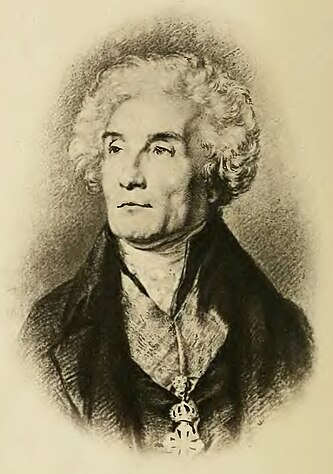
About Joseph de Maistre
Joseph de Maistre (1 April 1753 – 26 February 1821) was a Savoyard philosopher, writer, lawyer and diplomat who advocated social hierarchy and monarchy in the period immediately following the French Revolution. Despite his close personal and intellectual ties with France, Maistre was throughout his life a subject of the Kingdom of Sardinia, which he served as a member of the Savoy Senate (1787–1792), ambassador to Russia (1803–1817) and minister of state to the court in Turin (1817–1821).
View all quotes →