p. 293
“
It is permitted to modern philosophy, all swollen up with Bacon's venom, to repeat to us to satiety, to disgust, to nausea, that we make God similar to man; we will reply as many times that is not quite the same thing to say that a man resembles his portrait or that his portrait resembles him.
— Joseph de Maistre
What It Means
This is a placeholder explanation generated by the low-overhead model. It interprets "It is permitted to modern philosophy, all swollen up with Bacon's venom, to repeat to us to satiety, to disgust, to nausea, that we make God similar to man; we will reply as many times that is not quite the same thing to say that a man resembles his portrait or that his portrait resembles him." in the context of "p. 293" to mean that wisdom is timeless.

Source: Wikiquote: "Joseph de Maistre" (Quotes, An Examination of the Philosophy of Francis Bacon (1836))
The 'What it means' explanation text was generated by Google Gemini Flash (accessed January 18, 2026). https://gemini.google.com/app
Tags
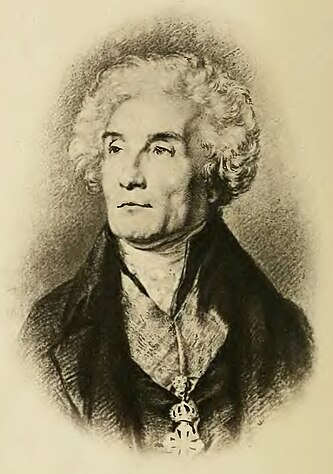
About Joseph de Maistre
Joseph de Maistre (1 April 1753 – 26 February 1821) was a Savoyard philosopher, writer, lawyer and diplomat who advocated social hierarchy and monarchy in the period immediately following the French Revolution. Despite his close personal and intellectual ties with France, Maistre was throughout his life a subject of the Kingdom of Sardinia, which he served as a member of the Savoy Senate (1787–1792), ambassador to Russia (1803–1817) and minister of state to the court in Turin (1817–1821).
View all quotes →