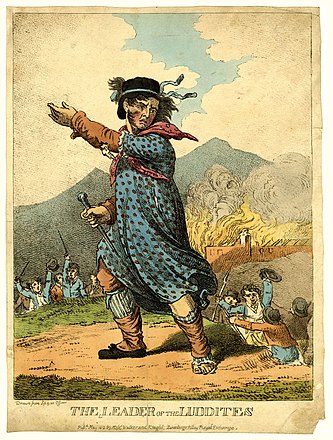
The attack of the Luddites was not occasioned by the introduction of new machinery, however, as is commonly thought, for there is no evidence of such in 1811 and 1812 when Luddism proper began. Rather, the destruction was leveled at the new slip-shod methods which were ordered into effect on the extant machinery. Not an attack against production on economic grounds, it was above all the violent response of the textile workers (soon joined by others) to their attempted degradation in the form of inferior work; shoddy goods — the hastily-assembled "cut-ups," primarily — was the issue at hand.
What It Means
This is a placeholder explanation generated by the low-overhead model. It interprets "The attack of the Luddites was not occasioned by the introduction of new machinery, however, as is commonly thought, for there is no evidence of such in 1811 and 1812 when Luddism proper began. Rather, the destruction was leveled at the new slip-shod methods which were ordered into effect on the extant machinery. Not an attack against production on economic grounds, it was above all the violent response of the textile workers (soon joined by others) to their attempted degradation in the form of inferior work; shoddy goods — the hastily-assembled "cut-ups," primarily — was the issue at hand." in the context of "John Zerzan, Elements of Refusal (1999), p. 108" to mean that wisdom is timeless.
Tags

About John Zerzan