But now, some of our countrymen in this island, well affected to these studies, and the more public good, procured a most learned mathematician to translate the same into our vulgar English tongue, who after he had finished it, sent a copy of it to me, to be seen and considered on by myself. I having most willingly and gladly done the same, find it to be most exact and precisely conformable to my mind and the original. Therefore it may please you who are inclined to these studies, to receive it from me and the translator, with as much good will as we recommend it unto you.—Fare thee well.
What It Means
This is a placeholder explanation generated by the low-overhead model. It interprets "But now, some of our countrymen in this island, well affected to these studies, and the more public good, procured a most learned mathematician to translate the same into our vulgar English tongue, who after he had finished it, sent a copy of it to me, to be seen and considered on by myself. I having most willingly and gladly done the same, find it to be most exact and precisely conformable to my mind and the original. Therefore it may please you who are inclined to these studies, to receive it from me and the translator, with as much good will as we recommend it unto you.—Fare thee well." in the context of "Canon Mirificus, Englsh edition (1616)" to mean that wisdom is timeless.
Tags
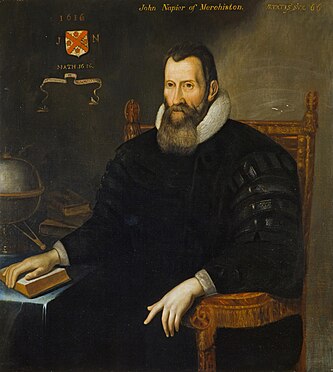
About John Napier