John Middleton Murry on Friedrich Hölderlin
← Back to John Middleton Murry Profile
“The fact remains that Hölderlin's creed was a kind of pantheism – thought it has many varieties – and that his supreme value was beauty – though beauty is variously understood and experienced. Beauty for Hölderlin was not a thing in itself, but rather the grace attendant on a harmonious manifestation of the powers of Nature. Athenian civilization was the type of the beautiful, because Nature achieved in it her own perfect form.”
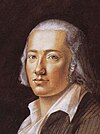
“It was the function of poetry, not of himself as the poet, that he thought highly. That function was sacred, for the poet was the priest of the divine. Mr. Peacock – we think rightly – compares him with Blake both for his isolation among his contemporaries and for the purity of his utterance, which seems to carry with it so little base or neutral matter. He can be compared with Blake also for his sense of inspiration; but whereas the divine for Blake was gradually concentrated in a power which he identified with the god of Christianity, Hölderlin sought for it in the gods. These gods of his – of whose imaginative reality his poetry convinces us – appear to have been created by a singular combination of German philosophical pantheism and a profound insight into the religious sources of Greek poetry.”