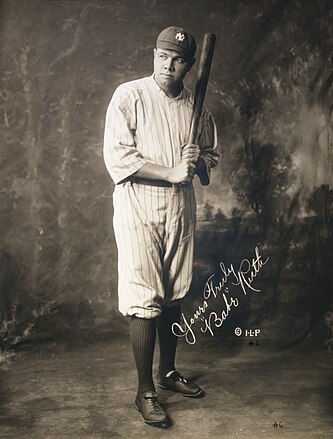
That's the kind of hitter for me. The man who can lean against the ball and send it on a ride when there are men ahead of him is the only batter worth thinking about in baseball. There are many players with big batting averages who never advance a runner. Give me the man who meets the ball when a hit will do the most good. He will be a valuable man, no matter what the averages tell.
What It Means
This is a placeholder explanation generated by the low-overhead model. It interprets "That's the kind of hitter for me. The man who can lean against the ball and send it on a ride when there are men ahead of him is the only batter worth thinking about in baseball. There are many players with big batting averages who never advance a runner. Give me the man who meets the ball when a hit will do the most good. He will be a valuable man, no matter what the averages tell." in the context of "John McGraw, reacting to Ruth's tape-measure HR and RBI single, contributing to Boston's pre-season victory over McGraw's Giants, in "McGraw Seems Strong for Babe Ruth," in The Baltimore Sun (April 7, 1919), p. 9" to mean that wisdom is timeless.
Tags

About John McGraw