• Variant paraphrase, sometimes cited as a direct quote: One unerring mark of the love of truth is not entertaining any proposition with greater assurance than the proofs it is built upon will warrant.
• As paraphrased in Peter's Quotations : Ideas for our Time (1979) by Laurence J. Peter, p. 500; also in The Demon-Haunted World : Science as a Candle in the Dark (1994) by Carl Sagan, p. 64.
He that would seriously set upon the search of truth, ought in the first place to prepare his mind with a love of it. For he that loves it not, will not take much pains to get it; nor be much concerned when he misses it. There is nobody in the commonwealth of learning who does not profess himself a lover of truth: and there is not a rational creature that would not take it amiss to be thought otherwise of. And yet, for all this, one may truly say, that there are very few lovers of truth, for truth's sake, even amongst those who persuade themselves that they are so. How a man may know whether he be so in earnest, is worth inquiry: and I think there is one unerring mark of it, viz. The not entertaining any proposition with greater assurance than the proofs it is built upon will warrant. Whoever goes beyond this measure of assent, it is plain receives not the truth in the love of it; loves not truth for truth's sake, but for some other bye-end.
What It Means
This is a placeholder explanation generated by the low-overhead model. It interprets "He that would seriously set upon the search of truth, ought in the first place to prepare his mind with a love of it. For he that loves it not, will not take much pains to get it; nor be much concerned when he misses it. There is nobody in the commonwealth of learning who does not profess himself a lover of truth: and there is not a rational creature that would not take it amiss to be thought otherwise of. And yet, for all this, one may truly say, that there are very few lovers of truth, for truth's sake, even amongst those who persuade themselves that they are so. How a man may know whether he be so in earnest, is worth inquiry: and I think there is one unerring mark of it, viz. The not entertaining any proposition with greater assurance than the proofs it is built upon will warrant. Whoever goes beyond this measure of assent, it is plain receives not the truth in the love of it; loves not truth for truth's sake, but for some other bye-end." in the context of "John Locke, An Essay Concerning Human Understanding (1689), Book IV, Ch. 19 : Of Enthusiasm (Chapter added in the fourth edition).
• Variant paraphrase, sometimes cited as a direct quote: One unerring mark of the love of truth is not entertaining any proposition with greater assurance than the proofs it is built upon will warrant.
• As paraphrased in Peter's Quotations : Ideas for our Time (1979) by Laurence J. Peter, p. 500; also in The Demon-Haunted World : Science as a Candle in the Dark (1994) by Carl Sagan, p. 64." to mean that wisdom is timeless.
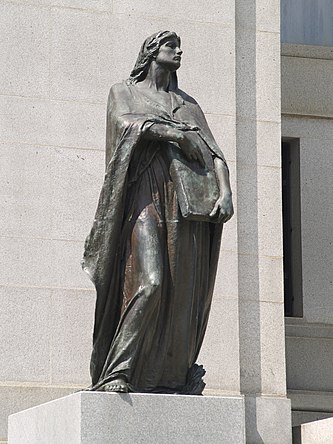

About John Locke