Link Copied!
John Keats Quotes (1795-1821)
Poet
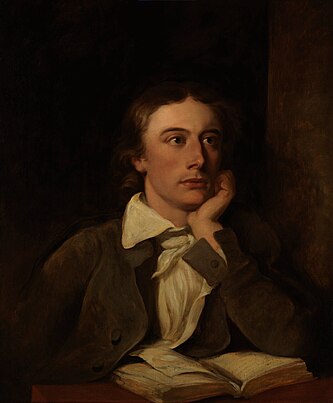
























































About John Keats
John Keats (October 31, 1795 – February 23, 1821) was one of the principal poets of the English Romantic movement.
Best John Keats Quotes
Shortest
Earliest
Explore our curated collection of the most famous and impactful John Keats quotes.

“The days of peace and slumberous calm are fled.”

“A poor, weak, palsy-stricken, churchyard thing.”

“O for a life of Sensations rather than of Thoughts!”

“Call the world if you please "The vale of soul-making."”

“Ever let the Fancy roam,
Pleasure never is at home.”
Pleasure never is at home.”


“Pleasure is oft a visitant; but pain
Clings cruelly to us.”
Clings cruelly to us.”

“There is an awful warmth about my heart like a load of immortality.”
John Keats Quotes by Topic
Find exactly what you are looking for by browsing this categorized list of John Keats quotes by topic.
John Keats on Flowers 10 quotes
View all 10 quotes on Flowers →John Keats on Love 7 quotes
“Love in a hut, with water and a crust, Is—Love, forgive us!—cinders, ashes, dust.”

John Keats on Roses 6 quotes
View all 6 quotes on Roses →John Keats on Poetry about love 6 quotes
“Love in a hut, with water and a crust, Is—Love, forgive us!—cinders, ashes, dust.”
John Keats on Music 3 quotes
View all 3 quotes on Music →John Keats on Sorrow 3 quotes
“O, sorrow! Why dost borrow Heart's lightness from the merriment of May?”
John Keats on Immortality 3 quotes
“He ne'er is crowned with immortality Who fears to follow where airy voices lead.”
John Keats on Poetry 3 quotes
“The poetry of earth is never dead; * * * * * The poetry of earth is ceasing never.”

John Keats on Poets 3 quotes
“O 'tis a very sin For one so weak to venture his poor verse In such a place as this.”

John Keats on Nightingales 3 quotes
“Where the nightingale doth sing Not a senseless, tranced thing, But divine melodious truth.”
John Keats on Purple 2 quotes
“That purple-linèd palace of sweet sin,”

What John Keats Said About Others
Discover personal opinions John Keats shared regarding contemporaries.
John Keats on William Shakespeare 4 quotes
View all 4 quotes on William Shakespeare →John Keats on Women 3 quotes
“I have met with women whom I really think would like to be married to a poem and to be given away by a novel.”

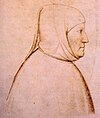
John Keats on Petrarch
“Lovely Laura in her light green dress, And faithful Petrarch gloriously crowned.”
John Keats on Wives
John Keats on William Wordsworth
John Keats on Lord Byron
“You speak of Lord Byron and me — there is this great difference between us. He describes what he sees — I describe what I imagine. Mine is the hardest task.”

John Keats on Maiden
“Should ever the fine-eyed maid to me be kind; Ah! surely it must be whenever I find; Some flowery spot, sequestered, wild, romantic; That often must have seen a poet frantic.”

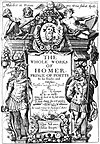
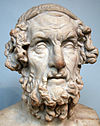
John Keats on Homer
“Oft of one wide expanse had I been told That deep-browed Homer ruled as his demesne; Yet never did I breathe its pure serene Till I heard Chapman speak out loud and bold: Then felt I like some watcher of the skies When a new planet swims into his ken.”
John Keats on Ruth (biblical figure)
“The voice I hear this passing night was heard In ancient days by emperor and clown: Perhaps the self-same song that found a path Through the sad heart of Ruth, when, sick for home, She stood in tears amid the alien corn;”

John Keats on George Chapman
“Much have I travell'd in the realms of gold, And many goodly states and kingdoms seen; Round many western islands have I been Which bards in fealty to Apollo hold. Oft of one wide expanse had I been told That deep-brow'd Homer ruled as his demesne; Yet did I never breathe its pure serene Till I heard Chapman speak out loud and bold: Then felt I like some watcher of the skies When a new planet swims into his ken; Or like stout Cortez when with eagle eyes He stared at the Pacific—and all his men Look'd at each other with a wild surmise— Silent, upon a peak in Darien.”

Quotes About John Keats
Gain deeper perspective through quotes about John Keats from others.
Paula Gunn Allen Interview on John Keats
“The other people that I was simply made for were the Romantic poets. Shelley, in particular, and Keats.”
Matthew Arnold on John Keats
“What harm he has done in English Poetry. As Browning is a man with a moderate gift passionately desiring movement and fulness, and obtaining but a confused multitudinousness, so Keats with a very high gift, is yet also consumed by this desire; and cannot produce the truly living and moving, as his conscience keeps telling him. They will not be patient neither understand that they must begin with an Idea of the world in order not be prevailed over by the world's multitudinousness: or if they cannot get that, at least with isolated ideas: and all other things shall (perhaps) be added unto them.”

Thomas Carlyle on John Keats
“[On Monckton Milne's Life of Keats] An attempt to make us eat dead dog by exquisite currying and cooking [...] The kind of man that Keats was gets ever more horrible to me. Forces of hunger for every pleasure of every kind, and want of all other force -- that is a combination! Such a structure of soul, it would once have been very evident, was a chosen 'Vessel of Hell' [...]”

Lord Byron on John Keats 2 quotes
“Here are Johnny Keats's piss a-bed poetry [...] There is such trash of Keats and the like upon my tables, that I am ashamed to look at them [...] No more Keats, I entreat: flay him alive; if some of you don't I must skin him myself: there is no bearing the driveling idiotism of the Mankin.
The Edinburgh praises Jack Keats or Ketch, or whatever his names are [...] why, his is the Onanism of Poetry -- something like the pleasure an Italian fiddler extracted out of being suspended daily by a Street Walker in Drury Lane. This went on for some weeks: at last the Girl went to get a pint of Gin -- met another, chatted too long, and Cornelli was hanged outright before she returned. Such like is the trash they praise, and such will be the end of the outstretched poesy of this miserable Self-polluter of the human mind.
Mr Keats, whose poetry you enquire after, appears to me what I have already said: such writing is a sort of mental masturbation -- he is always frigging his Imagination. I don't mean he is indecent, but viciously soliciting his ideas into a state, which is neither poetry nor anything else but a Bedlam vision produced by raw pork and opium.”
Jorge Luis Borges on John Keats
“Keats, entirely a stranger to error, could believe that the nightingale enchanting him was the same one Ruth heard amid the alien corn of Bethlehem in Judah; Stevenson posits a single bird that consumes the centuries: "the nightingale that devours time." Schopenhauer — impassioned, lucid Schopenhauer — provides a reason: the pure corporeal immediacy in which animals live, oblivious to death and memory. He then adds, not without a smile: Whoever hears me assert that the grey cat playing just now in the yard is the same one that did jumps and tricks there five hundred years ago will think whatever he likes of me, but it is a stranger form of madness to imagine that the present-day cat is fundamentally an entirely different one.”
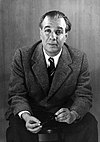
Charles Armitage Brown on John Keats
“In the latter part of that year's summer [1817] I first saw him. It was on the Hampstead road that we were introduced to each other.... ...in that interview of a minute I inwardly desired his acquaintanceship, if not his friendship... He was small in stature, well proportioned, compact in form, and, though thin, rather muscular; — one of the many who prove that manliness is distinct from height and bulk. There is no magic equal to that of an ingenuous countenance, and I never beheld any human being's so ingenuous as his. His full fine eyes were lustrously intellectual, and beaming (at that time!) with hope and joy. It has been remarked that the most faulty feature was his mouth; and, at intervals, it was so. But, whenever he spoke, or was, in any way, excited, the expression of the lips was so varied and delicate, that they might be called handsome.”
Mrs. Maria Dilke on John Keats
“A very odd young man, but good-tempered, and good-hearted, and very clever indeed.”
Micere Githae Mugo on John Keats
“I also liked the Romantic poets. Wordsworth, Keats, Burns and Blake were some of my favourites. There was something about their rebellious spirit against the evils of industrialization that moved me. Of course now, some of their pessimism, mysticism and limited critical realist visions make me quite uncomfortable.”

Edward Holmes on John Keats
“Keats was in childhood not attached to books. His penchant was for fighting. He would fight any one – morning, noon, and night, his brother among the rest. It was meat and drink to him. Jennings their sailor relation was always in the thoughts of the brothers, and they determined to keep up the family reputation for courage; George in a passive manner; John and Tom more fiercely. The favourites of John were few; after they were known to fight readily he seemed to prefer them for a sort of grotesque and buffoon humour. I recollect at this moment his delight at the extraordinary gesticulations and pranks of a boy named Wade who was celebrated for this.... He was a boy whom any one from his extraordinary vivacity and personal beauty might easily fancy would become great — but rather in some military capacity than in literature.”
Henry Stephens on John Keats
“He was called by his fellow students 'little Keats,' being at his full growth no more than five feet high.... In a room, he was always at the window, peering into space, so that the windowseat was spoken of by his comrades as Keats's place.... In the lecture room he seemed to sit apart and to be absorbed in something else, as if the subject suggested thoughts to him which were not practically connected with it. He was often in the subject and out of it, in a dreamy way. He never attached much consequence to his own studies in medicine, and indeed looked upon the medical career as the career by which to live in a workaday world, without being certain that he could keep up the strain of it. He nevertheless had a consciousness of his own powers, and even of his own greatness, though it might never be recognised.... Poetry was to his mind the zenith of all his aspirations: the only thing worthy the attention of superior minds: so he thought: all other pursuits were mean and tame. He had no idea of fame or greatness but as it was connected with the pursuits of poetry, or the attainment of poetical excellence.... He was gentlemanly in his manners and when he condescended to talk upon other subjects he was agreeable and intelligent. He was quick and apt at learning, when he chose to give his attention to any subject. He was a steady quiet and well behaved person, never inclined to pursuits of a low or vicious character.”
Leigh Hunt on John Keats
“He was under the middle height; and his lower limbs were small in comparison with the upper, but neat and well-turned. His shoulders were very broad for his size; he had a face, in which energy and sensibility were remarkably mixed-up, an eager power checked and made patient by ill-health. Every feature was at once strongly cut, and delicately alive. If there was any faulty expression, it was in the mouth, which was not without something of a character of pugnacity... The head was a particular puzzle for the phrenologist, being remarkably small in the skull; a singularity he has in common with Lord Byron and Mr Shelley, none of whose hats I could get on.”

Benjamin Haydon on John Keats
“And don't you remember Keats proposing 'Confusion to the memory of Newton' and upon your insisting on an explanation before you drank it, his saying, 'Because he destroyed the poetry of the rainbow by reducing it to a prism? Ah, my dear old friend, you and I shall never see such days again!”
About John Keats
John Keats (October 31, 1795 – February 23, 1821) was one of the principal poets of the English Romantic movement.