Unfortunately... the philosophy of Aristotle laid it down as a principle, that the celestial motions were regulated by laws proper to themselves, and bearing no affinity to those which prevail on earth. By thus drawing a broad and impassable line of separation between celestial and terrestrial mechanics, it placed the former altogether out of the pale of experimental research, while it at the same time impeded the progress of the latter by the assumption of principles respecting natural and unnatural motions, hastily adopted from the most superficial and cursory and remark, undeserving even the name of observation. Astronomy therefore continued for ages a science of mere record, in which theory had no part, except in so far as it attempted to conciliate the inequalities of the celestial motions with that assumed law of uniform circular revolution which was alone considered consistent with the perfection of the heavenly mechanism.
What It Means
This is a placeholder explanation generated by the low-overhead model. It interprets "Unfortunately... the philosophy of Aristotle laid it down as a principle, that the celestial motions were regulated by laws proper to themselves, and bearing no affinity to those which prevail on earth. By thus drawing a broad and impassable line of separation between celestial and terrestrial mechanics, it placed the former altogether out of the pale of experimental research, while it at the same time impeded the progress of the latter by the assumption of principles respecting natural and unnatural motions, hastily adopted from the most superficial and cursory and remark, undeserving even the name of observation. Astronomy therefore continued for ages a science of mere record, in which theory had no part, except in so far as it attempted to conciliate the inequalities of the celestial motions with that assumed law of uniform circular revolution which was alone considered consistent with the perfection of the heavenly mechanism." in the context of "John Herschel, A Preliminary Discourse on the Study of Natural Philosophy (1831)" to mean that wisdom is timeless.

Tags
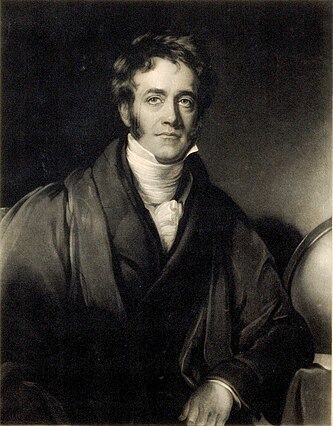
About John Herschel