If you look at a map of the British Empire, neatly colored pink by tradition- an odd color to choose, when you come to think about it- the temptation is great to consider it as a unit, as something uniform. As matter of fact the British Empire, wih its 485,000,000 people, its 13,290,000 square miles, is very far from being uniform. Its vast "mixture of growths and accumulations" is by no means governed by a single law.
The Empire includes dominions like Canada and Australia, which are self-governing, sister states of Britain virtually independent since the Statute of Westminster, except for the common bondage of the Crown. It includes the colossal subcontinent of India, itself sub-divided into British India and princely states, which we shall deal with soon. It includes some crown colonies which are administrative dictatorships, and some which have constitutions and legislatures. It includes "free states" like Eire, mandated territories like Palestine, protectorates like the hinterland of Aden, condominums like the Anglo-Egyptian Sudan, territory held jointly with France like the New Hebrides, and political curiosities such as Bhutan or Sarawak which fit into no normal categories. There are even regions ruled by charter companies like the old East India Company.
What It Means
This is a placeholder explanation generated by the low-overhead model. It interprets "If you look at a map of the British Empire, neatly colored pink by tradition- an odd color to choose, when you come to think about it- the temptation is great to consider it as a unit, as something uniform. As matter of fact the British Empire, wih its 485,000,000 people, its 13,290,000 square miles, is very far from being uniform. Its vast "mixture of growths and accumulations" is by no means governed by a single law.
The Empire includes dominions like Canada and Australia, which are self-governing, sister states of Britain virtually independent since the Statute of Westminster, except for the common bondage of the Crown. It includes the colossal subcontinent of India, itself sub-divided into British India and princely states, which we shall deal with soon. It includes some crown colonies which are administrative dictatorships, and some which have constitutions and legislatures. It includes "free states" like Eire, mandated territories like Palestine, protectorates like the hinterland of Aden, condominums like the Anglo-Egyptian Sudan, territory held jointly with France like the New Hebrides, and political curiosities such as Bhutan or Sarawak which fit into no normal categories. There are even regions ruled by charter companies like the old East India Company." in the context of "p. 315" to mean that wisdom is timeless.

Tags
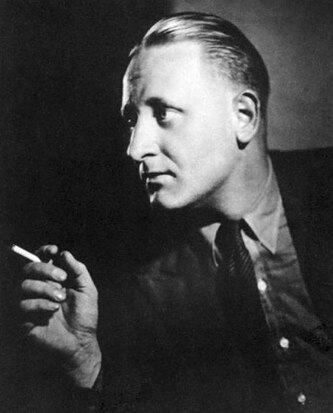
About John Gunther