No. 9, line 1
“
If poisonous minerals, and if that tree,
Whose fruit threw death on else immortal us,
If lecherous goats, if serpents envious
Cannot be damned; alas; why should I be?
— John Donne
What It Means
This is a placeholder explanation generated by the low-overhead model. It interprets "If poisonous minerals, and if that tree,
Whose fruit threw death on else immortal us,
If lecherous goats, if serpents envious
Cannot be damned; alas; why should I be?" in the context of "No. 9, line 1" to mean that wisdom is timeless.
Source: Wikiquote: "John Donne" (Quotes, Holy Sonnets (1633))
The 'What it means' explanation text was generated by Google Gemini Flash (accessed January 18, 2026). https://gemini.google.com/app
Tags
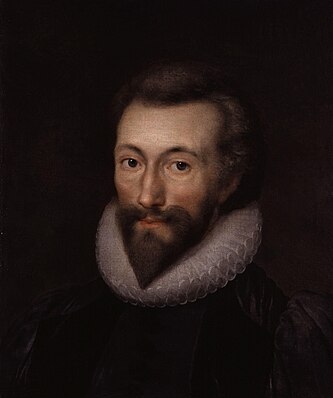
About John Donne
John Donne (22 January 1572 – 31 March 1631) was a Jacobean metaphysical poet. His works include sonnets, love poetry, religious poems, Latin translations, epigrams, elegies, songs, and sermons.
About John Donne
John Donne (22 January 1572 – 31 March 1631) was a Jacobean metaphysical poet. His works include sonnets, love poetry, religious poems, Latin translations, epigrams, elegies, songs, and sermons.
View all quotes →