John Adams, in a letter to Thomas Jefferson (22 June 1819); Adams was lamenting that Paine's Common Sense had received much more attention than the Mecklenburg Declaration of Independence, which Adams discovered in 1819, and in comparison to which he judged Paine's Common Sense to be "a poor ignorant, Malicious, short-sighted, Crapulous Mass". Sometimes only "History is to ascribe the American Revolution to Thomas Paine" has been quoted, which makes it seem a statement of praise, rather than one of irritation and anger.
“

You know that the unanimity of the States finally depended on the vote of Joseph Hewes, and was finally determined by him. And yet history is to ascribe the American Revolution to Thomas Paine! Sat verbum sapienti ["a word to the wise is sufficient"].

— John Adams on Thomas Paine

What It Means

This is a placeholder explanation generated by the low-overhead model. It interprets "You know that the unanimity of the States finally depended on the vote of Joseph Hewes, and was finally determined by him. And yet history is to ascribe the American Revolution to Thomas Paine! Sat verbum sapienti ["a word to the wise is sufficient"]." in the context of "John Adams, in a letter to Thomas Jefferson (22 June 1819); Adams was lamenting that Paine's Common Sense had received much more attention than the Mecklenburg Declaration of Independence, which Adams discovered in 1819, and in comparison to which he judged Paine's Common Sense to be "a poor ignorant, Malicious, short-sighted, Crapulous Mass". Sometimes only "History is to ascribe the American Revolution to Thomas Paine" has been quoted, which makes it seem a statement of praise, rather than one of irritation and anger." to mean that wisdom is timeless.
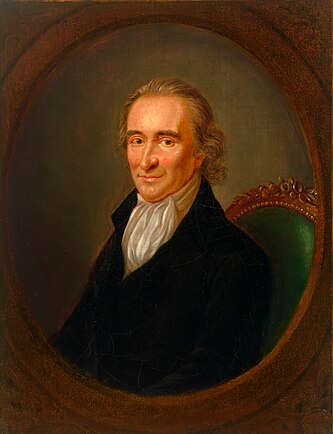
Quote Image
Source: Wikiquote: "Thomas Paine" (Quotes about Paine) The 'What it means' explanation text was generated by Google Gemini Flash (accessed January 18, 2026). https://gemini.google.com/app
John Adams

About John Adams

John Adams (30 October 1735 – 4 July 1826) was an American lawyer, author, statesman, and diplomat. He served as the second president of the United States (1797–1801), the first vice president (1789–1797), and as a Founding Father was a leader of American independence from the British Empire. Adams was a political theorist in the Age of Enlightenment who promoted republicanism and a strong central government. His innovative ideas were frequently published. He was also a dedicated diarist and correspondent, particularly with his wife and key advisor Abigail. He was the father of John Quincy Adams.