Link Copied!
Johannes Kepler Quotes (1571-1630)
Mathematician


About Johannes Kepler
Johannes Kepler (December 27 1571 – November 15 1630) was a German Lutheran mathematician, astronomer and astrologer, and a key figure in the 17th century astronomical revolution. He is best known for his laws of planetary motion, which provided one of the foundations of Isaac Newton's law of universal gravitation.
Best Johannes Kepler Quotes
Shortest
Earliest
Explore our curated collection of the most famous and impactful Johannes Kepler quotes.
“Temporis filia veritas; cui me obstetricari non pudet.”

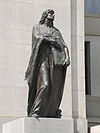
“I much prefer the sharpest criticism of a single intelligent man to the thoughtless approval of the masses.”

“Discover the force of the heavens O Men: Once recognised it can be put to use: No use could be seen in unknown things.”
“...wheresoever the earth may be placed, or whithersoever it may be carried by its animal faculty, heavy bodies will always be carried towards it.”

“No operation of addition or subtraction gives rise to diversity, but all are equally related to their pair of Terms, or Elements.”

“I used to measure the heavens, now I measure the shadows of Earth. Although my mind was heaven-bound, the shadow of my body lies here.”

“Gravity is a mutual affection between cognate bodies towards union or conjunction (similar in kind to the magnetic virtue), so that the earth attracts a stone much rather than the stone seeks the earth.”
“The die is cast; I have written my book; it will be read either in the present age or by posterity, it matters not which; it may well await a reader, since God has waited six thousand years for an interpreter of his words.”

“I believe it was an act of Divine Providence that I arrived just at the time when Longomontanus [
“The sphere of the attractive virtue which is in the moon extends as far as the earth, and entices up the waters; but as the moon flies rapidly across the zenith, and the waters cannot follow so quickly, a flow of the ocean is occasioned in the torrid zone towards the westward.”
“If two stones were placed... near each other, and beyond the sphere of influence of a third cognate body, these stones, like two magnetic needles, would come together in the intermediate point, each approaching the other by a space proportional to the comparative mass of the other.”
“The wisdom of the Lord is infinite as are also His glory and His power. Ye heavens, sing His praises: sun, moon, and planets, glorify Him in your ineffable language! Praise Him, celestial harmonies, and all ye who can comprehend them! And thou, my soul, praise thy Creator! It is by Him and in Him that all exist.”

“If the moon and earth were not retained in their orbits by their animal force or some other equivalent, the earth would mount to the moon by a fifty-fourth part of their distance, and the moon fall towards the earth through the other fifty-three parts, and they would there meet, assuming, however, that the substance of both is of the same density.”
“Geometry has two great treasures: one is the Theorem of Phythagoras, the other the division of a line in extreme and mean ratio. The first we can compare to a mass of gold; the other we may call a precious jewel.”

Johannes Kepler Quotes by Topic
Find exactly what you are looking for by browsing this categorized list of Johannes Kepler quotes by topic.
Johannes Kepler on Reading
Johannes Kepler on Ignorance
Johannes Kepler on Space exploration
Johannes Kepler on Measurement
“I used to measure the heavens, now I measure the shadows of Earth. Although my mind was heaven-bound, the shadow of my body lies here.”

Johannes Kepler on Extraterrestrial life
Johannes Kepler on Geometry
“Geometry has two great treasures: one is the Theorem of Phythagoras, the other the division of a line in extreme and mean ratio. The first we can compare to a mass of gold; the other we may call a precious jewel.”
Johannes Kepler on Magnetism
“My aim is to say that the machinery of the heavens is not like a divine animal but like a clock (and anyone who believes a clock has a soul gives the work the honour due to its maker) and that in it almost all the variety of motions is from one very simple magnetic force acting on bodies, as in the clock all motions are from a very simple weight.”

Johannes Kepler on Solar System
“The orbit of the earth is a circle; round the spheres to which this circle belongs describe a dodecahedron; the spheres including this will give the orbit of Mars. Round Mars describe a tetrahedron; the circle including this will be orbit of Jupiter. Describe a cube round Jupiter’s orbit; the circle including this will be Saturn. Now, inscribe in the earth’s orbit, an icosahedron, the circle inscribed in it will be the orbit of Venus: inscribe an octahedron in the orbit of Venus: the circle inscribed in it will be Mercury’s orbit. This is the reason of number of planets.”

Johannes Kepler on Printing
“After the birth of printing books became widespread. Hence everyone throughout Europe devoted himself to the study of literature... Every year, especially since 1563, the number of writings published in every field is greater than all those produced in the past thousand years. Through them there has today been created a new theology and a new jurisprudence; the Paracelsians have created medicine anew and the Copernicans have created astronomy anew. I really believe that at last the world is alive, indeed seething, and that the stimuli of these remarkable conjunctions did not act in vain.”

Johannes Kepler on Planet
“And if you want the exact moment in time, it was conceived mentally on 8th March in this year one thousand six hundred and eighteen, but submitted to calculation in an unlucky way, and therefore rejected as false, and finally returning on the 15th of May and adopting a new line of attack, stormed the darkness of my mind. So strong was the support from the combination of my labour of seventeen years on the observations of Brahe and the present study, which conspired together, that at first I believed I was dreaming, and assuming my conclusion among my basic premises. But it is absolutely certain and exact that the proportion between the periodic times of any two planets is precisely the sesquialterate proportion of their mean distances.”

What Johannes Kepler Said About Others
Discover personal opinions Johannes Kepler shared regarding contemporaries.
Johannes Kepler on Aristotle
“[A] comparison was undertaken between this book—or the related work On the Harmonies...—and Aristotle's books On the Heavens and Metaphysics... I have nothing to worry about in the case of Aristotle... His Most Serene Highness cannot dislike whatever is the more convincing, whether it be that the world was first made at a fixed beginning in time as was my work On the Harmonies, or will be destroyed at some time, or is merely liable to destruction, like the alterations of the ether and the celestial atmosphere; nor will he ever prefer the Master Aristotle to the truth of which Aristotle was ignorant.”

Quotes About Johannes Kepler
Gain deeper perspective through quotes about Johannes Kepler from others.
E. F. Apelt on Johannes Kepler
“Kepler was the first to discover the art of successfully inquiring [into] her laws of nature, since his predecessors merely constructed explanatory concepts which they endeavoured to apply to the course of nature.”
W. W. Rouse Ball on Johannes Kepler
“It is not known so generally that Kepler was... a geometrician and algebraist of considerable power, and that he, Desargues, and perhaps Galileo, may be considered as forming a connecting link between the mathematicians of the renaissance and those of modern times. Kepler's work in geometry consists rather in certain general principles enunciated, and illustrated by a few cases, than in any systematic exposition of the subject. In a short chapter on conics inserted in his Paralipomena, published in 1604, he lays down what has been called the principle of continuity, and gives as an example the statement that a parabola is at once the limiting case of an ellipse and of a hyperbola; he illustrates the same doctrine by reference to the foci of conics (the word focus was introduced by him); and he also explains that parallel lines should be regarded as meeting at infinity. He introduced the use of the eccentric angle in discussing properties of the ellipse.”
Eric Temple Bell on Johannes Kepler 2 quotes
“Kepler's laws were the climax of thousands of years of an empirical geometry of the heavens. They were discovered as the result of about twenty-two years of incessant calculation, without logarithms, one promising guess after another being ruthlessly discarded as it failed to meet the exacting demands of observational accuracy. Only Kepler's Pythagorean faith in a discoverable mathematical harmony in nature sustained him. The story of his persistence in spite of persecution and domestic tragedies that would have broken an ordinary man is one of the most heroic in science.”

Sir David Brewster on Johannes Kepler
“In his curious tract on Stereometry, published in 1615, Kepler made some advances in the doctrine of infinitesimals. Prompted to the task by a dispute with the seller of some casks of wine, he studied the measurement of solids formed by the revolution of a curve round any line whatever. In solving some of the simplest of these problems, he conceived a circle to be formed of an infinite number of triangles having all their vertices in the centre, and their infinitely small bases in the circumference of the circle, and by thus rendering familiar the idea of quantities infinitely great and infinitely small, he gave an impulse to this branch of mathematics. The failure of Kepler, too, in solving some of the more difficult of the problems which he himself proposed roused the attention of geometers, and seems particularly to have attracted the notice of Cavaleri.”
Walter William Bryant on Johannes Kepler
“When Gilbert of Colchester, in his “New Philosophy,” founded on his researches in magnetism, was dealing with tides, he did not suggest that the moon attracted the water, but that “subterranean spirits and humors, rising in sympathy with the moon, cause the sea also to rise and flow to the shores and up rivers”. It appears that an idea, presented in some such way as this, was more readily received than a plain statement. This so-called philosophical method was, in fact, very generally applied, and Kepler, who shared Galileo’s admiration for Gilbert’s work, adopted it in his own attempt to extend the idea of magnetic attraction to the planets.”
Robert Burton on Johannes Kepler
“Now, if the Earth move, it is a Planet, and shines to them in the Moone, and to the other Planetary inhabitants, as the Moone and they doe vs upon the Earth: but shine she doth, as Galilie, Kepler, and others prove, and then they per consequens, the rest of the Planets are inhabited, as well as the Moone, which he grants in his dissertation with Galilies Nuncius Siderius, that there be Joiviall and Saturnine Inhabitants, &tc. and that those severall Planets, have their severall Moones about them, as the Earth hath hers, as Galileus hath already evinced by his glasses... yet Kepler, the Emperours Mathematitian, confirms out of his experience, that he saw as much, by the same helpe. Then (I say) the Earth and they be Planets alike, inhabited alike, moved about by the Sunne, the common center of the World alike, and it may be those two greene children... that fell from Heaven, came from thence. We may likewise insert with Campanella and Brunus, that which Melissus, Democritus, Leucipus maintained in their ages, there be infinite Worlds, and infinite Earths, or systemes, because infinite starres and planets, like unto this of ours. Kepler betwixtiest and earnest in his Perspectives, Lunar Geography, dissertat cum nunc:syder seemes in part to agree with this, and partly to contradict; for the Planets he yeelds them to be inhabited, he doubts of the Starres: and so doth Tycho in his Astronomicall Epistles, out of consideration of their variety and greatnesse... that he will never beleeve those great and huge Bodies were made to no other use, then this that we perceave, to illuminate the Earth, a point insensible, in respect of the whole. But who shall dwell in these vast Bodies, Earths, Worlds, if they be inhabited? rational creatures, as Kepler demands? Or have they soules to be saved? Or do they inhabit a better part of the World then we doe? Are we or they Lords of the World? ...this only he proves, that we are in the best place, best World, nearest the Heart of the Sun. Thomas Campanella... subscribes to this of Keplerus, that they are inhabited hee certainly supposeth... and that there are infinite worlds, having made an Apologie for Galileus...”

Edwin Arthur Burtt on Johannes Kepler 4 quotes
“Kepler's achievements in mathematics would alone have been sufficient to win for him enduring fame; he first enunciated clearly the principle of continuity in mathematics, treating the parabola as at once the limiting case of the ellipse and the hyperbola, and showing that parallel lines can be regarded as meeting at infinity; he introduced the word 'focus' into geometry; while in his Stereometria Dolorum, published 1615, he applied the conception to the solution of certain volumes and areas by the use of infinitesimals, thus preparing the way for Desargues, Cavalieri, Barrow, and the developed calculus of Newton and Leibniz.”
Herbert Butterfield on Johannes Kepler
“Kepler in the first thirty years of the seventeenth century "reduced to order the chaos of data" left by Tycho Brahe, and added to them just the thing that was needed—mathematical genius. Like Copernicus he created another world-system which, since it did not ultimately prevail, merely remains as a strange monument of colossal intellectual power working on insufficient materials; and even more than Copernicus he was driven by semi-religious fervour—a passion to uncover the magic of mere numbers and to demonstrate the music of the spheres. ...He has to his credit a collection of discoveries and conclusions—some of them more ingenious than useful—from which we today can pick out three that have a permanent importance in the history of astronomy.”

Florian Cajori on Johannes Kepler
“Johannes Kepler... imbibed Copernican principles while at the University of Tubingen. His pursuit of science was repeatedly interrupted by war, religious persecution, pecuniary embarrassments, frequent changes of residence, and family troubles. In 1600 he became for one year assistant to... Tycho Brahe... His first attempt to explain the solar system was made in 1596, when he thought he had discovered a curious relation between the five regular solids and the number and distance of the planets. The publication of this pseudo-discovery brought him much fame. At one time he tried to represent the orbit of Mars by the oval curve which we now write in polar coördinates, rho = 2r cos^3theta. Maturer reflection and intercourse with Tycho Brahe and Galileo led him to investigations and results worthy of his genius—"Kepler's laws." He enriched pure mathematics as well as astronomy. It is not strange that he was interested in the mathematical science which had done him so much service; for "if the Greeks had not cultivated conic sections, Kepler could not have superseded Ptolemy." The Greeks never dreamed that these curves would ever be of practical use; Aristaeus and Apollonius studied them merely to satisfy their intellectual cravings after the ideal; yet the conic sections assisted Kepler in tracing the march of the planets in their elliptic orbits. Kepler made also extended use of logarithms and decimal fractions, and was enthusiastic in diffusing a knowledge of them. At one time, while purchasing wine, he was struck by the inaccuracy of the ordinary modes of determining the contents of kegs. This led him to the study of the volumes of solids of revolution and to the publication of the Stereometria Doliorum [Vinariorum] in 1615. In it he deals first with the solids known to Archimedes and then takes up others. Kepler made wide application of an old but neglected idea, that of infinitely great and infinitely small quantities. Greek mathematicians usually shunned this notion, but with it modern mathematicians completely revolutionized the science. In comparing rectilinear figures, the method of superposition was employed by the ancients, but in comparing rectilinear and curvilinear figures with each other, this method failed because no addition or subtraction of rectilinear figures could ever produce curvilinear ones. To meet this case, they devised the Method of Exhaustion, which was long and difficult; it was purely synthetical, and in general required that the conclusion should be known at the outset. The new notion of infinity led gradually to the invention of methods immeasurably more powerful. Kepler conceived the circle to be composed of an infinite number of triangles having their common vertices at the centre, and their bases in the circumference; and the sphere to consist of an infinite number of pyramids. He applied conceptions of this kind to the determination of the areas and volumes of figures generated by curves revolving about any line as axis, but succeeded in solving only a few of the simplest out of the 84 problems which he proposed for investigation in his Stereometria. Other points of mathematical interest in Kepler's works are (1) the assertion that the circumference of an ellipse, whose axes are 2a and 2b, is nearly π (a + b); (2) a passage from which it has been inferred that Kepler knew the variation of a function near its maximum value to disappear; (3) the assumption of the principle of continuity (which differentiates modern from ancient geometry), when he shows that a parabola has a focus at infinity, that lines radiating from this "cæcus focus" are parallel and have no other point at infinity. The Stereometria led Cavalieri... to the consideration of infinitely small quantities.”

Subrahmanyan Chandrasekhar. "The pursuit of science on Johannes Kepler
“As I have stated the most remarkable aspect of Kepler's pursuit of science is the constancy with which he applied himself to his chosen quest. To use a phrase of Shelley's his 'was a character superior in singleness'.”
John L. Casti on Johannes Kepler
“A law explains a set of observations; a theory explains a set of laws. The quintessential illustration of this jump in level is the way in which Newton’s theory of mechanics explained Kepler’s law of planetary motion. Basically, a law applies to observed phenomena in one domain (e.g., planetary bodies and their movements), while a theory is intended to unify phenomena in many domains. Thus, Newton’s theory of mechanics explained not only Kepler’s laws, but also Galileo’s findings about the motion of balls rolling down an inclined plane, as well as the pattern of oceanic tides. Unlike laws, theories often postulate unobservable objects as part of their explanatory mechanism. So, for instance, Freud’s theory of mind relies upon the unobservable ego, superego, and id, and in modern physics we have theories of elementary particles that postulate various types of quarks, all of which have yet to be observed.”
Disputed Quotes
Quotes attributed to Johannes Kepler that are questionable.
“I was merely thinking God's thoughts after Him. Since we astronomers are priests of the highest God in regard to the book of nature, it benefits us to be thoughtful, not of the glory of our minds, but rather, above all else, of the glory of God.”
“The laws of nature are but the mathematical thoughts of God.”
About Johannes Kepler
Johannes Kepler (December 27 1571 – November 15 1630) was a German Lutheran mathematician, astronomer and astrologer, and a key figure in the 17th century astronomical revolution. He is best known for his laws of planetary motion, which provided one of the foundations of Isaac Newton's law of universal gravitation.