Link Copied!
Johann Friedrich Herbart Quotes (1776-1841)
Philosopher
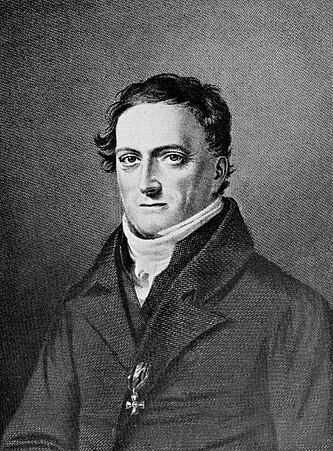

About Johann Friedrich Herbart
Johann Friedrich Herbart (4 May 1776 – 14 August 1841) was a German philosopher, psychologist and founder of pedagogy as an academic discipline.
Johann Friedrich Herbart Quotes
Shortest
Earliest
Explore our curated collection of the most famous and impactful Johann Friedrich Herbart quotes.
“It is of course a familiar precept that the teacher must try to arouse the interest of his pupils in all that he teaches. However, this precept is generally meant and understood to denote the idea that learning is the end and interest the means to attain it. I wish to reverse that relationship. Learning must serve the purpose of creating interest. Learning is transient, but interest must be lifelong.”

“The intention with which the educator is to approach his work, this practical reflection, provisionally detailed down to the measures which our present state of knowledge suggests we should choose, is to my mind the first half of pedagogics. But there must be a second in which the possibility of education is theoretically explained and presented with its limitations in the light of changing circumstances.”
Johann Friedrich Herbart Quotes by Topic
Find exactly what you are looking for by browsing this categorized list of Johann Friedrich Herbart quotes by topic.
Johann Friedrich Herbart on Sympathy
“Whatever the day brings, part of it always belongs to sympathy, for the well-being of men and states is ever changing. Thus observation and sympathy are the movements by which we make every moment of time our own—through which we properly live. When their pulse beats faintly, leisure becomes a burden; the bolder spirits then open the door of time and seek eternity.”

Johann Friedrich Herbart on Will (philosophy)
“It is an old complaint that man has often, as it were, two souls. He observes himself, would understand himself, would please and guide himself. But, previous to this observation, while immersed in things and externals, he has a will, and often very marked features of character. These are the objective with which the contemplating subjective either agrees or disagrees by means of a new will, created in an entirely different condition of mind and soul (Gemuthslage). In case of disagreement, which of the two wills determines the character? It is quite clear, that that, which combined would have strengthened it, now chafes and disintegrates it; that the better claims on us, if they only prevent a fall into the distinctly bad, can but preserve at best a salutary absence of character.”

Quotes About Johann Friedrich Herbart
Gain deeper perspective through quotes about Johann Friedrich Herbart from others.
Edwin Boring on Johann Friedrich Herbart
“Leibniz foreshadowed the entire doctrine of the unconscious, but Herbart actually began it. Wundt was to appeal first to unconscious inference in order to explain perception, and then to apperception. Fechner was to take from Herbart the notion of the measurement of the magnitude...”
George A. Kelly on Johann Friedrich Herbart
“Johann Herbart’s work on education and particularly mathematical psychology influenced me. I think mathematics is the pure instance of construct functioning—the model of human behaviour.”
Arthur Schopenhauer on Johann Friedrich Herbart
“In every page of David Hume, there is more to be learned than from Hegel's, Herbart's and Schleiermacher's complete philosophical works.”

About Johann Friedrich Herbart
Johann Friedrich Herbart (4 May 1776 – 14 August 1841) was a German philosopher, psychologist and founder of pedagogy as an academic discipline.