Link Copied!
Jean-Jacques Rousseau Quotes (1712-1778)
Philosopher, King




















About Jean-Jacques Rousseau
Jean-Jacques Rousseau (June 28, 1712 – July 2, 1778) was a major French-speaking Genevan philosopher of the Enlightenment whose political ideas influenced the French Revolution, the development of socialist theory, and the growth of nationalism.
Best Jean-Jacques Rousseau Quotes
Shortest
Earliest
Explore our curated collection of the most famous and impactful Jean-Jacques Rousseau quotes.
“He thinks like a philosopher, but governs like a king.”
“The thirst after happiness is never extinguished in the heart of man.”


“Let's go dance under the elms:
Step lively, young lassies.
Let's go dance under the elms:
Gallants, take up your pipes.”
Step lively, young lassies.
Let's go dance under the elms:
Gallants, take up your pipes.”

“Days of absence, sad and dreary,
Clothed in sorrow's dark array,—
Days of absence, I am weary:
She I love is far away.”
Clothed in sorrow's dark array,—
Days of absence, I am weary:
She I love is far away.”
“The supreme enjoyment is in satisfaction with oneself ; it is in order to deserve this satisfaction that we are placed on earth and endowed with freedom.”

“I have entered on an enterprise which is without precedent, and will have no imitator. I propose to show my fellows a man as nature made him, and this man shall be myself.”

“As a general rule—never substitute the symbol for the thing signified, unless it is impossible to show the thing itself; for the child's attention is so taken up with the symbol that he will forget what it signifies.”

“Our island is this earth; and the most striking object we behold is the sun. As soon as we pass beyond our immediate surroundings, one or both of these must meet our eye. Thus the philosophy of most savage races is mainly directed to imaginary divisions of the earth or to the divinity of the sun.”

“I know my heart, and have studied mankind; I am not made like any one I have been acquainted with, perhaps like no one in existence; if not better, I at least claim originality, and whether Nature did wisely in breaking the mould with which she formed me, can only be determined after having read this work.”

“I remembered the way out suggested by a great princess when told that the peasants had no bread: "Well, let them eat cake".
• Variant: At length I recollected the thoughtless saying of a great princess, who, on being informed that the country people had no bread, replied, "Then let them eat cake!" ”
• Variant: At length I recollected the thoughtless saying of a great princess, who, on being informed that the country people had no bread, replied, "Then let them eat cake!" ”

“L'offenseur ne pardonne jamais.http://books.google.com/books?id=uxw20bc2CXMC&q=%22l'offenseur+ne+pardonne+jamais%22&pg=PA51#v=onepage
• Translation: The offender never forgives.”
• Translation: The offender never forgives.”

“J'adore la liberté; j'abhorre la gêne, la peine, l'assujettissement. Tant que dure l'argent que j'ai dans ma bourse, il assure mon indépendance; il me dispense de m'intriguer pour en trouver d'autre, nécessité que j'eus toujours en horreur; mais de peur de le voir finir, je le choie. L'argent qu'on possède est l'instrument de la liberté; celui qu'on pourchasse est celui de la servitude.”
“Let us not forget what befits our present state in the pursuit of vain fancies. Mankind has its place in the sequence of things; childhood has its place in the sequence of human life; the man must be treated as a man and the child as a child. Give each his place, and keep him there. Control human passions according to man's nature; that is all we can do for his welfare. The rest depends on external forces, which are beyond our control.”

“As soon as we have contrived to give our pupil an idea of the word "Useful," we have got an additional means of controlling him, for this word makes a great impression on him, provided that its meaning for him is a meaning relative to his own age, and provided he clearly sees its relation to his own well-being. This word makes no impression on your scholars because you have taken no pains to give it a meaning they can understand, and because other people always undertake to supply their needs so that they never require to think for themselves, and do not know what utility is. "What is the use of that?"”
“The origin of our passions, the root and spring of all the rest, the only one which is born with man, which never leaves him as long as he lives, is self-love; this passion is primitive, instinctive, it precedes all the rest, which are in a sense only modifications of it. In this sense, if you like, they are all natural. But most of these modifications are the result of external influences, without which they would never occur, and such modifications, far from being advantageous to us, are harmful. They change the original purpose and work against its end; then it is that man finds himself outside nature and at strife with himself.”

Jean-Jacques Rousseau Quotes by Topic
Find exactly what you are looking for by browsing this categorized list of Jean-Jacques Rousseau quotes by topic.
Jean-Jacques Rousseau on Society 8 quotes
View all 8 quotes on Society →Jean-Jacques Rousseau on Slavery 3 quotes
“Slaves lose everything in their chains, even the desire of escaping from them: they love their servitude, as the comrades of Ulysses loved their brutish condition. If then there are slaves by nature, it is because there have been slaves against nature. Force made the first slaves, and their cowardice perpetuated the condition.”

Jean-Jacques Rousseau on Freedom 2 quotes
“Man is born free, and everywhere he is in chains.”
Jean-Jacques Rousseau on Chain 2 quotes
“Man is born free, and everywhere he is in chains.”

Jean-Jacques Rousseau on Money 2 quotes
View all 2 quotes on Money →Jean-Jacques Rousseau on Law 2 quotes
“Every law the people has not ratified in person is null and void - is, in fact, not a law.”

Jean-Jacques Rousseau on Police 2 quotes
“Every law the people has not ratified in person is null and void - is, in fact, not a law.”

Jean-Jacques Rousseau on Ambition 2 quotes
“The money that we possess is the instrument of liberty, that which we lack and strive to obtain is the instrument of slavery. Therefore I hold fast to that which I have, and desire nothing. .... It is too difficult to think nobly when one thinks only of earning a living.”

Jean-Jacques Rousseau on Vegetarianism 2 quotes
“It appears therefore that man, having teeth and intestines like frugivorous animals, should naturally be placed in that class. And not only do anatomical observations confirm this opinion, but the monuments of antiquity are also very favorable to it. “Dicaearchus,” says St. Jerome, “relates in his books on Greek antiquities that under the reign of Saturn, when the earth was still fertile by itself, no man ate flesh, but that all lived on fruits and vegetables that grew naturally.” ... From this one can see that I am neglecting several advantageous considerations that I could turn to account. For since prey is nearly the exclusive subject of fighting among carnivorous animals, and since frugivorous animals live among themselves in continual peace, if the human species were of this latter genus, it is clear that it would have had a much easier time subsisting in the state of nature, and much less need and occasion to leave it.”

Jean-Jacques Rousseau on Character
Jean-Jacques Rousseau on Hatred
Jean-Jacques Rousseau on Pity
“We pity in others only those evils which we have ourselves experienced.”
What Jean-Jacques Rousseau Said About Others
Discover personal opinions Jean-Jacques Rousseau shared regarding contemporaries.
Jean-Jacques Rousseau on Niccolò Machiavelli 2 quotes
“It is this that Samuel insisted on to the Hebrews; it is this that Machiavelli clearly demonstrated. While pretending to give lessons to kings, he gave great ones to peoples. The Prince of Machiavelli is the book for republicans.”

Jean-Jacques Rousseau on Thomas Hobbes
Jean-Jacques Rousseau on Muhammad
“Muhammad had very sound views; he thoroughly unified his political system; and so long as his form of government survived under his successors, the caliphs, the government was quite unified and in that respect good.”

Jean-Jacques Rousseau on Jesus
“One could wish no easier death than that of Socrates, calmly discussing philosophy with his friends; one could fear nothing worse than that of Jesus, dying in torment, among the insults, the mockery, the curses of the whole nation. In the midst of these terrible sufferings, Jesus prays for his cruel murderers. Yes, if the life and death of Socrates are those of a philosopher, the life and death of Christ are those of a God.”

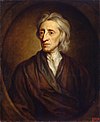
Jean-Jacques Rousseau on John Locke
“Locke would have us begin with the study of spirits and go on to that of bodies. This is the method of superstition, prejudice, and error; it is not the method of nature, nor even that of well-ordered reason; it is to learn to see by shutting our eyes. We must have studied bodies long enough before we can form any true idea of spirits, or even suspect that there are such beings. The contrary practice merely puts materialism on a firmer footing.”
Jean-Jacques Rousseau on Denis Diderot
“I don't understand how a man of good sense can accept for a single moment the sentence of the philosopher Diderot. It may well be high-sounding and incisive, it is nonetheless absurd and false. An who does not see, on the contrary, that it is not possible for the wicked man to love living alone and with himself? He would feel himself in company that is too bad, he would be too ill at ease, he would not be able to bear it for very long, or else, with his dominant passion remaining idle, it would have to die out and he would become good again. Amour-propre, the principle of all wickedness, is revived and thrives in society, which cause it to be born and where one is forced to compare oneself at each instant. It languishes and dies for want of nourishment in solitude. Whoever suffices to himself does not want to harm anyone at all. This maxim is less resounding and less arrogant, but more sensible and more just than that of the philosopher Diderot, and preferable at least in that it does not tend to offend anyone.”

Quotes About Jean-Jacques Rousseau
Gain deeper perspective through quotes about Jean-Jacques Rousseau from others.
Lord Acton on Jean-Jacques Rousseau
Ian Adams on Jean-Jacques Rousseau
“...whatever his ambiguities of his legacy in respect of totalitarianism, there is no doubt that Rousseau is the key figure in the development of democratic thought...it was Rousseau who developed the concept of sovereignty of the people, and he was the first to insist upon the fitness and right of the ordinary people to participate in the political system as full citizens.”
Bill Ashcroft on Jean-Jacques Rousseau
“Binary distinctions are not necessarily motivated by a desire to dominate. David Spurr (1993: 103) discusses the ways in which Rousseau, in the Essay on the Origin of Languages, attempts to validate the ‘life and warmth’ of Oriental languages such as Arabic and Persian. But in employing the ‘logic and precision’ of Western writing to do so, Rousseau effectively negates these languages because they become characterized by a primitive lack of rational order and culture. Although setting out to applaud such languages, he succeeds in confirming the binary between European science, understanding, industry and writing on the one hand, and Oriental primitivism and irrationality on the other.”
Irving Babbitt on Jean-Jacques Rousseau
“It seems to me imperative to re-establish the true dualism—that between vital impulse and vital control—and to this end to affirm the higher will first of all as a psychological fact. The individual needs, however, to go beyond this fact if he is to decide how far he is to exercise control in any particular instance with a primary view to his own happiness: in short, he needs standards. To secure standards, at least critically, he cannot afford, like the Rousseauist, to disparage the intellect.”
Honore de Balzac on Jean-Jacques Rousseau
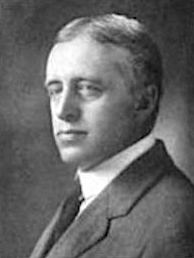
“The average age at which a man marries is thirty years; the average age at which his passions, his most violent desires for genesial delight are developed, is twenty years. Now during the ten fairest years of his life, during the green season in which his beauty, his youth and his wit make him more dangerous to husbands than at any other epoch of his life, his finds himself without any means of satisfying legitimately that irresistible craving for love which burns in his whole nature. During this time, representing the sixth part of human life, we are obliged to admit that the sixth part or less of our total male population and the sixth part which is the most vigorous is placed in a position which is perpetually exhausting for them, and dangerous for society. “Why don’t they get married?” cries a religious woman. But what father of good sense would wish his son to be married at twenty years of age? Is not the danger of these precocious unions apparent at all? It would seem as if marriage was a state very much at variance with natural habitude, seeing that it requires a special ripeness of judgment in those who conform to it. All the world knows what Rousseau said: “There must always be a period of libertinage in life either in one state or another. It is an evil leaven which sooner or later ferments.” Now what mother of a family is there who would expose her daughter to the risk of this fermentation when it has not yet taken place?”
Jacques Barzun on Jean-Jacques Rousseau
“Rousseau's unforgivable crime was his rejection of the graces and luxuries of civilized existence. Voltaire had sung “The superfluous, that most necessary thing." For the high bourgeois standard of living Rousseau would substitute the middling peasant's. It was the country versus the city – an exasperating idea for them, as was the amazing fact that every new work of Rousseau's was a huge success, whether the subject was politics, theater, education, religion, or a novel about love.”

David A. Bell on Jean-Jacques Rousseau
“...As with any truly great writer, it is foolish to judge Rousseau by the instances where people tried to follow his advice literally, still less by the harmful things done in his name (by which standard Jesus Christ does not exactly come off unblemished.) Rousseau's influence on modern culture has been far too vast and multifaceted to squeeze into reductive categories of “positive” and “negative” and even his most misguided prescriptions often came accompanied by profound and poetic insights.”
Allan Bloom on Jean-Jacques Rousseau
“Hence Rousseau's novelistic works, Emile, La Nouvelle Héloïse, and Confessions―each of which is much longer than his primary political treatise, the two Discourses and the Social Contract, put together―constitute an attempt to establish what was missing in earlier democratic thinkers, a democratic art. He does for democracy what Socrates did for aristocracy in the Republic.”

Nicholas Buccola on Jean-Jacques Rousseau
“For Rousseau, man's nature is essentially good, but he was corrupted by various “advances” in human civilization (especially the institution of private property). Although man's natural “innocence” has been lost, Rousseau thought that it could be replaced by a new form of moral goodness through the establishment of new political institutions. When we compare this to St. Augustine, we can see what a departure this is from the mainstream of Pauline Christianity. Augustine held that man is inescapably sinful and concludes that, as such, the City of God cannot be achieved on earth. Rousseau's major contribution to the foundation of socialist thought is in his rejection of human sinfulness and his commitment to human improvement through institutional change. With this foundational belief, he set the stage for perfectionist political doctrines that moved focus from “the next world” of Christianity by arguing that this world can be transformed into “heaven on earth.””
Edmund Burke on Jean-Jacques Rousseau 3 quotes
“The assembly [in revolutionary France] recommends to its youth a study of the bold experimenters in morality. Everybody knows that there is a great dispute amongst their leaders, which of them is the best resemblance of Rousseau. In truth, they all resemble him. His blood they transfuse into their minds and into their manners. Him they study; him they meditate; him they turn over in all the time they can spare from the laborious mischief of the day, or the debauches of the night. Rousseau is their canon of holy writ; in his life he is their canon of Polycletus; he is their standard figure of perfection. To this man and this writer, as a pattern to authors and to Frenchmen, the foundries of Paris are now running for statues, with the kettles of their poor and the bells of their churches. If an author had written like a great genius on geometry, though his practical and speculative morals were vicious in the extreme, it might appear, that in voting the statue, they honoured only the geometrician. But Rousseau is a moralist, or he is nothing. It is impossible, therefore, putting the circumstances together, to mistake their design in choosing the author with whom they have begun to recommend a course of studies.”

Francis Stuart Campbell on Jean-Jacques Rousseau 2 quotes
“Rousseau, though holding views diametrically opposed to Luther's as to the character of man, finally strengthened his hand by his estimate of man's mind. Luther believed in the utter moral wretchedness of man, but Rousseau believed not only in man's goodness on the plane of character but he also was convinced (like Luther) that man is by nature intelligent. The "democrats" of the late eighteenth and the nineteenth centuries deducted from Luther's and Rousseau's joint declaration that man is intelligent (either by nature or by an inner light) the further conclusion that the sum total of all minds must be perfection itself.”
E. H. Carr on Jean-Jacques Rousseau
“If the author of the romantic creed was Rousseau, its popularizer and vulgarizer was George Sand.”
About Jean-Jacques Rousseau
Jean-Jacques Rousseau (June 28, 1712 – July 2, 1778) was a major French-speaking Genevan philosopher of the Enlightenment whose political ideas influenced the French Revolution, the development of socialist theory, and the growth of nationalism.