Link Copied!
Jean-François Millet Quotes (1814-1875)
Artist, Painter

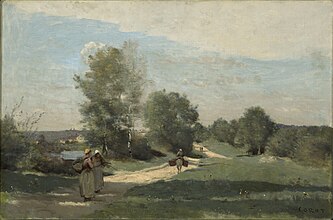
About Jean-François Millet
Francois Millet, (October 4, 1814 – January 20, 1875) was a French painter and one of the founders of the Barbizon school in rural France. Millet is noted for his scenes of peasant farmers like in his well-known painting The Gleaners.
Best Jean-François Millet Quotes
Shortest
Earliest
Explore our curated collection of the most famous and impactful Jean-François Millet quotes.
“They [the Paris art-critics] wish to force me into their drawing-room art, to break my spirit. No, no! I was born as a peasant and a peasant I will die. I say what I feel. I paint things as I see them, and I will hold my ground without retreating one sabot; if necessary, I will fight for honour.”

“I remember being awakened one morning by voices in the room where I slept. There was a whizzing sound which made itself heard between the voices now and then. It was the sound of spinning-wheels, and the voices were those of women spinning and carding wool. The dust of the room danced in a ray of sunshine which shone through the high narrow window that lighted the room..”

“What do I care? 'I don't come here [studying with the Paris' artist & teacher Paul Delaroche https://fr.wikipedia.org/wiki/Paul_Delaroche to please anybody. I come because there are antiques and models to teach me, that is all. Do I object to your figures, made of butter and honey [to Alfred Boisseau]?”

“He [Alfred de Musset] puts you into a fever, it is true; but he can do nothing more for you. He has undoubted charms, but his taste is capricious and poisoned. All he can do is to disenchant and corrupt you, and at the end leave you in despair. The fever passes, and you are left without strength - like a convalescent who is in need of fresh air, of the sunshine, and of the stars.”

“[Theophile] Gautier's article is very good. I begin to feel a little more contented. His remarks about my thick colours are also very just. The critics who see and judge my pictures are not forced to know that in painting them I am not guided by a definite intention, although I do my utmost to try and attain the aim which I have in sight, independently of methods. People are not even obliged to know why it is that I work in this way, with all its faults.”
“I came to Paris with all my ideas of art fixed, and I have never found it necessary to change them. I have been more or less in love with this master, or that method in art, but I have not modified any fundamental opinions. You have seen my first drawing, made at home without a master, without a model, without a guide. I have never done anything different since. You have never seen me paint except in a low tone; demi-teinte [half-tone] is necessary to me in order to sharpen my eyes and clear my thoughts, - it has been my best teacher.”

“To tell the truth, peasant subjects suit my nature best, for I must confess, at the risk of your taking me to be a Socialist, that the human side is what touches me most in art.. .The joyous side never shows itself to me ; I know not if it exists, but I have never seen it. The gayest thing I know is the calm, the silence, which are so delicious, both in the forest and in the cultivated fields, whether the soil is good for culture or not. You will confess that it always gives you a very dreamy sensation, and that the dream is a sad one, although often very delicious.”
“You are sitting under the trees, feeling all the ease, all the tranquility that can possibly be enjoyed; you see some poor figure laden with a faggot come turning out of some little path. The unexpected and always striking way in which this figure appears to you carries your mind instantly to the sadness of human life.. .In tilled lands you see these figures digging and delving. From time to time you see one straighten his loins and wipe his forehead with the back of his hand. Is this the gay frolicsome work in which some people would have us believe? Yet here for me is the real humanity, the great poetry.”
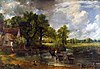
“Sir, I have completed the picture ['Les Faneurs / Haymakers', 1849] which you were kind enough to order, and have executed it with all possible care and conscientiousness. I ought to send it to the Exhibition, where it could be properly seen and judged. I pray you to be good enough to pay me the balance of 1,100 francs which is still due on this commission. My great need of money obliges me to ask you to let me have it as soon as possible. Accept, sir, the assurance of my pro- found respect - J. F. Millet. 8, Rue du Delta [Paris]'''”
“I work like a gang of slaves; the day seems five months long. My wish to make a winter landscape has become a fixed idea. I want to do a sheep picture and have all sorts of projects in my head. If you could see how beautiful the forest is! I rush there at the end of the day, after my work, and I come back every time crushed. It is so calm, such a terrible grandeur, that I find myself really frightened. I don't know what those fellows, the trees, are saying to each other.. ..we don't know their language, that is all; but I am quite sure of this - they do not make puns!.. ..Send [me] 3 burnt sienna, 2 raw ditto, 3 Naples's yellow, 1 burnt Italian earth, 2 yellow ocher, 2 burnt umber, 1 bottle of raw oil.”
“One day, however, I spent the whole day in front of the 'Concert Champetre' https://fr.wikipedia.org/wiki/Le_Concert_champ%C3%AAtre_(Titien) of Giorgione [in the Louvre museum, during his early Paris' years]. I could not weary of it. It was already three o'clock when, mechanically, I took a little canvas belonging to a friend, and began a sketch of the picture. Four o'clock sounded, and the dreadful 'ferme' [closing-time] of the guardians turned me out: but I had made enough of a sketch to give me pleasure, like a run into the country. Giorgione had opened the country to me. I had found consolation with him.”

“My dear Sensier, - I shall be greatly obliged if after reading and sealing the enclosed letter, you will take it to Rue du Delta, No. 8. [Paris].. ..Jaque [common friend and painter] and I have settled to stay here [ Barbizon ] for some time, and have accordingly each of us taken rooms. The prices are excessively low compared to those in Paris; and as it is easy to get to town if necessary, and the country is superbly beautiful, we hope to work more quietly here, and perhaps do better things. In fact, we intend to spend some time here.. .I wish you good-bye, with many hearty embraces. Jacque sends you warm remembrances, and will answer your letter tomorrow.”

“Barbizon Thursday, My dear [Alfred] Sensier: M. Letrone, whom I do not know.. ..came yesterday [to the house of Millet in Barbizon], and bought my 'Women Putting Bread in the Oven', for 800 francs, and another little picture which I am to make from a sketch which he has seen for 400 francs. This gentleman has a son who has been, and, for all I know, may be still, a pupil of Rousseau. I am working, in spite of frequent interruptions, at my picture of 'A Woman Sewing by the Light of a Lamp' for the Dutchman [a buyer who ordered the painting]. It is already in a forward state, but trivial matters disturb me too often.”
“In the morning we saw that the sea was rough, and people said there would be trouble.. ..Fifty men volunteered to go at once, and followed the old sailor without a word. We descended the cliffs to the beach, and there we saw a terrible sight : several vessels rushing, one after the other, at fearful speed, upon our rocks. Our men put three boats out to sea, but before they had rowed ten strokes one boat sank, another was upset by a huge breaker, while a third was thrown upon the beach.. ..The sea threw up hundreds of corpses, as well as quantities of cargo.. .Then came a fourth, fifth and sixth vessel, all of which were lost with their crew and cargo alike, upon the rocks. The tempest was furious.. .The next morning.. ..As I was passing by a hollow in the cliff, I saw a large sail spread, as I thought, over a bale of merchandise. I lifted the sail and saw a heap of corpses. I was so frightened that I ran home, and found my mother and grandmother on their knees, praying for the shipwrecked sailors.”
“For the first [his very first time in Paris], I went to a little hotel, where I spent the night in a sort of nightmare, in which I saw my home, full of melancholy, with my mother, grandmother, and sister spinning in the evening, weeping and thinking of me, praying that I should escape the perdition of Paris. Then the evil demon drove me on before wonderful pictures, which seemed so beautiful, so brilliant, that it appeared to me they took fire and vanished in a heavenly cloud.. .Finally, without knowing how, I found myself [during one of his his first days in Paris] on the Pont Neuf, from which I saw a magnificent building which I thought must be the Louvre, from the descriptions I had heard of it. I went to it, and mounted the great stairway with a beating heart. At last one great object of my life was attained. I had imagined correctly what I should see. It seemed to me that I was in a world of friends [the paintings of the old masters], in a family where all that I beheld was the reality of my dreams.”
“My dear Rousseau, I do not know if the two sketches which I enclose will be of any use to you. I merely wish to show you where I would place the figures in your picture, that is all. You know better than I do what is best, and what you wish to do. These last few days we have had some effects of hoarfrost, which I am not going to try and describe, feeling how useless this would be! I will content myself with saying that God alone can ever have seen such marvelously fairy-like scenes. I only wish that you could have been here to see them. Have you finished your pictures? Because you have only a month more in which to finish your 'Forest', and it is very important indeed that this picture should be in the Salon. In fact, it must absolutely be there.. .Good-bye, my dear Rousseau, and accept a whole pile of cordial good wishes.”
Jean-François Millet Quotes by Topic
Find exactly what you are looking for by browsing this categorized list of Jean-François Millet quotes by topic.
Jean-François Millet on Barbizon school
“You are sitting under the trees, feeling all the ease, all the tranquility that can possibly be enjoyed; you see some poor figure laden with a faggot come turning out of some little path. The unexpected and always striking way in which this figure appears to you carries your mind instantly to the sadness of human life.. .In tilled lands you see these figures digging and delving. From time to time you see one straighten his loins and wipe his forehead with the back of his hand. Is this the gay frolicsome work in which some people would have us believe? Yet here for me is the real humanity, the great poetry.”
Quotes About Jean-François Millet
Gain deeper perspective through quotes about Jean-François Millet from others.
Quote of the father of Millet on Jean-François Millet
“My poor Francois, I see well that thou tormentest thyself with this idea. I would gladly have sent thee to learn this profession of a painter, but I could not, for thou art the eldest of my boys, and I had too much need of thee; but now the others are growing up, and I will not hinder thee from learning what thou has so much desire to know. We will soon go to Cherbourg and find out whether you have talent enough to earn your living by this business.”
Quote on Jean-François Millet 2 quotes
“I have the honour to beg you to examine three drawings which I have placed in your Council Hall [of Cherbourg]. Those drawings are the unassisted work of my pupil, Francois Millet, of the Commune of Greville, and are the best proof of his decided taste for art, and rare talent.. ..It was at your recommendation that he was placed under my charge. During the last six months his progress has been constant and rapid.. ..In short, he requires the advantages of Paris, if he is to learn historical painting.. ..But, alas! young Millet has no resources,. ..Young Millet would require a sum of at least five or six hundred francs to begin his studies at Paris. - Your devoted servant, Langlois”
fr:Alfred Sensier on Jean-François Millet 3 quotes
“The schooling of [the young] Millet, begun by the good vicar Jean Lebrisseux.. ..He was soon obliged to be a serious help to his father, and to devote all his time to the rough farm-work. He was the eldest of the sons, and in this lay a duty which Francois accepted without regret. He began to work beside his father and the 'hands', to mow, make hay, bind the sheaves, thresh, winnow, spread manure, plow, sow, - in a word, all the work which makes the daily life of the peasant. So he spent years...[ till Millet was c. 18 years old]”
Alfred Boisseau on Jean-François Millet
“Eh! Are you coming here to give us some more of your fine figures ? Are you going to make men and women on your own plan? You know the master [ Delaroche] doesn't like this Caen cookery. - ('What do I care?' answered Millet, according to Sensier's report, 'I don't come here to please anybody. I come because there are antiques and models to teach me, that is all. Do I object to your figures, made of butter and honey'?)”
Diaz de la Peña on Jean-François Millet
“At last, here is a new man [Millet], who has the knowledge which I would like to have, and movement, color, expression, too, - here is a painter!”
Diaz on Jean-François Millet
“Patience ! They will come to it gradually ! Rousseau has sold a landscape for five hundred francs; for my part, I have sold a view of Fontainebleau for seventy-five francs. And I am commissioned to ask you for companion sketches to your drawings. And this time, instead of twenty francs, they are to pay you twenty-five! (Millet replied resignedly: 'If I could only sell two drawings a week at that price all would go right!'”
Quote by on Jean-François Millet 5 quotes
“He [= Theodore Rousseau ] does not carry us away, as Francois Millet, toward the sorrowing epochs of rustic life, to reveal their savage grandeur or gloomy solemnity..”
Theophile Gautier on Jean-François Millet
“M. Millet, it is plain, understands the true poetry of the fields. He loves the peasants whom he represents. In his grave and serious types we read the sympathy which he feels with their lives. In his pictures sowing, reaping, and grafting are all of them sacred actions, which have a beauty and grandeur of their own, together with a touch of Virgilian melancholy.”
Quote from on Jean-François Millet
“[Millet,] an entirely original painter, high-minded and genuinely rustic in nature, who has expressed things about the country and its inhabitants, about their toil, their melancholy, and the nobleness of their labour. He has represented them in a somewhat barbaric fashion, in a manner to which his ideas gave a more expressive force than his hand possessed. The world has been grateful for his intentions; it has recognised in his methods something of the sensibility of a Burns who was a little awkward in expression.. .He stands out as a deep thinker.”
Quote of Vincent van Gogh on Jean-François Millet
“..I fear that in a few years there may be a kind of 'panic', in this form: 'since Millet' we have sunk very low — the word decadence, now whispered or pronounced in veiled terms (see Herkomer), will then sound like an alarm bell. Many, like I myself, now keep quiet, because they already have the reputation of being awkward customers, and talking about it doesn't help. That — namely, talking — isn't what one needs to do — one must work, though with sorrow in the heart. Those who later cry out the loudest about decadence will themselves belong to it the most. I repeat: 'by this shall ye know them', [from: Matt. 7:16.] by their work, and it won't be the most eloquent who say the truest things. See Millet himself, see Herkomer, they're certainly not orators, and speak almost reluctantly.”
Quote of Camille Pissarro on Jean-François Millet
“The great Millet indignantly protests ['Le Figaro' has just published two letters of Millet] against the Commune [and the communards] , whom he characterizes as barbarians and vandals; he concludes with a dig at good Courbet, who, as I see it, can only be aggrandized by this attempt at belittlement. Because of his painting 'The Man with the Hoe', the socialists thought Millet was on their side.. .Not at all. More and more indignant disavowals from the great painter! What do you think of that? I was not much surprised. He was just a bit too biblical.”
About Jean-François Millet
Francois Millet, (October 4, 1814 – January 20, 1875) was a French painter and one of the founders of the Barbizon school in rural France. Millet is noted for his scenes of peasant farmers like in his well-known painting The Gleaners.