Link Copied!
James Joyce Quotes (1882-1941)
Writer, Poet, Novelist












-100px.jpg)


About James Joyce
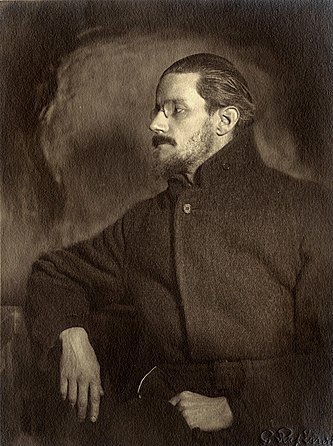
James Augustine Aloysius Joyce (2 February 1882 – 13 January 1941) was an Irish novelist, short-story writer and poet. He contributed to the modernist movement and is regarded as one of the most influential and important writers of the twentieth century.
Best James Joyce Quotes
Shortest
Earliest
Explore our curated collection of the most famous and impactful James Joyce quotes.
“Does nobody understand?”
“Everything in Paris is gay”

“Thaw! The last word in stolentelling! (424.35)”
“Seraphim,
The lost hosts awaken”
The lost hosts awaken”
“Around us fear, descending
Darkness of fear above”
Darkness of fear above”


“Ah star of evil! star of pain!
Highhearted youth comes not again”
Highhearted youth comes not again”

“The heaventree of stars hung with humid nightblue fruit. (683)”

“The fragrant hair,
Falling as through the silence falleth now
Dusk of the air.”
Falling as through the silence falleth now
Dusk of the air.”
“There is not past, no future; everything flows in an eternal present.”

“There is no heresy or no philosophy which is so abhorrent to the church as a human being.”


“Art is the human disposition of sensible or intelligible matter for an aesthetic end.”
“Christopher Columbus, as everyone knows, is honoured by posterity because he was the last to discover America.”

“Boor, bond of thy herd,
Tonight stretch full by the fire!
I bleed by the black stream
For my torn bough!”
Tonight stretch full by the fire!
I bleed by the black stream
For my torn bough!”
“I am a worker, a tombstone mason, anxious to pleace averyburies and jully glad when Christmas comes his once ayear.”

“How soft, how sad his voice is ever calling,
Ever unanswered, and the dark rain falling,
Then as now.”
Ever unanswered, and the dark rain falling,
Then as now.”

“But all they are all there scraping along to sneeze out a likelihood that will solve and salve life's robulous rebus (12.32-33)”
“ (Of Shakespeare) A man of genius makes no mistakes. His errors are volitional and are the portals of discovery (243)”
“in the Nichtian glossery which purveys aprioric roots for aposteriorious tongues this is nat language at any sinse of the world (83.10-12)”
“Can you nei do her, numb? asks Dolph, suspecting the answer know. Oikkont, ken you, ninny? asks Kev, expecting the answer guess. (286.25-27)”
“A Place for Everything and Everything in its Place, Is the Pen Mightier than the Sword? A Successful Career in the Civil Service.”

“Every age must look for its sanction to its poetry and philosophy, for in these the human mind, as it looks backward or forward, attains to an eternal state.”
“In the name of Annah the Allmaziful, the Everliving, the Bringer of Plurabilities, haloed be her eve, her singtime sung, her rill be run, unhemmed as it is uneven!”
“For myself, I always write about Dublin, because if I can get to the heart of Dublin I can get to the heart of all the cities of the world. In the particular is contained the universal.”

“And why couldn't he have a voice too? asked Freddy Malins sharply. Is it because he's only a black? Nobody answered this question and Mary Jane led the table back to the legitimate opera.”


“Humme the Cheapner, Esc, overseen as we thought him, yet worthy of the naym, came at this timecoloured place where we live in our paroqial fermament one tide on another (29.30)”
“Quoint a quincidence! O.K. Omnius Kollidimus. As Ollover Krumwall sayed when he slepped ueber his grannyamother. Kangaroose feathers. Who in the name of thunder'd ever belevin you were that bolt?”
“I laugh at it today, now that I have had all the good of it. Let the bridge blow up, provided I have got my troops across... Nonetheless, that book was a terrible risk. A transparent leaf separates it from madness.”
“I want to give a picture of Dublin so complete that if the city suddenly disappeared from the earth it could be reconstructed out of my book.”
“(Stoop) if you are abcedminded, to this claybook, what curios of signs (please stoop), in this allaphbed! Can you rede (since We and Thou had it out already) its world? It is the same told of all. Many. Miscegenations on miscegenations. Tieckle.”
“If I gave it all up immediately, I'd lose my immortality. I've put in so many enigmas and puzzles that it will keep the professors busy for centuries arguing over what I meant, and that's the only way of insuring one's immortality.”
“All things are inconstant except the faith in the soul, which changes all things and fills their inconstancy with light, but though I seem to be driven out of my country as a misbeliever I have found no man yet with a faith like mine.”

“One of his sentences, written two months after his last interview with Mrs. Sinico, read: Love between man and man is impossible because there must not be sexual intercourse and friendship between man and woman is impossible because there must be sexual intercourse.”

“Beauty, the splendour of truth, is a gracious presence when the imagination contemplates intensely the truth of its own being or the visible world, and the spirit which proceeds out of truth and beauty is the holy spirit of joy. These are realities and these alone give and sustain life.”
“He tried to weigh his soul to see if it was a poet's soul. Melancholy was the dominant note of his temperament, he thought, but it was a melancholy tempered by recurrences of faith and resignation and simple joy. If he could give expression to it in a book of poems perhaps men would listen.”
“Our civilization, bequeathed to us by fierce adventurers, eaters of meat and hunters, is so full of hurry and combat, so busy about many things which perhaps are of no importance, that it cannot but see something feeble in a civilization which smiles as it refuses to make the battlefield the test of excellence.”

“End here. Us then. Finn, again! Take. Bussoftlhee, mememormee! Till thousandsthee. Lps. The keys to. Given! A way a lone a last a loved a long the / riverrun, past Eve and Adam's, from swerve of shore to bend of bay, brings us by a commodius vicus of recirculation back to Howth Castle and Environs. (628.13 to 3.3)”
“He caun ne'er be bothered but maun e'er be waked. If there is a future in every past that is present Quis est qui non novit quinnigan and Qui quae quot at Quinnigan's Quake! Stump! His producers are they not his consumers? Your exagmination round his factification for incamination of a warping process. Declaim! (496.34 - 497.3)”
“I know all about the honour of God, Mary Jane, but I think it's not at all honourable for the pope to turn out the women out of the choirs that have slaved there all their lives and put little whipper-snappers of boys over their heads. I suppose it is for the good of the Church if the pope does it. But it's not just, Mary Jane, and it's not right.”

“Poetry, even when apparently most fantastic, is always a revolt against artifice, a revolt, in a sense, against actuality. It speaks of what seems fantastic and unreal to those who have lost the simple intuitions which are the test of reality; and, as it is often found at war with its age, so it makes no account of history, which is fabled by the daughters of memory.”
“To say that a great genius is half-mad, while recognizing his artistic prowess, is worth as much as saying that he was rheumatic, or that he suffered from diabetes. Madness, in fact, is a medical expression to which a balanced critic should pay no more heed than he would to the accusation of heresy brought by the theologian, or to the accusation of immorality brought by the public prosecutor.”
“[Robinson Crusoe] is the true prototype of the British colonist, as Friday (the trusty slave who arrives on an unlucky day) is the symbol of the subject races. The whole Anglo-Saxon spirit is in Crusoe: the manly independence; the unconscious cruelty; the persistence; the slow yet efficient intelligence; the sexual apathy; the practical, well-balanced religiousness; the calculating taciturnity.”

“Having finished his argument Stephen walked on in silence. He felt Cranly's hostility and he accused himself of having cheapened the eternal images of beauty. For the first time, too, he felt slightly awkward in his friend's company and to restore a mood of flippant familiarity he glanced up at the clock of the Ballast Office and smiled:
— It has not epiphanised yet, he said.”
— It has not epiphanised yet, he said.”
“Every night as I gazed up at the window I said to myself softly the word paralysis. It had always sounded strangely in my ears, like the word gnomon in the Euclid and the word simony in the Catechism. But now it sounded to me like the name of some maleficent and sinful being. It filled me with fear, and yet I longed to be nearer to it and to look upon its deadly work.”
“It soared, a bird, it held its flight, a swift pure cry, soar silver orb it leaped serene, speeding, sustained, to come, don't spin it out too long long breath he breath long life, soaring high, high resplendent, aflame, crowned, high in the effulgence symbolistic, high, of the ethereal bosom, high, of the high vast irradiation everywhere all soaring all around about the all, the endlessnessnessness... (271)”
“But there was no harshness in the eyes which, looking at the world from under their tawny eyebrows, gave the impression of a man ever alert to greet a redeeming instinct in others but often disappointed. He lived at a little distance from his body, regarding his own acts with doubtful side-glances. He had an odd autobiographical habit which led him to compose in his mind from time to time a short sentence about himself containing a subject in the third person and a predicate in the past tense.”
“For that (the rapt one warns) is what papyr is meed of, made of, hides and hints and misses in prints. Till ye finally (though not yet endlike) meet with the acquaintance of Mister Typus, Mistress Tope and all the little typtopies. Filstup. So you need hardly spell me how every word will be bound over to carry three score and ten toptypsical readings throughout the book of Doublends Jined (may his forehead be darkened with mud who would sunder!) till Daleth, mahomahouma, who oped it closeth thereof the. Dor. (20.10-18)”
“the cluekey to a worldroom beyond the roomwhorld, for scarce one, or pathetically few of his dode canal sammenlivers cared seriously or for long to doubt with Kurt Iuld van Dijke (the gravitational pull perceived by certain fixed residents and the capture of uncertain comets chancedrifting through our system suggesting the authenticitatem of his aliquitudinis) he canonicity of his existence as a tesseract. Be still, O quick! Speak him dumb! Hush ye fronds of Ulma!”
“When I hear the word "stream" uttered with such a revolting primness, what I think of is urine and not the contemporary novel. And besides, it isn't new, it is far from the dernier cri. Shakespeare used it continually, much too much in my opinion, and there's Tristram Shandy, not to mention the Agamemnon.”
“Yes, the newspapers were right: snow was general all over Ireland. It was falling on every part of the dark central plain, on the treeless hills, falling softly upon the Bog of Allen and, farther westward, softly falling into the dark mutinous Shannon waves. It was falling, too, upon every part of the lonely churchyard on the hill where Michael Furey lay buried. It lay drifted on the crooked crosses and headstones, on the spears of the little gate, on the barren thorns. His soul swooned slowly as he heard the snow falling faintly through the universe and faintly falling, like the descent of their last end, upon all the living and the dead.”
“The Irishman, finding himself in another environment, outside Ireland, very often knows how to make his worth felt. The economic and intellectual conditions of his homeland do not permit the individual to develop. The spirit of the country has been weakened by centuries of useless struggle and broken treaties. Individual initiative has been paralyzed by the influence and admonitions of the church, while the body has been shackled by peelers, duty officers and soldiers. No self-respecting person wants to stay in Ireland. Instead he will run from it, as if from a country that has been subjected to a visitation by an angry Jove.”
“Now for the third quality. For a long time I couldn't make out what Aquinas meant. He uses a figurative word (a very unusual thing for him) but I have solved it. Claritas is quidditas. After the analysis which discovers the second quality the mind makes the only logically possible synthesis and discovers the third quality. This is the moment which I call epiphany. First we recognise that the object is one integral thing, then we recognise that it is an organised composite structure, a thing in fact: finally, when the relation of the parts is exquisite, when the parts are adjusted to the special point, we recognise that it is that thing which it is. Its soul, its whatness, leaps to us from the vestment of its appearance. The soul of the commonest object, the structure of which is so adjusted, seems to us radiant. The object achieves its epiphany.”

“This triviality made him think of collecting many such moments together in a book of epiphanies. By an epiphany he meant a sudden spiritual manifestation, whether in the vulgarity of speech or of gesture or in a memorable phase of the mind itself. He believed that it was for the man of letters to record these epiphanies with extreme care, seeing that they themselves are the most delicate and evanescent of moments. He told Cranly that the clock of the Ballast Office was capable of an epiphany. Cranly questioned the inscrutable dial of the Ballast Office with his no less inscrutable countenance:
—Yes, said Stephen. I will pass it time after time, allude to it, refer to it, catch a glimpse of it. It is only an item in the catalogue of Dublin's street furniture. Then all at once I see it and I know at once what it is: epiphany.”
—Yes, said Stephen. I will pass it time after time, allude to it, refer to it, catch a glimpse of it. It is only an item in the catalogue of Dublin's street furniture. Then all at once I see it and I know at once what it is: epiphany.”
“Imagine my glimpses at that clock as the gropings of a spiritual eye which seeks to adjust its vision to an exact focus. The moment the focus is reached the object is epiphanised. It is just in this epiphany that I find the third, the supreme quality of beauty. … No esthetic theory, pursued Stephen relentlessly, is of any value which investigates with the aid of the lantern of tradition. What we symbolise in black the Chinaman may symbolise in yellow: each has his own tradition. Greek beauty laughs at Coptic beauty and the American Indian derides them both. It is almost impossible to reconcile all tradition whereas it is by no means impossible to find the justification of every form of beauty which has ever been adored on the earth by an examination into the mechanism of esthetic apprehension whether it be dressed in red, white, yellow or black. We have no reason for thinking that the Chinaman has a different system of digestion from that which we have though our diets are quite dissimilar. The apprehensive faculty must be scrutinised in action.”
“—You know what Aquinas says: The three things requisite for beauty are, integrity, a wholeness, symmetry and radiance. Some day I will expand that sentence into a treatise. Consider the performance of your own mind when confronted with any object, hypothetically beautiful. Your mind to apprehend that object divides the entire universe into two parts, the object, and the void which is not the object. To apprehend it you must lift it away from everything else: and then you perceive that it is one integral thing, that is a thing. You recognise its integrity. Isn't that so?
— And then?
—That is the first quality of beauty: it is declared in a simple sudden synthesis of the faculty which apprehends. What then? Analysis then. The mind considers the object in whole and in part, in relation to itself and to other objects, examines the balance of its parts, contemplates the form of the object, traverses every cranny of the structure. So the mind receives the impression of the symmetry of the object. The mind recognises that the object is in the strict sense of the word, a thing, a definitely constituted entity. You see?
— Let us turn back, said Cranly.”
— And then?
—That is the first quality of beauty: it is declared in a simple sudden synthesis of the faculty which apprehends. What then? Analysis then. The mind considers the object in whole and in part, in relation to itself and to other objects, examines the balance of its parts, contemplates the form of the object, traverses every cranny of the structure. So the mind receives the impression of the symmetry of the object. The mind recognises that the object is in the strict sense of the word, a thing, a definitely constituted entity. You see?
— Let us turn back, said Cranly.”

James Joyce Quotes by Topic
Find exactly what you are looking for by browsing this categorized list of James Joyce quotes by topic.
James Joyce on Love 2 quotes
View all 2 quotes on Love →James Joyce on Wakefulness 2 quotes
View all 2 quotes on Wakefulness →James Joyce on Blindness
What James Joyce Said About Others
Discover personal opinions James Joyce shared regarding contemporaries.
James Joyce on Mothers
James Joyce on Dante Alighieri
James Joyce on Moses
James Joyce on Jesus
James Joyce on Rudyard Kipling
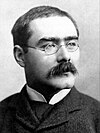
“I believe that the three writers of the nineteenth century who had the greatest natural talents were D'Annunzio, Kipling and Tolstoy - it's strange that all three had semi-fanatic ideas about religion or about patriotism.”
Quotes About James Joyce
Gain deeper perspective through quotes about James Joyce from others.
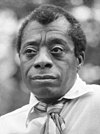
James Baldwin on James Joyce 2 quotes
“Joyce accepted silence, exile, and cunning as a system which would sustain his life, and I've had to accept it too — incidentally, silence is the hardest part to understand.”
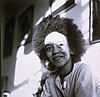
Nikki Giovanni on James Joyce
“James Joyce teaches us that you must write on the human breath. This is the reason people get confused when they read Ulysses or Finnegans Wake. There are no breaks, so people don't understand how to read them. But Joyce wrote as he breathed. And you should write the way you breathe.”
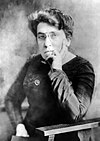
Emma Goldman on James Joyce
“I did not mind remaining in the Tombs, for I was resting and enjoying an absorbing book Margaret Anderson had sent me. It was A Portrait of the Artist As a Young Man, by James Joyce. I had not read that author before and I was fascinated by his power and originality,”
Gerald Gould on James Joyce
“If novel-readers don't read Mr. Joyce, novel-writers do.”
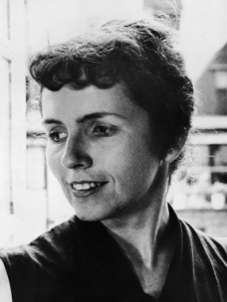
Maxine Hong Kingston on James Joyce 3 quotes
“You know James Joyce said [in A Portrait of the Artist as a Young Man] that he would forge the conscience of his race with "cunning, silence, and exile," and I have always thought that those were very weird things to say because how could you do it with silence? But maybe he means secrecy, because as far back as I could remember writing-I guess I was eight or nine years old-it was my secret thing to do. I'd hide my work and I would pretend I was doing something else, and I would write all the things that were forbidden to say. And then I just kept that up forever. I was very clear from a long time ago that I didn't have to share this with anybody-so that makes me very brave. I can always write it, throw it away, and I don't have to publish. But I do have to say it. Everything has to be expressed...Speaking of secrecy, did you notice that Alice Walker and Toni Morrison both began books with almost that same sentence: "You must not tell anyone,' my mother said, 'what I am about to tell you." " Alice Walker's novel [The Color Purple] begins: "You better not tell nobody but God," and then Toni Morrison [in The Bluest Eye] has the line, "Quiet as it's kept..." You see everybody has that same line; it's the same struggle to break through taboos, to find your voice. It's that same "exile, secrecy, and cunning" that Joyce was talking about.”


Misattributed Quotes
Quotes mistakenly credited to James Joyce
“Irresponsibility is part of the pleasure of all art; it is the part the schools cannot recognize.”
“I am tomorrow, or some future day, what I establish today. I am today what I established yesterday or some previous day.”
“The actions of men are the best interpreters of their thoughts.”
About James Joyce
James Augustine Aloysius Joyce (2 February 1882 – 13 January 1941) was an Irish novelist, short-story writer and poet. He contributed to the modernist movement and is regarded as one of the most influential and important writers of the twentieth century.