Link Copied!
Jacques Barzun Quotes (1907-2012)


About Jacques Barzun
Jacques Barzun (November 30, 1907 – October 25, 2012) was a French-born American scholar, historian, critic, teacher and editor.
Best Jacques Barzun Quotes
Shortest
Earliest
Explore our curated collection of the most famous and impactful Jacques Barzun quotes.


“I have always been — I think any student of history almost inevitably is — a cheerful pessimist.”
“The one thing that unifies men in a given age is not their individual philosophies but the dominant problem that these philosophies are designed to solve.”
“Strangers who have seen Shaw face to face are wont to report their surprise at his gentleness and consideration, his willingness to listen and his complete lack of pose.”


“Like Nietzsche, he rails at romanticism, but it is evident that what they both mean by the word is the clichés of second-hand romance. Historic romanticism is in fact the ground-work of their philosophy.”

“When plugged in, the least elaborate computer can be relied on to work to the fullest extent of its capacity. The greatest mind cannot be relied on for the simplest thing; its variability is its superiority.”
“My notion about any artist is that we honor him best by reading him, by playing his music, by seeing his plays or by looking at his pictures. We don't need to fall all over ourselves with adjectives and epithets. Let's play him more.”
“A student under my care owes his first allegiance to himself and not to my specialty; and must not be burdened with my work as if he followed no other and had contracted no obligation under heaven but that of satisfying my requirements.”
“Everybody keeps calling for Excellence — excellence not just in schooling, throughout society. But as soon as somebody or something stands out as Excellent, the other shout goes up: "Elitism!" And whatever produced that thing, whoever praises that result, is promptly put down. "Standing out" is undemocratic.”

“Criticism will need an injection of humility — that is, a recognition of its role as ancillary to the arts, needed only occasionally in a temporary capacity. Since the critic exists only for introducing and explaining, he must be readily intelligible; he has no special vocabulary: criticism is in no way a science or a system.”

“On reflection, moral judgment in the arts appears rather as a tribute to their power to influence emotion and possibly conduct. And reflecting further on what some critics do today, one sees that a good many have merely shifted the ground of their moralism, transferring their impulse of righteousness to politics and social issues.”

“Among the words that can be all things to all men, the word "race" has a fair claim to being the most common, most ambiguous and most explosive. No one today would deny that it is one of the great catchwords about which ink and blood are spilled in reckless quantities. Yet no agreement seems to exist about what race means.”
“The ever-present impulse is to push against restriction and, in so doing, to feel intolerably hemmed in. Thus in practice, every liberation increases the sense of oppression. Nor is the paradox merely in the mind: the laws enacted to secure the rights of every person and group, by creating protective boundaries, create new barriers.”
“On the one hand, society needs a common faith and vigorous institutions with the power to coerce; and on the other, the individual as a human soul or as the bearer of a new and possibly saving heresy, must be free. It is difficult enough to reconcile these two needs, but the problem holds another hazard: the need of action under the pressure of time.”
“Shaw's emotional development was one with his intellectual strength. His path led him into the thick of the scrimmage, where more spontaneous natures defend themselves with the usual weapons of malice, humility, bad temper or conceit. But Shaw used the death ray of imperturbability. His feelings were never hurt, his envy never aroused, his conceit was a transparent fiction, he never quarreled.”

“We are accustomed to the artist scoundrel or specialist in vice, and unaccustomed to the creator in whom passion and reason and moral integrity hold in balance. But greatness of intellect and feeling, or soul and conduct — magnanimity, in short — does occur; it is not a myth for boy scouts, and its reality is important, if only to give us the true range of the term "human," which we so regularly define by its lower reaches.”

“He sent me a letter from India, where I think he got a fellowship to spend a year or so. He sent me a letter that read, I've just met a wonderful guru who can read minds. "I want you to" — Allen had a way of saying "I want you to do this, I want you to do that" — "I want you to get him a position in the Philosophy Department." I wrote back, "Dear Allen, the members of the Philosophy Department want nothing so little as to have their minds read."”

“Seeing clearly within himself and always able to dodge around the ends of any position, including his own, Shaw assumed from the start the dual role of prophet and gadfly. To his contemporaries it appeared frivolous and contradictory to perform as both superman and socialist, sceptic and believer, legalist and heretic, high-brow and mob-orator. But feeling the duty to teach as well as to mirror mankind, Shaw did not accept himself as a contradictory being.”
Jacques Barzun Quotes by Topic
Find exactly what you are looking for by browsing this categorized list of Jacques Barzun quotes by topic.
Jacques Barzun on Baseball 2 quotes
View all 2 quotes on Baseball →Jacques Barzun on Affectation
“Great cultural changes begin in affectation and end in routine.”
Jacques Barzun on Ageing
Jacques Barzun on Elitism
“As soon as somebody or something stands out as excellent, the other shout goes up: 'Elitism!' And whatever produced that thing, whoever praises that result, is promptly put down. 'Standing out' is undemocratic.”

Jacques Barzun on Piano
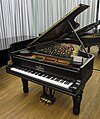
“[T]he piano is the social instrument par excellence. It is drawing-room furniture, a sign of bourgeois prosperity, the most massive of the devices by which the young are tortured in the name of education and the grown-up in the name of entertainment.”
Jacques Barzun on Relativism
“Can an idea — a notion as abstract as Relativism — produce by itself the effects alleged? cause all the harm, destroy all the lives and reputations? I am as far as anyone can be from denying the power of ideas in history, but the suggestion that a philosophy (as Relativism is often called) has perverted millions and debased daily life is on the face of it absurd. No idea working alone has ever demoralized society, and there have been plenty of ideas simpler and more exciting than Relativism.”

Jacques Barzun on Collecting
“The danger is that we shall become a nation of pedants. I use the word literally and democratically to refer to the millions of people who are moved by a certain kind of passion in their pastimes as well as in their vocations. In both parts of their lives this passion comes out in shoptalk. I have in mind both the bird watchers and nature lovers: the young people who collect records and follow the lives of pop singers and movie stars; I mean the sort of knowledge possessed by “buffs” and “fans” of all species—the baseball addicts and opera goers, the devotees of railroad trains and the collectors of objects, from first editions to netsuke.They are pedants not just because they know and recite an enormous quantity of facts—if a school required them to learn as much they would scream against tyranny. It is not the extent of their information that appalls; it is the absence of any reflection upon it, any sense of relation between it and them and the world. Nothing is brought in from outside for contrast or comparison; no perspective is gained from the top of their monstrous factual pile; no generalities emerge to lighten the sameness of their endeavor.”

What Jacques Barzun Said About Others
Discover personal opinions Jacques Barzun shared regarding contemporaries.
Jacques Barzun on George Bernard Shaw 5 quotes
“Shaw does not merely decorate a proposition, but makes his way from point to point through new and difficult territory.”

Jacques Barzun on Rex Stout
“If he had done nothing more than to create Archie Goodwin, Rex Stout would deserve the gratitude of whatever assessors watch over the prosperity of American literature.”
Jacques Barzun on Karl Marx
Jacques Barzun on H. G. Wells
“Mr. Wells is not shrinking back to a mossy political liberalism; he is expressing the clear-eyed conclusions of one abreast with his own latest experience. He has seen it demonstrated all over Europe and Asia that however much the world wants order, it cannot get it by mere violence and the magic of symbols. He has seen that however splendid fanatical dogmatism may feel internally to the possessor, it is the quickest way to chaos externally.”

Jacques Barzun on Jean-Jacques Rousseau
“Rousseau's unforgivable crime was his rejection of the graces and luxuries of civilized existence. Voltaire had sung “The superfluous, that most necessary thing." For the high bourgeois standard of living Rousseau would substitute the middling peasant's. It was the country versus the city – an exasperating idea for them, as was the amazing fact that every new work of Rousseau's was a huge success, whether the subject was politics, theater, education, religion, or a novel about love.”

Jacques Barzun on Jacques Hadamard
“... Professor Hadamard concludes that the general pattern of invention, or, as it might also be put, of original work, is three-fold : conscious study, followed by unconscious maturing, which leads in turn to the moment of insight or illumination. Thereupon another period of conscious work ensues, the purpose of which is to achieve a synthesis of several elements: the novel idea, its logically deduced consequences including proof, and the traditional knowledge to which the new item is added.
Hadamard's investigation, modest and tentative as are its results, seems to me of capital importance in the realm of criticism and cultural history. For what he has done is to show that the human mind tends to behave much the same way whenever it invents, whether in mathematical or in poetic form—a conclusion which does not deny differences of temperament. Our author, on the contrary, is at pains to distinguish among types of mathematical geniuses. He classes them as logical or intuitive, concrete or abstract, yet with enough flexibility to allow for deceptive appearances and for the overlapping of categories. But it is clear in the end that in any process of creation there lurks a mystery—a mystery at least equal to that of thinking itself.”
About Jacques Barzun
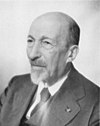
Jacques Barzun (November 30, 1907 – October 25, 2012) was a French-born American scholar, historian, critic, teacher and editor.