Link Copied!
J. M. Coetzee Quotes (1940-)
Writer, Novelist

About J. M. Coetzee
John Maxwell Coetzee (born 9 February 1940), often called J. M. Coetzee, is a South African-born writer and academic. A novelist and literary critic as well as a translator, Coetzee won the 2003 Nobel Prize in Literature. He now lives in Australia.
Best J. M. Coetzee Quotes
Shortest
Earliest
Explore our curated collection of the most famous and impactful J. M. Coetzee quotes.


J. M. Coetzee Quotes by Topic
Find exactly what you are looking for by browsing this categorized list of J. M. Coetzee quotes by topic.
J. M. Coetzee on State
“The modern state appeals to morality, to religion, and to natural law as the ideological foundation of its existence. At the same time it is prepared to infringe any or all of these in the interest of self-preservation.”

J. M. Coetzee on Breast
“There is nothing more humanly beautiful than a woman's breasts. Nothing more humanly beautiful, nothing more humanly mysterious than why men should want to caress, over and over again, with paintbrush or chisel or hand, these oddly curved fatty sacs, and nothing more humanly endearing than our complicity (I mean the complicity of women) in their obsession.”

J. M. Coetzee on Democracy
“As during the time of kings it would have been naive to think that the king’s firstborn son would be the fittest to rule, so in our time it is naive to think that the democratically elected ruler will be the fittest. The rule of succession is not a formula for identifying the best ruler, it is a formula for conferring legitimacy on someone or other and thus forestalling civil conflict.”

J. M. Coetzee on Comedy
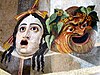
“Erasmus dramatizes a well-established political position: that of the fool who claims license to criticize all and sundry without reprisal, since his madness defines him as not fully a person and therefore not a political being with political desires and ambitions. The Praise of Folly, therefore sketches the possibility of a position for the critic of the scene of political rivalry, a position not simply impartial between the rivals but also, by self-definition, off the stage of rivalry altogether.”
J. M. Coetzee on Esotericism
“Erasmus dramatizes a well-established political position: that of the fool who claims license to criticize all and sundry without reprisal, since his madness defines him as not fully a person and therefore not a political being with political desires and ambitions. The Praise of Folly, therefore sketches the possibility of a position for the critic of the scene of political rivalry, a position not simply impartial between the rivals but also, by self-definition, off the stage of rivalry altogether.”

J. M. Coetzee on The Praise of Folly
“Erasmus dramatizes a well-established political position: that of the fool who claims license to criticize all and sundry without reprisal, since his madness defines him as not fully a person and therefore not a political being with political desires and ambitions. The Praise of Folly, therefore sketches the possibility of a position for the critic of the scene of political rivalry, a position not simply impartial between the rivals but also, by self-definition, off the stage of rivalry altogether.”
J. M. Coetzee on Animals
“To any thinking person, it must be obvious that there is something badly wrong in relations between human beings and the animals that human beings rely on for food; and that in the past 100 or 150 years whatever is wrong has become wrong on a huge scale, as traditional animal husbandry has been turned into an industry using industrial methods of production. ... It would be a mistake to idealise traditional animal husbandry as the standard by which the animal-products industry falls short: traditional animal husbandry is brutal enough, just on a smaller scale. A better standard by which to judge both practices would be the simple standard of humanity: is this truly the best that human beings are capable of?”

J. M. Coetzee on Vegetarianism
““But your own vegetarianism, Mrs. Costello,” says President Garrard, pouring oil on troubled waters: “it comes out of moral conviction, does it not?” “No, I don't think so,” says his mother. “It comes out of a desire to save my soul.” Now there truly is a silence, broken only by the clink of plates as the waitresses set baked Alaskas before them. “Well, I have a great respect for it,” says Garrard. “As a way of life.” “I'm wearing leather shoes,” says his mother. “I'm carrying a leather purse. I wouldn't have overmuch respect if I were you.” “Consistency,” murmurs Garrard. “Consistency is the hobgoblin of small minds. Surely one can draw a distinction between eating meat and wearing leather.” “Degrees of obscenity,” she replies.”

J. M. Coetzee on Pragmatism
“The typical reaction of liberal intellectuals is to seize on the contradiction here: How can something be both wrong and right, or at least both wrong and OK, at the same time? What liberal intellectuals fail to see is that this so-called contradiction expresses the quintessence of the Machiavellian and therefore the modern, a quintessence that has been thoroughly absorbed by the man in the street. The world is ruled by necessity, says the man in the street, not by some abstract moral code. We have to do what we have to do.
If you wish to counter the man in the street, it cannot be by appeal to moral principles, much less by demanding that people should run their lives in such a way that there are no contradictions between what they say and what they do. Ordinary life is full of contradictions; ordinary people are used to accommodating them. Rather, you must attack the metaphysical, supra-empirical status of necessità and show that to be fraudulent.”

What J. M. Coetzee Said About Others
Discover personal opinions J. M. Coetzee shared regarding contemporaries.
J. M. Coetzee on Desiderius Erasmus
“Erasmus dramatizes a well-established political position: that of the fool who claims license to criticize all and sundry without reprisal, since his madness defines him as not fully a person and therefore not a political being with political desires and ambitions. The Praise of Folly, therefore sketches the possibility of a position for the critic of the scene of political rivalry, a position not simply impartial between the rivals but also, by self-definition, off the stage of rivalry altogether.”

Quotes About J. M. Coetzee
Gain deeper perspective through quotes about J. M. Coetzee from others.
Abdulrazak Gurnah on J. M. Coetzee

Amos Oz on J. M. Coetzee
“(whom of those you have read recently have you found impressive?) AO: The South Africans: Nadine Gordimer, J. M. Coetzee, and André Brink.”

About J. M. Coetzee
John Maxwell Coetzee (born 9 February 1940), often called J. M. Coetzee, is a South African-born writer and academic. A novelist and literary critic as well as a translator, Coetzee won the 2003 Nobel Prize in Literature. He now lives in Australia.