Link Copied!
Hugo Chávez Quotes (1954-2013)
President



About Hugo Chávez
Hugo Rafael Chávez Frías (28 July 1954 – 5 March 2013) was the President of Venezuela from 1999 until March 2013.
Best Hugo Chávez Quotes
Shortest
Earliest
Explore our curated collection of the most famous and impactful Hugo Chávez quotes.
“But Cuba doesn’t have a dictatorship — it’s a revolutionary democracy.”

“We must confront the privileged elite who have destroyed a large part of the world”
“The grand destroyer of the world, and the greatest threat … is represented by U.S. imperialism.”

“I extend from here my recognition of all who voted against us, recognition of their democratic weight.”
“I am convinced that the path to a new, better and possible world is not capitalism, the path is socialism.”

“We have to strengthen ourselves, our will to do battle, our awareness. We have to build a new and better world.”

“Let the dogs of the empire bark, that's their job; ours is to battle to achieve the true liberation of our people.”


“You should resign. It's the least you can do: Resign, along with those other spies and delinquents working in the State Department.”
“Enough already with the imperialist aggression! Down with the U.S. empire! It must be said, in the entire world: Down with the empire!”
“Liberator of Libya, He will be remembered as a great fighter, a revolutionary and martyr. They assassinated him. It is another outrage.”
“Dr Insulza is quite an idiot, a true idiot. The insipid Dr Insulza should resign from the secretariat of the OAS for daring to play that role.”

Hugo Chávez Quotes by Topic
Find exactly what you are looking for by browsing this categorized list of Hugo Chávez quotes by topic.
Hugo Chávez on Latin America 2 quotes
“Cuba doesn’t have a dictatorship — it’s a revolutionary democracy.”

Hugo Chávez on Elitism 2 quotes
“We must confront the privileged elite who have destroyed a large part of the world.”

Hugo Chávez on Socialism of the 21st century 2 quotes
“We have to re-invent socialism. It can’t be the kind of socialism that we saw in the Soviet Union, but it will emerge as we develop new systems that are built on cooperation, not competition.”

Hugo Chávez on Democratic socialism 2 quotes
“Capitalism can not be transcended through capitalism itself; it must be done through socialism, true socialism, with equality and justice. I’m also convinced that it is possible to do it under democracy, but not in the type of democracy being imposed by Washington.”

Hugo Chávez on Capitalism 2 quotes
“Capitalism is the way of the devil and exploitation, of the kind of misery and inequality that destroys social values. If you really look at things through the eyes of Jesus Christ - who I think was the first socialist - only socialism can really create a genuine society.”

Hugo Chávez on Cuba
“But Cuba doesn’t have a dictatorship — it’s a revolutionary democracy.”
Hugo Chávez on Venezuela
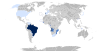
Hugo Chávez on Portuguese language
“Knowing English is important, but for us Venezuelans I think it would also be important to know Portuguese. For that reason, we should evaluate the possibility of it being taught in our schools.”
Hugo Chávez on Terrorism
“One has to ask whether there was transparency in the invasion of Iraq. The world knows President Bush lied openly about Iraq having chemical weapons, They keep on bombing cities, killing children, they have become a terrorist state.”

What Hugo Chávez Said About Others
Discover personal opinions Hugo Chávez shared regarding contemporaries.
Hugo Chávez on Eduardo Galeano
Hugo Chávez on Condoleezza Rice
“Hi Condoleezza, how are you? You've forgotten about me, my little girl.”

Hugo Chávez on Muammar Gaddafi
“Liberator of Libya, He will be remembered as a great fighter, a revolutionary and martyr.”

Hugo Chávez on Alexander Lukashenko
Hugo Chávez on Barack Obama
“Mr. Obama decided to attack us, Now you want to win votes by attacking Venezuela. Don't be irresponsible. You are a clown, a clown. Leave us in peace … Go after your votes by fulfilling that which you promised your people.”

Hugo Chávez on Robert Mugabe
“I give you a replica of liberator Simon Bolivar's sword. For you who, like Bolivar, took up arms to liberate your people. For you who, like Bolivar, are and will always be a true freedom fighter. [Mugabe] continues, alongside his people, to confront the pretensions of new imperialists.”

Hugo Chávez on Tony Blair
“Don’t be shameless, Mr Blair. Don’t be immoral, Mr. Blair. You are one of those who have no morals. You are not one who has the right to criticize anyone about the rules of the international community. You are an imperialist pawn who attempts to curry favor with Danger Bush-Hitler, the number one mass murderer and assassin there is on the planet. Go straight to hell, Mr. Blair.”

Hugo Chávez on George W. Bush
“You messed up with me, birdie. No? You don't know much about history. You don't know much about anything, you know? A great ignorance is what you've got. You are ignorant, Mr. Danger. You are an ignorant. You are a donkey, Mr. Danger ... By that I mean, you know, to say it with all its letters, to Mr. George W. Bush. You are a donkey, Mr. Bush. I'm going to tell you something, Mr. Danger. You are a coward, you know? You are a coward. Why don't you go to Iraq and command your army? It's so easy to command an army from afar. If you ever come up with the crazy idea of invading Venezuela, I'll be waiting for you in this savanna, Mr. Danger. Come on here, Mr. Danger. Come on here. Come on here, Mr. Danger. Coward, assassin, genocidal... Genocidal, you are a genocidal. You are an alcoholic, a drunk.. A drunk, Mr. Danger. You are immoral, Mr. Danger... You are the worst ever, Mr. Danger ... The worst of this planet, the very worst is called George W. Bush. God save the world from this menace. Because he is an assassin. A sick man, a psychologically ill man, I know it. Personally, he is a coward. But he has a lot of power. He has a lot of power. And look at what's happening in Iraq. Yesterday the world marched against the war... 70%, according to the surveys I've seen, of your own people, Mr. Danger, are against you, against the war. You are a liar, Mr. Danger. You are killing children, Mr. Danger, who aren't responsible for your illnesses, of your complexes. Your soldiers in Iraq are bombing cities. Just yesterday we were watching images of five children who were murdered by you soldiers. They're not the murderers. You are the murderer, coward!”

Quotes About Hugo Chávez
Gain deeper perspective through quotes about Hugo Chávez from others.
Iranian president Mahmoud Ahmadinejad upon decorating Chávez with the "Higher Medal of the Islamic Republic of Iran" on Hugo Chávez
“Mr. Chávez is my brother, he is a friend of the Iranian nation and the people seeking freedom around the world. He works perpetually against the dominant system. He is a worker of God and servant of the people.”
George W. Bush on Hugo Chávez
“The stem cell debate was an introduction to a phenomenon I witnessed throughout my presidency: highly personal criticism. Partisan opponents and commentators questioned my legitimacy, my intelligence, and my sincerity. They mocked my appearance, my accent, and my religious beliefs. I was labeled a Nazi, a war criminal, and Satan himself. That last one came from a foreign leader, Venezuelan President Hugo Chavez.”
Venezuelans Marched for Peace and Against Paramilitary and Imperialist Intervention by Martin Sanchez May 17 2004 on Hugo Chávez
“Last Friday, Chavez held a press conference with foreign correspondents in which he showed pictures of the alleged leaders of the paramilitary group. “The paramilitary incursion is a historic incident with worldwide resonance which only the local private media have tried to minimize,” said the President. The President spoke out against Capitalism, and criticized the fact that after the Cold War many on the left stopped talking about Capitalism, replacing it with the word Neoliberalism. Both terms refer to “the same assassin, perverse and stinky empire”. During his presidency, Chavez himself has spoken out against Neoliberalism, while claiming to lead a revolution to build “Capitalism with a human face”. He has only recently started to criticize Capitalism directly.”
José R. Cárdenas on Hugo Chávez
“It is difficult to fathom the level of economic and social degradation occurring today in Venezuela under chavismo, the movement founded by the late leftist firebrand Hugo Chávez, who died of cancer three years ago. What began as a war against the “squalid” oligarchy in order to build what he called “21st-century socialism” — cheered on as he was by many leftists from abroad — has collapsed into an unprecedented heap of misery and conflict. Unsurprisingly, Chávez was incapable of reinventing socialism as anything other than a prescription for abject failure. Ultimately, all he wound up bequeathing to his people is this century’s longest national train wreck.”
Jeremy Corbyn on Hugo Chávez
“Thanks Hugo Chavez for showing that the poor matter and wealth can be shared. He made massive contributions to Venezuela & a very wide world”

Vitaly Churkin on Hugo Chávez
“He was a great politician for his country and for the world as a whole.”
The Media Myth of ‘Once Prosperous’ and Democratic Venezuela Before Chávez, Joe Emersberger and Justin Podur, on Hugo Chávez 2 quotes
“The lies peddled about Venezuela’s past make US US aggression against it possible in the present. It is worth summing up some of these key lies: Venezuela was “once prosperous” and ruined by socialism. In fact, Venezuela was an unequal country in which most people were poor despite the country’s oil wealth, which had generated huge export revenues since the 1920s.Venezuela was a democracy before Chavismo. In fact, Venezuela’s democracy was a gravely flawed system in which politicians alternated holding power according to an undemocratic agreement, and rammed austerity down the throats of Venezuela’s poor by committing massacres, such as the Caracazo.Chavismo ruined Venezuela’s democracy. Chávez indeed attempted to carry out a coup in 1992, but he came to power through an election in 1998, and afterward made changes through extensive democratic processes.”
Steven Levitsky on Hugo Chávez
“But there is another way to break a democracy. It is less dramatic but equally destructive. Democracies may die at the hands not of generals but of elected leaders—presidents or prime ministers who subvert the very process that brought them to power. Some of these leaders dismantle democracy quickly, as Hitler did in the wake of the 1933 Reichstag fire in Germany. More often, though, democracies erode slowly, in barely visible steps. In Venezuela, for example, Hugo Chávez was a political outsider who railed against what he cast as a corrupt governing elite, promising to build a more “authentic” democracy that used the country’s vast oil wealth to improve the lives of the poor. Skillfully tapping into the anger of ordinary Venezuelans, many of whom felt ignored or mistreated by the established political parties, Chávez was elected president in 1998. As a woman in Chávez’s home state of Barinas put it on election night, “Democracy is infected. And Chávez is the only antibiotic we have.” When Chávez launched his promised revolution, he did so democratically. In 1999, he held free elections for a new constituent assembly, in which his allies won an overwhelming majority. This allowed the chavistas to single-handedly write a new constitution. It was a democratic constitution, though, and to reinforce its legitimacy, new presidential and legislative elections were held in 2000. Chávez and his allies won those, too. Chávez’s populism triggered intense opposition, and in April 2002, he was briefly toppled by the military. But the coup failed, allowing a triumphant Chávez to claim for himself even more democratic legitimacy. It wasn’t until 2003 that Chávez took his first clear steps toward authoritarianism. With public support fading, he stalled an opposition-led referendum that would have recalled him from office—until a year later, when soaring oil prices had boosted his standing enough for him to win. In 2004, the government blacklisted those who had signed the recall petition and packed the supreme court, but Chávez’s landslide reelection in 2006 allowed him to maintain a democratic veneer. The chavista regime grew more repressive after 2006, closing a major television station, arresting or exiling opposition politicians, judges, and media figures on dubious charges, and eliminating presidential term limits so that Chávez could remain in power indefinitely. When Chávez, now dying of cancer, was reelected in 2012, the contest was free but not fair: Chavismo controlled much of the media and deployed the vast machinery of the government in its favor. After Chávez’s death a year later, his successor, Nicolás Maduro, won another questionable reelection, and in 2014, his government imprisoned a major opposition leader. Still, the opposition’s landslide victory in the 2015 legislative elections seemed to belie critics’ claims that Venezuela was no longer democratic. It was only when a new single-party constituent assembly usurped the power of Congress in 2017, nearly two decades after Chávez first won the presidency, that Venezuela was widely recognized as an autocracy.”
Elizabeth Martinez on Hugo Chávez
“you asked about Hugo Chávez a while ago. I mean, there’s a whole lot going on in Latin America, and there’s an overall push to the left overall — not every country, and not everything, but I find it very encouraging, you know?”

William Neuman on Hugo Chávez
“The history of Venezuela and oil flows through Mene Grande like the crude oil through the silver pipe. The first oil workers’ strike occurred here (and was put down here) in 1925. In 1976, during the country’s first petrodelirium, when oil prices quadrupled, President Carlos Andrés Pérez came to Mene Grande to declare the nationalization of the oil industry. Three decades later, in the midst of an even bigger boom, President Hugo Chávez came here to announce a second nationalization, changing the terms by which foreign oil companies operated in Venezuela and giving the government a controlling stake in everything that happened in the oil fields. There were information boards at the edge of the parking lot commemorating the dual nationalizations; in their telling, Chávez got all the glory. Chávez had died a year earlier, in 2013, after fourteen years as president. A former soldier, he called himself a socialist and a revolutionary and he delighted in thumbing his nose at the United States, the imperial power to the north, to which he sold most of his country’s oil. His successor was Nicolás Maduro, a less talented politician who styled himself as the ideological heir of the man he called the eternal comandante. In Maduro’s short time as president, there had been waves of protest, the economy had begun to contract, inflation was soaring, and shortages of food and other goods were becoming acute.”
Johan Norberg on Hugo Chávez
“At the same time, on the other side of the Atlantic, in Venezuela, the authoritarian populist Hugo Chávez and his disciple Nicolás Maduro initiated a similar policy of massive spending, corruption and nationalization. The difference was that Chávez had control over the world’s largest oil reserves at a time when oil prices were soaring, so he received almost $1,000 billion that could keep that policy afloat for a little longer. That was enough for Chávez to be the left’s favourite demagogue for a while. Bernie Sanders said that the American dream was more alive in Venezuela than in the US. Labour’s Jeremy Corbyn praised Chávez for showing that ‘the poor matter and wealth can be shared’. Oxfam called Venezuela ‘Latin America’s inequality success story’. In an open letter to ‘Dear President Chávez’, luminaries of the Left such as Jesse Jackson, Naomi Klein, Howard Zinn and others state that they ‘see Venezuela not only as a model democracy but also as a model of how a country’s oil wealth can be used to benefit all of its people.’ On paper, that $1,000 billion was enough to make every extremely poor individual in Venezuela a millionaire. But still, it is not much money if you do not invest it productively and if you destroy the ability to create new wealth with nationalization and price controls. When the price of oil began to fall only slightly, it became obvious that the business sector was in a shambles and the oil industry had been demolished by corrupt mismanagement and underinvestment. The result was one of the worst economic disasters to have occurred anywhere in the world in peacetime. Between 2010 and 2020, Venezuela’s average income plummeted by an incomprehensible 75 per cent. South America’s richest country suddenly turned into South America’s poorest country with breadlines and a mass exodus from an increasingly tyrannical state. Around seven million Venezuelans have fled the crumbling country, an unbelievable 25 per cent of the country’s population. Since then, Venezuela has been less frequently mentioned as the hope of the international working class.”
About Hugo Chávez
Hugo Rafael Chávez Frías (28 July 1954 – 5 March 2013) was the President of Venezuela from 1999 until March 2013.