Link Copied!
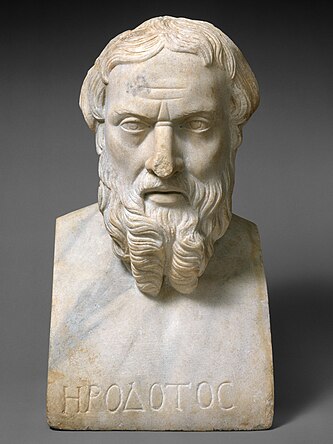
Herodotus Quotes (-484--425)









Best Herodotus Quotes
Shortest
Earliest
Explore our curated collection of the most famous and impactful Herodotus quotes.


“When life is so burdensome death has become a sought after refuge.”
“It is the gods' custom to bring low all things of surpassing greatness.”

“Circumstances rule men; men do not rule circumstances.”
“From great wrongdoing there are great punishments from the gods.”

“Stranger, tell the people of Lacedaemon
That we who lie here obeyed their commands.”
That we who lie here obeyed their commands.”
“Now, that these descendants of Perdiccas are Greeks, as they themselves say, I myself chance to know.”

“Tell your king (Xerxes), who sent you, how his Greek viceroy (Alexander I) of Macedonia has received you hospitably.”

“"It is sound planning that invariably earns us the outcome we want; without it, even the gods are unlikely to look with favour on our designs."”
“The Lacedaemonians fought a memorable battle; they made it quite clear that they were the experts, and that they were fighting against amateurs.”
“It is better to be envied than pitied.
• Variant: How much better a thing it is to be envied than to be pitied.”
• Variant: How much better a thing it is to be envied than to be pitied.”
“If a man insisted always on being serious, and never allowed himself a bit of fun and relaxation, he would go mad or become unstable without knowing it.”

“"At sea your men will be as far inferior to Greeks as women are to men." (By Artemisa, the best persian warrior in Salamina, a very courageous woman. A superbe irony!).”
Herodotus Quotes by Topic
Find exactly what you are looking for by browsing this categorized list of Herodotus quotes by topic.
Herodotus on Amazons 8 quotes
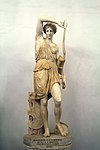
“And the Sauromatai make use of the Scythian tongue, speaking it barbarously however from the first, since the Amazons did not learn it thoroughly well. As regards marriages their rule is this, that no maiden is married until she has slain a man of their enemies; and some of them even grow old and die before they are married, because they are not able to fulfil the requirement of the law.”
Herodotus on Mail 2 quotes
“Neither snow, nor rain, nor heat, nor night stays these couriers from the swift completion of their appointed rounds.”

Herodotus on Emerald 2 quotes
“Polycrates considered which of his treasures it would most grieve his soul to lose, and came to this conclusion: he wore a seal set in gold, an emerald, crafted by Theodorus son of Telecles of Samos.”

Herodotus on Scythians 2 quotes
“The Scythians then take the seed of this hemp and creep under the felt coverings, and then they throw the seed upon the stones which have been heated red-hot: and it burns like incense and produces a vapour so thick that no vapour-bath in Hellas would surpass it: and the Scythians being delighted with the vapour-bath howl like wolves. This is to them instead of washing, for in fact they do not wash their bodies at all in water. Their women however pound with a rough stone the wood of the cypress and cedar and frankincense tree, pouring in water with it, and then with this pounded stuff, which is thick, they plaster over all their body and also their face; and not only does a sweet smell attach to them by reason of this, but also when they take off the plaster on the next day, their skin is clean and shining.”
Herodotus on Ships
“The wooden wall alone should remain unconquered.”

Herodotus on Eyes
“The ear is a less trustworthy witness than the eye.”

Herodotus on King
Herodotus on Dissent
Herodotus on Knowledge
Herodotus on Success
What Herodotus Said About Others
Discover personal opinions Herodotus shared regarding contemporaries.
Herodotus on Alexander I of Macedon 2 quotes
“Tell your king (Xerxes), who sent you, how his Greek viceroy of Macedonia has received you hospitably.”

Herodotus on Euripides
“Circumstances rule men and not men circumstances.”

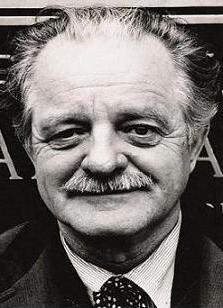
Herodotus on Kenneth Rexroth
“There have always been those who, though they see tragedy as the outcome of freedom, will nevertheless judge that tragedy is not too high a price to pay.”
Herodotus on Solon
“An unlucky rich man is more capable of satisfying his desires and of riding out disaster when it strikes, but a lucky man is better off than him…He is the one who deserves to be described as happy. But until he is dead, you had better refrain from calling him happy, and just call him fortunate.”
Herodotus on Leonidas I
“It is said that on the eve of battle, he was told by a native of Trachis that the Persian archers were so numerous that, when they fired their volleys the mass of arrows blocked out the sun. Dienekes, however, quite undaunted by this prospect, remarked with a laugh, "Good. Then we'll have our battle in the shade."”

Herodotus on Thales
“Since Alyattes would not give up the Scythians to Cyaxares at his demand, there was war [ Battle of Halys ] between the Lydians and the Medes for five years; each won many victories over the other, and once they fought a battle by night. They were still warring with equal success, when it happened, at an encounter which occurred in the sixth year, that during the battle the day was suddenly turned to night. Thales of Miletus had foretold this loss of daylight to the Ionians, fixing it within the year in which the change did indeed happen.”
Herodotus on Ramesses II
“Sesostris was the only Egyptian king who also ruled Ethiopia. To commemorate his name, he set before the temple of Hephaestus two stone statues of himself and his wife, each thirty cubits high, and statues of his four sons, each of twenty cubits. Long afterwards Darius the Persian would have set up his statue before these; but the priest of Hephaestus forbade him, saying that he had achieved nothing equal to the deeds of Sesostris the Egyptian; for Sesostris (he said) had subdued the Scythians, besides as many other nations as Darius had conquered, and Darius had not been able to overcome the Scythians; therefore it was not just that Darius should set his statue before the statues of Sesostris, whose achievements he had not equalled. Darius, it is said, let the priest have his way.”

Herodotus on Prostitution
“The foulest Babylonian custom is that which compels every woman of the land to sit in the temple of Aphrodite and have intercourse with some stranger at least once in her life. Many women who are rich and proud and disdain to mingle with the rest, drive to the temple in covered carriages drawn by teams, and stand there with a great retinue of attendants. But most sit down in the sacred plot of Aphrodite, with crowns of cord on their heads; there is a great multitude of women coming and going; passages marked by line run every way through the crowd, by which the men pass and make their choice. Once a woman has taken her place there, she does not go away to her home before some stranger has cast money into her lap, and had intercourse with her outside the temple; but while he casts the money, he must say, “I invite you in the name of Mylitta” (that is the Assyrian name for Aphrodite). It does not matter what sum the money is; the woman will never refuse, for that would be a sin, the money being by this act made sacred. So she follows the first man who casts it and rejects no one. After their intercourse, having discharged her sacred duty to the goddess, she goes away to her home; and thereafter there is no bribe however great that will get her. So then the women that are fair and tall are soon free to depart, but the uncomely have long to wait because they cannot fulfil the law; for some of them remain for three years, or four. There is a custom like this in some parts of Cyprus.”

Herodotus on Polycrates
“Polycrates, tyrant of Samos, ruled over many islands and many cities of the mainland. These he had subdued with his ships and his bowmen; for it was said that he plundered friend and foe alike, and that he was successful in everything he undertook. Now he had a friend, Amasis, king of Egypt, who, when he heard of Polycrates's great prosperity, sent him a letter, saying that he feared that some great misfortune would come upon him, "For the gods," he said, "are jealous, and in the end destroy miserably all those who are prosperous in everything." So he bade him ponder which one of his possessions he held most valuable, and at the loss of which he would grieve most, and to throw this away in such wise that his eyes should never see it again. For he hoped that by this advice he might be able to save his friend, and that after this his good luck would alternate with misfortune.Now, when Polycrates read this letter, it seemed to him that Amasis gave him good advice; so he decided to throw away a seal-ring which he was wont to wear. It was an emerald set in gold, and he thought he would grieve most at the loss of this. So he manned a ship of fifty oars, and put out, and then, in the sight of all those with him, flung the ring into the sea. A few days after this a fisherman brought to the palace a huge fish, saying that it seemed to him too fine to be taken to market, but worthy rather to be given to the king. So Polycrates, pleased at the gift and at the man's words, invited him to dinner. Now one may well wonder at what I am about to tell; but in the belly of the fish was found this same ring. At this Polycrates was pleased and wrote to Amasis, telling him what he had done. But Amasis broke off his friendship with him, thinking that calamity was sure to come upon one so lucky.”
Quotes About Herodotus
Gain deeper perspective through quotes about Herodotus from others.
Friedrich Accum on Herodotus
“The invention of brewing is ascribed to the Egyptians... from whence it seems to have passed to... western nations... Herodotus attributes the discovery of the art of brewing to Isis the wife of Osiris.”
Dionysius of Halicarnassus on Herodotus
“If we take up his book, we are filled with admiration till the last syllable and always seek for more.”
Richard Claverhouse Jebb on Herodotus 3 quotes
“The History of Herodotus works up the materials thus collected into an artistic picture of the world, grouped round a central idea. This idea is the great struggle between East and West, between Asiatic and Greek, of which the Persian Wars formed the last chapter. The History falls into two chief parts. The first five books are an introduction, tracing the rise and growth of the Persian power. The last four books relate the Persian invasions of Greece under Darius and Xerxes.”
Arnaldo Momigliano on Herodotus 3 quotes
“Herodotus was the first to organize a vast enquiry about a war and its causes. This is indeed the legacy of Herodotus to European historiography, and I am not going to say that it is an enviable legacy from every point of view. It has made war the central theme or one of the very central themes of European historiography ever since. If I had to answer the famous question an Oxford undergraduate once put to Sir John Myres – "Sir, if Herodotus was such a fool as they say, why do we read him for Greats?" – my answer would be that Herodotus was not only the founder of European historiography in a generic way: he provided European historiography with one of its leading and recurring themes, the study of war, in its origins, main events, results.”
Misattributed Quotes
Quotes mistakenly credited to Herodotus
“Knowledge may give weight, but accomplishments give lustre, and many more people see than weigh.”
“Very few things happen at the right time, and the rest do not happen at all. The conscientious historian will correct these defects.”