Link Copied!
Hermann Göring Quotes (1893-1946)
Politician, Leader
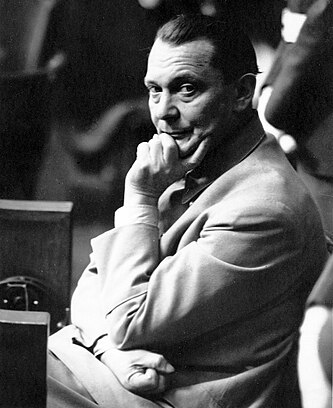

About Hermann Göring
Hermann Wilhelm Göring, also rendered as Goering (12 January 1893 – 15 October 1946), was a German politician, military leader and leading member of the Nazi Party. After Adolf Hitler became Chancellor of Germany in 1933, Göring was named as minister without portfolio in the new government. One of his first acts as a cabinet minister was to oversee the creation of the Gestapo, which he ceded to Heinrich Himmler in 1934.
Best Hermann Göring Quotes
Shortest
Earliest
Explore our curated collection of the most famous and impactful Hermann Göring quotes.
“Guns will make us powerful; butter will only make us fat.”
“If I didn't have a sense of humor, how could I stand this trial now?”

Attributed to Hermann Göring, this powerful statement on power dynamics emerged from the Nuremberg Trials, highlighting the victor's inherent control of historical narrative.
“The victor will always be the judge, and the vanquished the accused.”
English Translation: "The victor will always be the judge, and the vanquished always the accused."
Original (German): "Der Sieger wird immer der Richter und der Besiegte stets der Angeklagte sein."
“Der Sieger wird immer der Richter und der Besiegte stets der Angeklagte sein.”
Original (German): "Der Sieger wird immer der Richter und der Besiegte stets der Angeklagte sein."

“I think that women are wonderful but I've never met one yet who didn't show more feeling than logic.”

“In Berlin Jews controlled almost one hundred percent of the theaters and cinemas before the rise to power.”


Frustrated by his wife's pleas to help Jewish friends post-Kristallnacht and pressured by Hitler to cease assistance, Göring lamented his predicament, blaming the Jews for his woes.
“Now you see. You are even turning the Fuehrer against me. Ah, the Jews, the Jews, they'll be the death of me yet!”

“I especially denounce the terrible mass murders, which I cannot understand ... I never ordered any killing or tortures where I had the power to prevent such actions!”
“My measures will not be crippled by any bureaucracy. Here I don't have to worry about Justice; my mission is only to destroy and to exterminate, nothing more.”

“All nonsense. Nobody knows the real Göring. I am a man of many parts, but the autobiography, what does that tell you? Nothing. And those books put out by the party press, they are less than useless.”
“After the United States gobbled up California and half of Mexico, and we were stripped down to nothing, territorial expansion suddenly becomes a crime. It's been going on for centuries, and it will still go on.”

Göring's exasperated outburst reveals his frustration with the He 177 bomber's unreliable and complex Daimler-Benz DB 606 engine, a source of constant problems for the Luftwaffe.
“Why has this silly engine suddenly turned up, which is so idiotically welded together? They told me then, there would be two engines connected behind each other, and suddenly there appears this misbegotten monster of welded-together engines one cannot get at!”
“I know you want to study me psychologically. That's reasonable and I appreciate it. At least you don't lecture to me and pry into my affairs. You have a good technique as a psychiatrist. Let the other fellow talk and stick his neck into the noose. I don't mean that the way it sounds. But you hardly say anything. Someday I'm going to ask you questions.”
During his cross-examination at the Nuremberg Trials, Hermann Göring rationalized the Nazi regime's authoritarian structure, arguing that public trust in the Führer absolved citizens of direct political participation.
“The people were merely to acknowledge the authority of the Führer, or, let us say, to declare themselves in agreement with the Führer. If they gave the Führer their confidence then it was their concern to exercise the other functions. Thus, not the individual persons were to be selected according to the will of the people, but solely the leadership itself.”
“Just as nationalism protects a people from outside forces, so socialism serves a people's domestic needs. We want the people's strength to be released within the nation, forging the people once more into a strong block. The individual citizen must again have the sense that, even if he is finds himself in the simplest and lowest position, that his life and opportunities are assured.”

“The German people trusted the Führer. Given his authoritarian direction of the state, they had no influence on events. Ignorant of the crimes of which we know today, the people have fought with loyalty, self-sacrifice, and courage, and they have suffered too in this life-and-death struggle into which they were arbitrarily thrust. The German people are free from blame.”
“Hitler had the willpower of a demon and he needed it. If he didn't have such a strong willpower he couldn't have achieved anything. Don't forget, if Hitler had not lost the war, if he did not have to fight against the combination of big powers like England, America, and Russia — each one he could have conquered individually — these defendants and these generals would now be saying, 'Heil Hitler,' and would not be so damn critical.”
Facing down a reluctant Czech president, Goering chillingly threatened to obliterate Prague to prove the Luftwaffe's power, leveraging immense pressure to secure Czechoslovakia's surrender.
“Excellency, please sign. I hate to say it, but my job is not the easiest one. Prague, your capital–I should be terribly sorry if I were compelled to destroy this beautiful city. But I would have to do it, to make the English and French understand that my air force can do all it claims to do. Because they still don't want to believe this is so, and I should like an opportunity of giving them proof.”
Hermann Göring Quotes by Topic
Find exactly what you are looking for by browsing this categorized list of Hermann Göring quotes by topic.
Hermann Göring on Socialism 3 quotes
“Just as nationalism protects a people from outside forces, so socialism serves a people's domestic needs. We want the people's strength to be released within the nation, forging the people once more into a strong block. The individual citizen must again have the sense that, even if he is finds himself in the simplest and lowest position, that his life and opportunities are assured.”

Hermann Göring on Firearm
In 1936, Hermann Göring, advocating for German rearmament, famously prioritized military strength over civilian well-being, starkly illustrating Nazi ideology.
“Guns will make us powerful; butter will only make us fat.”
- Hermann Göring, G)
Hermann Göring on Mexican–American War
“After the United States gobbled up California and half of Mexico, and we were stripped down to nothing, territorial expansion suddenly becomes a crime. It's been going on for centuries, and it will still go on.”
- Hermann Göring, G)

Hermann Göring on Incitement to genocide
Hermann Göring on Pacifism
“Naturally, the common people don't want war; neither in Russia nor in England nor in America, nor for that matter in Germany. That is understood. But, after all, it is the leaders of the country who determine the policy and it is always a simple matter to drag the people along, whether it is a democracy or a fascist dictatorship or a Parliament or a Communist dictatorship. ... Voice or no voice, the people can always be brought to the bidding of the leaders. That is easy. All you have to do is tell them they are being attacked and denounce the pacifists for lack of patriotism and exposing the country to danger. It works the same way in any country.”

Hermann Göring on War
“Göring: Why, of course, the people don't want war. Why would some poor slob on a farm want to risk his life in a war when the best that he can get out of it is to come back to his farm in one piece? Naturally, the common people don't want war; neither in Russia nor in England nor in America, nor for that matter in Germany. That is understood. But, after all, it is the leaders of the country who determine the policy and it is always a simple matter to drag the people along, whether it is a democracy or a fascist dictatorship or a Parliament or a Communist dictatorship. Gilbert: There is one difference. In a democracy, the people have some say in the matter through their elected representatives, and in the United States only Congress can declare wars. Göring: Oh, that is all well and good, but, voice or no voice, the people can always be brought to the bidding of the leaders. That is easy. All you have to do is tell them they are being attacked and denounce the pacifists for lack of patriotism and exposing the country to danger. It works the same way in any country.”
What Hermann Göring Said About Others
Discover personal opinions Hermann Göring shared regarding contemporaries.
Hermann Göring on Alfred Rosenberg
Göring, dismissive of Alfred Rosenberg's Nazi ideology, privately mocked his focus on esoteric Nordic paganism and its potential to dominate policy.
“If Rosenberg was to decide … we would only have rite, thing, myth and such kind of swindle.”

Hermann Göring on Boris III of Bulgaria
“Your king is entirely too neutral to suit us. Anyway, there is no place for kings in the new European order.”

Hermann Göring on Adolf Galland
Facing imminent defeat, a nostalgic Hermann Göring, burdened by his role, wistfully expressed his desire to return to the simpler days of aerial combat to a younger Adolf Galland.
“I envy you Galland, for going into action. I wish I were a few years younger and less bulky. If I were, I would gladly put myself under your command. It would be marvelous to have nothing to worry about but a good fight, like it was in the old days.”

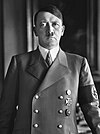
Hermann Göring on Adolf Hitler
“To me there are two Hitlers: one who existed until the end of the French war; the other begins with the Russian campaign. In the beginning he was genial and pleasant. He would have extraordinary willpower and unheard-of influence on people. The important thing to remember is that the first Hitler, the man who I knew until the end of the French war, had much charm and goodwill. He was always frank. The second Hitler, who existed from the beginning of the Russian campaign until his suicide, was always suspicious, easily upset, and tense. He was distrustful to an extreme degree.”
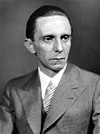
Hermann Göring on Joseph Goebbels
“Goebbels was the strongest representative of anti-Semitism. He saw his big chance to become powerful by using the press for anti-Semitic reasons. Personally, I think Goebbels was using anti-Semitism merely as a means of achieving personal power. Whether he had any deep-seated hatred against the Jews is questionable. I think he was too much of a thief and dishonest opportunist to have any deep-seated feelings for or against anything. But for years Goebbels had been trying in vain to become a big power. At last he saw his chance. He had whipped up anti-Semitic feelings to such a point by his vicious propaganda that he now thought he could do anything. He probably didn't think about the consequences himself. He was a fanatic of an abnormal caliber. Streicher was a tame man compared to Goebbels, because Streicher is half crazy and stupid, whereas Goebbels was just unscrupulous, clever and dangerous. You couldn't discuss anything with Goebbels. And for the same reason, you couldn't discuss anything with Himmler. Goebbels was so dishonest that it didn't pay to discuss anything with him.”
Quotes About Hermann Göring
Gain deeper perspective through quotes about Hermann Göring from others.
Doris L. Bergen on Hermann Göring 3 quotes
“Hitler neither developed his ideas in a vacuum nor rose to power alone. A rather motley crew of people formed his inner circle. Its membership changed many times, as people fell in and out of favor. Three individuals who stuck with Hitler throughout his political career and gained international profiles were Hermann Göring, Joseph Goebbels, and Heinrich Himmler. All of them would play key roles in the Nazi regime, each amassing enormous power even as they fought among themselves for Hitler's favor.”
Henry Channon on Hermann Göring
“Goering, wreathed in smiles and orders and decorations received us gaily, his wife at his side. There is something un-Christian about Goering, a strong pagan streak, a touch of the arena, though perhaps, like many who are libidinous-minded like myself, he actually does very little. People say that he can be very hard and ruthless, as are all Nazis when occasion demands, but outwardly he seems all vanity and childish love of display.”
Karl Dönitz on Hermann Göring
“I can't see a thing wrong with Göring's behavior as far as this trial is concerned. They have proven none of the charges. I have mentioned to Göring that the trouble with National Socialism is that it is a house divided, that we Germans tried to live in a community without considering our neighbors, and Göring agreed with me. So even Göring isn't as bad a fellow as the prosecution would have the world believe.”

Niall Ferguson on Hermann Göring
“The statesmen of the 1930s were not blind to the danger posed by a Germany dominant on the continent. On the contrary, it became conventional wisdom that the nation's capital would be flattened within twenty-four hours of the outbreak of war by the might of Hermann Gôring's Luftwaffe. In 1934 the Royal Air Force estimated that the Germans could drop up to 150 tons a day on England in the event of a war in which they occupied the Low Countries. By 1936 that figure had been raised to 600 tons and by 1939 to 700 tons - with a possible deluge of 3,500 tons on the first day of war. In July 1934 Baldwin declared, 'When you think of the defence of England you no longer think of the chalk cliffs of Dover; you think of the Rhine. That is where our frontier lies.' Yet he and his successor Neville Chamberlain failed altogether to devise a rational response to the German threat. It was one thing to let the Japanese have Manchuria; it meant nothing to British security. The same was true of letting the Italians have parts of Abyssinia; even Albania could be theirs at no cost to Britain. The internal affairs of Spain, too, were frankly irrelevant to the British national interest. But the rise of a Greater Germany was a different matter.”

Hans Fritzsche on Hermann Göring
“'''And another question was unfortunately not asked of Göring: 'The German people put faith in you even if they doubted Hitler because you were gentlemanly and more likable. What did you, Göring, do to justify this confidence? You have led a luxurious life and collected stolen art.''''”

Adolf Galland on Hermann Göring
“Göring wanted to know if we had ever thought about this. "Jawohl, Herr Reichsmarschall!" He looked me straight in the eyes and said, "What would you think of an order to shoot down pilots who were bailing out? "I should regard it as murder, Herr Reichsmarschall", I told him, "I should do everything in my power to disobey such an order". "That is just the reply I had expected from you, Galland".”
Heinz Guderian on Hermann Göring
“The blame for the faulty use of the Air Force must be apportioned equally to Hitler and to Goering. Neither the bravery nor the military and technical ability of the Luftwaffe sufficed to compensate for the vanity of its Commander-in-Chief and for the indulgence that Hitler showed towards the ambitions of his principle disciple. Only much later did Hitler form a true picture of Goering's worth- or rather worthlessness- but it is significant that on 'grounds of policy' he always refused to replace him in an appointment that was, for better or for worse, decisive to the outcome of the war. It has often been maintained that Hitler showed unshakable loyalty to his 'old comrades'. So far as Goering is concerned this was unfortunately true. It is also true that he frequently complained about him, but he never drew the correct conclusions from his own observations.”
Disputed Quotes
Quotes attributed to Hermann Göring that are questionable.
“In 1940 I could at least fly as far as Glasgow in most of my aircraft, but not now! It makes me furious when I see the Mosquito. I turn green and yellow with envy. The British, who can afford aluminium better than we can, knock together a beautiful wooden aircraft that every piano factory over there is building, and they give it a speed which they have now increased yet again. What do you make of that? There is nothing the British do not have. They have the geniuses and we have the nincompoops. After the war is over I'm going to buy a British radio set – then at least I'll own something that has always worked.Boog, Horst; Gerhard Krebs, Detlef Vogel (2006), Germany and the Second World War: Volume VII: The Strategic Air War in Europe and the War in the West and East Asia, 1943-1944/5 page: 407, place: Oxford, UK, publisher: Clarendon Press”
Misattributed Quotes
Quotes mistakenly credited to Hermann Göring
“When I hear the word culture, I reach for my Browning!
• Variant: "When I hear the word culture, I reach for my revolver." Often attributed to Göring, who might have used such lines, these statements are derived from those in the play Schlageter by Hanns Johst: "Wenn ich Kultur höre … entsichere ich meinen Browning!" [Whenever I hear of culture... I release the safety-catch of my Browning!] (Act 1, Scene 1) The play was first performed in April 1933 for Hitler's birthday. Reported as a misattribution in Paul F. Boller, Jr., and John George, They Never Said It: A Book of Fake Quotes, Misquotes, & Misleading Attributions (1989), p. 36.”
• Variant: "When I hear the word culture, I reach for my revolver." Often attributed to Göring, who might have used such lines, these statements are derived from those in the play Schlageter by Hanns Johst: "Wenn ich Kultur höre … entsichere ich meinen Browning!" [Whenever I hear of culture... I release the safety-catch of my Browning!] (Act 1, Scene 1) The play was first performed in April 1933 for Hitler's birthday. Reported as a misattribution in Paul F. Boller, Jr., and John George, They Never Said It: A Book of Fake Quotes, Misquotes, & Misleading Attributions (1989), p. 36.”
“I will decide who is a Jew!”
About Hermann Göring
Hermann Wilhelm Göring, also rendered as Goering (12 January 1893 – 15 October 1946), was a German politician, military leader and leading member of the Nazi Party. After Adolf Hitler became Chancellor of Germany in 1933, Göring was named as minister without portfolio in the new government. One of his first acts as a cabinet minister was to oversee the creation of the Gestapo, which he ceded to Heinrich Himmler in 1934.