Link Copied!
Herbert Read Quotes (1893-1968)
Writer, Poet, King

About Herbert Read
Sir Herbert Edward Read (4 December 1893 – 12 June 1968) was an English anarchist, poet, and critic of literature and art. He was one of the earliest English writers to take notice of existentialism, and was strongly influenced by proto-existentialist thinker Max Stirner.
Best Herbert Read Quotes
Shortest
Earliest
Explore our curated collection of the most famous and impactful Herbert Read quotes.
“All art originates in an act of intuition or vision.”

“A poem is not a statement, but a manifestation, a manifestation of being”
“Words,their sound and even their very appearance, are, of course,everything to the poet.”

“The distinction between a major and minor poet is the ability to write a long poem successfully.”
“Poetry is properly speaking a transcendental quality, a sudden transformation in which words assume a particular influence.”

“The work of art … is an instrument for tilling the human psyche, that it may continue to yield a harvest of vital beauty.”
“The work of art … is an instrument for tilling the human psyche, that it may continue to yield a harvest of vital beauty.”
“The process of poetry consists firstly in maintaining this vision in its integrity and secondly in expressing this vision in words.”

“A short poem is often called a lyric, which originally meant a poem short enough to be set to music and sung for a moment's pleasure.”
“These are the sensations and feelings that are gradually blunted by education, staled by custom, rejected in favor of social conformity.”
“The poem, even when it has some predetermined pattern, must be wrought to some effect or finish that justifies the exclamation: This is a poem!”
“There is no beauty in anything rational. Beauty emerges from the unknown, often from the inane, generally irrational, as unforseen combinations.”
“It is not my purpose as a poet to condemn war (or to be exact, modern warfare). I only wish to present the universal aspects of a particular event,”
“From the poet's viewpoint a lyric is a poem which embodies a single or simple emotional attitude that expresses directly an uninterrupted mood or inspiration.”
“The words in a poem, (or more exactly, syllables) are vocal signs that convey an intangible essence (the pattern of feeling) that vanishes the moment we approach it with an analytical intelligence.”

“The school of art which Hulme started and Pound established .. diction ,rhythm and metre were fully emancipated from formal artifice and the poet was free to act creatively under the laws of his own origination.”
“The revolutionary artist is born into a world of clichés, of stale images and signs which no longer pierce the consciousness to express reality. He therefore invents new symbols, perhaps a whole new symbolic system.”

“A poem therefore is to be defined as a structure of words whose sound constitutes a rhythmical unity, complete in itself, irrefragable, unanalyzable, completing its symbolic references within the ambit of its sound effects.”

“The difference between poetry and prose is not one of surface qualities, or form, or mode of expression, but of essence. The state of mind in which poetry originates must either seek poetic expression or it must not be expressed.”

“Shakespeare shows us tradition is a meaningless abstraction for the poet itself and I give thanks for for this poet reaching after nothing more distant than the impassioned accents of its own voice as it issued from an intuitive mind.”
“I believe that the poet is necessarily an anarchist, and that he must oppose all organized conceptions of the State, not only those which we inherit from the past, but equally those which are imposed on people in the name of the future.”
Herbert Read Quotes by Topic
Find exactly what you are looking for by browsing this categorized list of Herbert Read quotes by topic.
Herbert Read on Sincerity 3 quotes
“[Rousseau], [t]he man who would be sincere is unconsciously insincere. This confirms the supposition I began with: that a contradiction exists between self-consciousness and sincerity. To be conscious of a self, vis-a-vis other selves, is already to expose that self to corruption.”

Herbert Read on Art 2 quotes
“The work of art … is an instrument for tilling the human psyche, that it may continue to yield a harvest of vital beauty.”

Herbert Read on Pattern
“Art is pattern informed by sensibility.”

Herbert Read on Conformity
“These are the sensations and feelings that are gradually blunted by education, staled by custom, rejected in favor of social conformity.”
Herbert Read on Violence
“Revolt, it will be said, implies violence; but this is an outmoded, an incompetent conception of revolt. The most effective form of revolt in this violent world we live in is non-violence.”
Herbert Read on Anarchism
“I believe that the poet is necessarily an anarchist, and that he must oppose all organized conceptions of the State, not only those which we inherit from the past, but equally those which are imposed on people in the name of the future.”

Herbert Read on State
“I believe that the poet is necessarily an anarchist, and that he must oppose all organized conceptions of the State, not only those which we inherit from the past, but equally those which are imposed on people in the name of the future.”

Herbert Read on Surrealism
“Modern psychology has revealed.. ..the symbolic significance of much of the imagery we customarily find in dreams and in works of the imagination. To a great extent Surréalisme derives from this branch of modern psychology: at least,it finds its justification in it. It seeks deliberately to create valid symbols, and the work of a Surréaliste like Max Ernst will make use of both abstract and concrete symbols.”
Herbert Read on Fantasy
“The Thousand and One Nights, with its magnificent apparatus of genii and afrits, is the greatest work of fantasy that has ever been evolved by tradition, and given literary form. But it, alas, is not English, and has no English equivalent. The Western world does not seem to have conceived the necessity of fairy-tales for grown-ups — though it has been suggested that the modern detective story is an equivalent — and that is perhaps why it condemns them to a life of unremitted toil.”

Herbert Read on Value (ethics)
“The politics of the unpolitical—these are the politics of those who desire to be pure in heart: the politics of men without personal ambition; of those who have not desired wealth or an unequal share of worldly possessions; of those who have always striven, whatever their race or condition, for human values and not for national or sectional interests. For our Western world, Christ is the supreme example of this unselfish devotion to the good of humanity, and the Sermon on the Mount is the source of all the politics of the unpolitical.”

Herbert Read on Politics
“The politics of the unpolitical—these are the politics of those who desire to be pure in heart: the politics of men without personal ambition; of those who have not desires wealth or an unequal share of worldly possessions; of those who have always striven, whatever their race or condition, for human values and not for national or sectional interests.
For our Western world, Christ is the supreme example of this unselfish devotion to the good of humanity, and the Sermon on the Mount is the source of all the politics of the unpolitical.”

Herbert Read on Decoration
“If until now (i.e. 1910-12) colour and form were used as inner agents, it was mainly done subconsciously. The subordination of composition to geometrical form is no new idea (cf. the art of the Persians). Construction on a purely spiritual basis is a slow business, and at first seemingly blind and unmethodical. The artist must train not only his eye but also his soul, so that it can weigh colours in its own scale and thus become a determinant in artistic creation. If we begin at once to break the bonds that bind us to nature and to devote ourselves purely to combination of pure colour and independent form, we shall produce works that are mere geometric decoration, resembling something like a necktie or a carpet. Beauty of form and colour is no sufficient aim by itself, despite the assertions of pure aesthetes or even of naturalists obsessed with the idea of "beauty". It is because our painting is still at an elementary stage that we are so little able to be moved by wholly autonomous colour and form composition. The nerve vibrations are there (as we feel when confronted by applied art), but they get no farther than the nerves because the corresponding vibrations of the spirit which they call forth are weak.”
What Herbert Read Said About Others
Discover personal opinions Herbert Read shared regarding contemporaries.
Herbert Read on Pablo Picasso
“Picasso's great fresco is a monument to destruction, a cry of outrage and horror amplified by the spirit of genius.”

Herbert Read on Salman Rushdie
“The idea of the sacred is quite simply one of the most conservative notions in any culture, because it seeks to turn other ideas — uncertainty, progress, change — into crimes.”

Herbert Read on Leo Tolstoy
“Tostoy's message has not grown out-of-date. In the present "end of an age" when fear and anxiety and collective crime have expanded beyond even Tolstoy's conception of the possibilities, these essays come to us with prophetic force and urgency. He strides like a giant over all the pettifogging economists and politicians and confronts us with his unanswerable accusations, his scorn and his love of life and humanity.”

Herbert Read on Richard Aldington
“I well remember that first meeting. We had lunch together and then strolled up Charing Cross Road, looking at the bookshops and talking about our literary enthusiasms. Aldington looked very handsome in his uniform and I was immediately captivated by the brightness and candour of his features—a boyishness, one might call it, which he retained perhaps all his life, certainly until he left Europe. He was one of the most stimulating friends I have ever had—easy in conversation and very frank, full of strange oaths (mostly in French), his mind darting about rapidly from one aspect of a subject to another.”
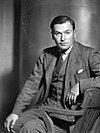
Herbert Read on Agatha Christie
“I do not know anyone who has, in such a supreme degree, what I would call Mrs. Christie's despatch. She wields her humane-killer with a butcher-like indifference to life; her murders are clean, explicit, feline. "But above the ear was a tiny hole with an incrustation of dried blood round it." That is the typical Christie sentence for such occasions. It was almost Websterian. Her pistols seem poetic toys, the knives are surgical instruments; there is a housewifely neatness in the slaughterhouse. The very style is cut to pattern... She is neither too short nor too long, too tough nor too tender; she is energetic, decisive, and slightly catty where women are concerned.”
Quotes About Herbert Read
Gain deeper perspective through quotes about Herbert Read from others.
David Goodway on Herbert Read
“The Spanish Civil War shaped the political consciousness of a whole generation, which overwhelmingly saw it as representing heroic resistance to Fascism. Goldman and J. C. Powys did not belong to that generation – they belonged to the generation of its parents or, even, grandparents. And rather than resistance to Fascism, it was the social achievements of the Spanish Revolution that inspired them. In that they stand alone, among figures of the front rank, with Read and Orwell…”
Michael Paraskos on Herbert Read
“Whereas Marxist critics, and their descendants the social historians of art, might at best see art as merely the pastime for a leisured bourgeois class, for Read it was a crucial component of our humanity. Without it, we would lack consciousness of the world around us, and be incapable of the social evolution that is necessary for the very survival of our species. When stated like this, one can see why Read believed art to be so important.”
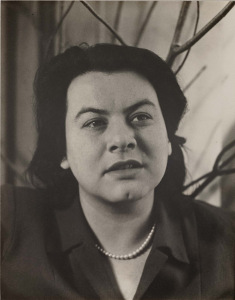
Muriel Rukeyser on Herbert Read 2 quotes
“"A poet has to undergo a process of birth and growth: he does not discover himself until he has rejected the alternate selves represented by the poetry already existing in the world," says Herbert Read.”
About Herbert Read
Sir Herbert Edward Read (4 December 1893 – 12 June 1968) was an English anarchist, poet, and critic of literature and art. He was one of the earliest English writers to take notice of existentialism, and was strongly influenced by proto-existentialist thinker Max Stirner.