Link Copied!
Herbert Butterfield Quotes (1900-1979)
Philosopher

About Herbert Butterfield
Herbert Butterfield (October 7, 1900 – July 20, 1979) was a British historian and philosopher of history who is remembered chiefly for a slim volume entitled, The Whig Interpretation of History (1931).
Best Herbert Butterfield Quotes
Shortest
Earliest
Explore our curated collection of the most famous and impactful Herbert Butterfield quotes.
“The raconteur knows too well that, if he investigates the truth of the matter, he is only too likely to lose his good story.””
“Every age likes its historians to place events in a framework that corresponds with contemporary prejudices and answers to contemporary political desires.”
“About the scientific revolution: it “outshines everything since the rise of Christianity and reduces the Renaissance and Reformation to the rank of mere episodes”.”

“The study of the past with one eye upon the present is the source of all sins and sophistries in history. It is the essence of what we mean by the word "unhistorical".””

“One of the paradoxes of history has been the way in which the name of England has come to be so closely associated with liberty on the one hand and tradition on the other hand.”
“Since the 17th century England has had a happier fate than most of the countries of continental Europe. In particular she has been spared the most violent cataclysms and the bitterness of civil war.”

“A man who has written a single lyric may outlast the centuries, living on in perpetual youth; but the author of a hundredweight of heavy historical tomes has them piled upon his grave, to hold him securely down.”
“And who amongst us would exchange the long line of amiable or prudent statesmen in English history, for all those masterful and awe-inspiring geniuses who have imposed themselves on France and Germany in modern times?”
“It is not clear that continental countries, which have had their revolutions, followed by counter-revolutions, have greatly improved on the English rate of progress, in spite of what they paid in havoc and bloodshed precisely for the sake of speed.”
“If history can do anything it is to remind us of those complications that undermine our certainties, and to show us that all our judgements are merely relative to time and circumstance. ...we can never assert that history has proved any man right in the long run.”

“But the greatest menace to our civilization today is the conflict between giant organized systems of self-righteousness—each system only too delighted to find that the other is wicked—each only too glad that the sins give it the pretext for still deeper hatred and animosity.”

“Considering the part played by the sciences in the story of our Western civilization, it is hardly possible to doubt the importance which the history of science will sooner or later acquire both in its own right and as the bridge which has been so long needed in between the Arts and the Sciences.”
“Humanism and Humanitarianism, Liberalism and Internationalism...emerge as a result of a tendency to translate into secular terms certain movements and aspirations which had characterised a Christian civilisation... humanitarianism, for example, is an anaemic substitute for the doctrine of New Testament love.”

“We have to be on our guard when the whig historian tells us... that the Reformation is justified because it ultimately led to liberty... for it is possible to argue against the whig historian that the ultimate issue which he applauds only came in the long run from the fact that, in its immediate results, The Reformation was disastrous to liberty.”

“Whatever we may feel about the defects of our own Whig interpretation of history, we have reason to be thankful for its influence on our political tradition; for it was to prove of the greatest moment to us that by the early seventeenth century our antiquarians had formulated our history as a history of liberty.”
“In the crisis of 1940 our leaders continually reminded us of those resources in the past which can be drawn upon to fortify a nation at war. While plunging into a sea of changes, novelties and inventions, England resumed contact with her traditions and threw out ropes to the preceding generations, as though in time of danger it was a good thing not to lose touch with the rest of the convoy.”
“It is always difficult to represent the place that power actually holds in the workings of politics and in the processes of history. Some men seem ready to speak as though power did not exist (because in their view it ought not to exist); and if others are emphatic about the reality of its presence they are assumed to be in favour of force, merely because they recognise its operation in the world.”

“All we can say now is that the government of England did not in fact develop into a despotism. In any case a tory historiography based on this monarchical supposition cannot exist in England in the 20th century. It is possible to be a tory historian in detail—to be kind to Charles I or Charles II or George III. It is not possible to have a tory structure of English history as a counterpart to that of the whigs.”

“Perhaps only in the shock of 1940 did we realize to what a degree the British Empire had become an organization for the purpose of liberty. What power is in this English tradition which swallows up monarchy, toryism, imperialism, yet leaves each of them still existing, each part of a wider synthesis. And how cunningly did the whig interpretation assert itself in all the utterances of Englishmen in 1940—throbbing and alive again, and now projected upon an extended map.”
“When the sins and errors of an age have made the world impossible to live in, the next generation, seeking to make life tolerable again, may be able to find no way save by surrender of cherished ideals, and so may find themselves compelled to cast about for new dreams and purposes. An important aspect of the historical process is the work of the new generation... being driven to something like a creative act for the very reason that life on the old terms has become impossible.”

“An American writer, studying English nationalism in the age of Cromwell, reminds us of the influence of the Old Testament—the belief that we were God's Chosen People—which still leaves its mark on the character of our national tradition. It may have led us to hypocrisy at times—saddling us with too great a burden of self-righteousness. But, says this writer, at least it has prevented English nationalism from becoming so completely amoral as that of some of the modern pagan forms of state.”

“When men parted first from their Christianity and then from their deism, the deification of the state was bound to be achieved in a comparatively short space of time; for no system can pretend to face all weathers when it has been reduced to naked individualism and the mere assertion of individual rights. Men make gods now, not out of wood and stone, which though a waste of time is a comparatively harmless proceeding, but out of their abstract nouns, which are the most treacherous and explosive things in the world.”

“And when we are told to consider the glories of the French Revolution let us not forget that there is a secret treasure of subtle riches which England enjoys as a result of the continuity of her history. Great changes have occurred in this country while deep below the surface the continuity has been maintained as a living thing. And when a cleavage has been made it has not been a matter of mere indifference that—instead of glorying in the cleavage—we have sent the shuttles backwards and forwards in order to tie up the past with the present again.”
“It is a similar case of Christian hang-over that exists in 20th-century England; and if some writers have slipped into the terminology of modern Germans, yet Englishmen in their hearts have never been worshippers of the deified state. Their hold on their "individualism" is stronger than that of the secular liberals of the continent, because it is rooted in tradition and sentiment. The individualism on the one hand, the love of country on the other hand, are less likely to be dangerous when growing in this kind of earth—less likely to devour one another.”
“It is like the Bishop who said that if we totally disarmed he had too high an opinion of human nature to think that anybody would attack us. There might be great virtue in disarming and consenting to be made martyrs for the sake of the good cause; but to promise that we should not have to endure martyrdom in that situation, or to rely on such a supposition, is against both theology and history. It is essential not to have faith in human nature. Such faith is a recent heresy and a very disastrous one.”

Herbert Butterfield Quotes by Topic
Find exactly what you are looking for by browsing this categorized list of Herbert Butterfield quotes by topic.
Herbert Butterfield on Aristotelian physics 2 quotes
“[T]he Aristotelian doctrine of inertia was a doctrine of rest—it was motion, not rest, that always required to be explained.”
Herbert Butterfield on Science in classical antiquity 2 quotes
“[T]he Aristotelian doctrine of inertia was a doctrine of rest—it was motion, not rest, that always required to be explained.”

Herbert Butterfield on French Revolution 2 quotes
“I do not know who could deny that the French Revolution brought tragedy for the generation upon which it fell—tragedy for France and for Europe not unlike that which resulted from the Nazi Revolution of 1933.”

Herbert Butterfield on Renaissance 2 quotes
“Most of the basic ideas in the Renaissance view of history are still clearly present in the controversies in the latter half of the seventeenth century; but the famous quarrel between the Ancients and the Moderns—the controversy in the course of which a more modern view of progress was hammered out—is already visible at the time of the Renaissance.”

Herbert Butterfield on History of mathematics 2 quotes
“[T]he whole Newtonian synthesis would never have been achieved—without, first, the analytical geometry of René Descartes and, secondly, the infinitesimal calculus of Newton and Leibnitz. Not only, then, did the science of mathematics make a remarkable development in the seventeenth century, but in dynamics and in physics the sciences give the impression that they were pressing upon the frontiers of the mathematics all the time. Without the achievements of the mathematicians the scientific revolution as we know it, would not have been possible.”

Herbert Butterfield on Unification in science and mathematics 2 quotes
“Copernicus had taken one course in treating the earth as virtually a celestial body in the Aristotelian sense—a perfect sphere governed by the laws which operated in the higher reaches of the skies. Galileo complemented this by taking now the opposite course—rather treating the heavenly bodies as terrestrial ones, regarding the planets as subject to the very laws which applied to balls sliding down inclined planes. There was something in all this which tended to the reduction of the whole universe to uniform physical laws, and it is clear that the world was coming to be more ready to admit such a view.”

Herbert Butterfield on Scientific revolution 2 quotes
“William Gilbert published a famous book on the magnet in 1600 and laid himself open to the gibes of Sir Francis Bacon for being one of those people so taken by their pet subject of research that they could only see the whole universe transposed into terms of it. Having made a spherical magnet called a terrella, and having found that it revolved when placed in a magnetic field, he decided that the whole earth was a magnet, that gravity was a form of magnetic attraction, and that the principles of the magnet accounted for the workings of the Copernican system as a whole. Kepler and Galileo were both influenced by this view, and with Kepler, it became an integral part of his system, a basis for the doctrine of almost universal gravitation.”

Herbert Butterfield on England
“One of the paradoxes of history has been the way in which the name of England has come to be so closely associated with liberty on the one hand and tradition on the other hand.”
Herbert Butterfield on Civilization
“But the greatest menace to our civilization today is the conflict between giant organized systems of self-righteousness—each system only too delighted to find that the other is wicked—each only too glad that the sins give it the pretext for still deeper hatred and animosity.”
Herbert Butterfield on History of science
“Considering the part played by the sciences in the story of our Western civilization, it is hardly possible to doubt the importance which the history of science will sooner or later acquire both in its own right and as the bridge which has been so long needed in between the Arts and the Sciences.”

Herbert Butterfield on Force field (physics)
“William Gilbert published a famous book on the magnet in 1600 and laid himself open to the gibes of Sir Francis Bacon for being one of those people so taken by their pet subject of research that they could only see the whole universe transposed into terms of it. Having made a spherical magnet called a terrella, and having found that it revolved when placed in a magnetic field, he decided that the whole earth was a magnet, that gravity was a form of magnetic attraction, and that the principles of the magnet accounted for the workings of the Copernican system as a whole. Kepler and Galileo were both influenced by this view, and with Kepler, it became an integral part of his system, a basis for the doctrine of almost universal gravitation.”

Herbert Butterfield on Progress
“Within any city or state or civilization... the natural operation of time was to produce internal corruption; the ordinary expected routine thing was a process of decadence. This could even be observed in a parallel manner in the physical world, where bodies would decompose and the finest fabrics in nature would suffer putrefaction. In fact, the current science chimed in with the current view of nature, for in both these realms it was held that compound bodies had a natural tendency to disintegrate. ... The reassertion of these ancient ideas on the subject of the historical process helps to explain why at the Renaissance it was almost less possible to believe in what we call progress than it was in the middle ages. If anything it was more easy to believe of something of this sort in the realm of spiritual matters than in any other sphere—to believe in stages of time succeeding one another in an ascending series... and so to find meaning and purpose in the passage of time itself.”

Herbert Butterfield on Monarchy of the United Kingdom
“It is typical of the English that, retaining what was a good in the past, but reconstruing it—reconstruing the past itself if necessary—they have clung to the monarchy, and have maintained it down to the present, while changing its import and robbing it of the power to do harm. It is typical of them that from their 17th-century revolution itself and from the very experiment of an interregnum, they learned that there was still a subtle utility in kingship and they determined to reconstitute their traditions again, lest they should throw away the good with the bad. In all this there is something more profound than a mere sentimental unwillingness to part with a piece of ancient pageantry—a mere disinclination to sacrifice the ornament of a royal court. Here we have a token of that alliance of Englishmen with their history which has prevented the uprooting of things that have been organic to the development of the country; which has enriched our institutions with echoes and overtones; and which has proved—against the presumption and recklessness of blind revolutionary overthrows—the happier form of co-operation with Providence.”

What Herbert Butterfield Said About Others
Discover personal opinions Herbert Butterfield shared regarding contemporaries.
Herbert Butterfield on Edmund Burke 2 quotes
“[I]t was Edmund Burke who—having recovered contact with the historical achievements of Restoration England—exerted the presiding influence over the historical movement of the nineteenth century.”

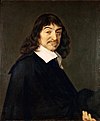
Herbert Butterfield on René Descartes 2 quotes
“[B]elievers in the plenum... the Cartesian idea of a space entirely filled with matter—contributed... to what was to become the Newtonian synthesis. Descartes himself achieved the modern formulation of the law of inertia... working it out by a natural deduction from his theory of the conservation of momentum, his theory that the amount of motion in the universe always remains the same. It was he rather than Galileo who fully grasped this principle of inertia and formulated it in all its clarity. ...The modern doctrine of inertia had been put forward by Descartes and was quickly gaining acceptance, though people like Borelli... still seemed to think that they had to provide a force actually pushing the planets along...”
Herbert Butterfield on Edward Coke 2 quotes
“The name of Sir Edward Coke, who lived from 1551 to 1634, is important in the development of English historical study, the evolution of the common law, and the parliamentary conflict with the early Stuarts. Coke used the historical methods of the time in order to magnify the claims of the common law; in order to codify our legal traditions in opposition to royal authority; and, particularly in the 1620's, in order to provide the House of Commons with material for a conflict with the crown on questions of historical interpretation. He helped to secure that the traditional system of English law should win the victory in the 17th century not only over the king but also over rival systems of law which could claim to be perhaps more efficient, perhaps even more up-to-date”

Herbert Butterfield on Bernard Le Bovier de Fontenelle 2 quotes
“Fontenelle provides an example of the transfer of the scientific spirit, and the application of methodical doubt, in... the History of Oracles. In a sense he is one of the predursors of the comparative method in the history of religion—the collection of myths of all lands to throw light on the development of human reason. ...he recommends the study of primitive tribes in our own day ...He treats myths as... a natural product, subject to scientific analysis—not the fruits of conscious imposture but the characteristic of a certain stage in human development. The human mind he regards as... the same in all times and ages, but subject to local influences... Here is a self-conscious attempt to show how the scientific method could receive extended application and could be transferred from the examination of purely material phenomena even into... human studies.”

Herbert Butterfield on Robert Hooke 2 quotes
“By 1678 he had formulated the idea of gravitation as a universal principle; and by 1679 he, too, had discovered that the diminution of the force of gravity is proportional to the square of the distance. In this period it would appear that Newton... seemed to be less sure of his apprehension than Hooke. At the same time [Newton] was called upon for mathematical help... Hooke was to claim the priority in respect of the whole gravitational theory, and because Newton had been secretive about his work in 1665-66, because many of Hooke's own papers disappeared, and because Newton's memory was defective sometimes—or his accounts unreliable—the controversy... has been renewed in recent years. But... Hooke did not produce the mathematical demonstrations of his system. ...in the crucial period he was developing his mathematical powers more than was once imagined... His reputation has risen, with... research... though the glory of Newton has not been eclipsed.”
Herbert Butterfield on Galileo Galilei
“Copernicus had taken one course in treating the earth as virtually a celestial body in the Aristotelian sense—a perfect sphere governed by the laws which operated in the higher reaches of the skies. Galileo complemented this by taking now the opposite course—rather treating the heavenly bodies as terrestrial ones, regarding the planets as subject to the very laws which applied to balls sliding down inclined planes. There was something in all this which tended to the reduction of the whole universe to uniform physical laws, and it is clear that the world was coming to be more ready to admit such a view.”

Herbert Butterfield on John Dalberg-Acton, 1st Baron Acton
“We can picture his mind as constantly knitting history together, then; and, though he failed to produce his magnum opus, he left behind him in his papers a tremendous intellectual system, which has stimulated many commentators and interpreters in our time... [B]ehind the multitude of Acton's reflective notes there is an intellectual system (and a record of the man's achievement) ampler and richer and more imposing than the published writings would suggest. The notes are an evidence of Acton's amazing intellectual integrity, his determination to confront the discrepant fact and not to shrink from the inconvenient anomaly.”
Herbert Butterfield on Johannes Kepler
“Kepler in the first thirty years of the seventeenth century "reduced to order the chaos of data" left by Tycho Brahe, and added to them just the thing that was needed—mathematical genius. Like Copernicus he created another world-system which, since it did not ultimately prevail, merely remains as a strange monument of colossal intellectual power working on insufficient materials; and even more than Copernicus he was driven by semi-religious fervour—a passion to uncover the magic of mere numbers and to demonstrate the music of the spheres. ...He has to his credit a collection of discoveries and conclusions—some of them more ingenious than useful—from which we today can pick out three that have a permanent importance in the history of astronomy.”

Herbert Butterfield on Jacob Burckhardt
“In reality, then, it was the Swiss historian, Jakob Burckhardt, who in 1860 established the concept that has been current in our time—the idea of a Renaissance as a general movement, particularly associated with the fifteenth century, coming to its climax around the year 1500, and primarily taking place in Italy. It was Burckhardt who conceived of the term Renaissance as descriptive of a whole historical period, as a great chapter in Italian history, and as a decisive stage or turning-point in the development of an entire civilisation, so that things which had hitherto been considered separate—the development of the modern state, for example—had now become enveloped by the concept too. And Burckhardt was one of the founders of what we call Kulturgeschichte, coming to this particular subject, indeed, with many of the prepossessions of the art-historian.”

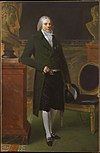
Herbert Butterfield on Charles Maurice de Talleyrand-Périgord
“Napoleon was essentially a man of visions and impulses, every conjecture, every trick of circumstance only prompting him to more grand designs, only luring his eye to more untrodden hills. But Talleyrand could not go with him all the way, and, aristocrat at heart, would not consent to be a mute unreasoning tool. Talleyrand's thought was of that withering kind that was so fashionable and attractive in the gilded world of his youth. He talked with a wink and a smile, his sarcasm would charm a salon, and, in repartee, he would cover a sword-thrust with velvet; but always his was the talk of the sceptic rather than the enthusiast, the critic rather than the dreamer; he could be delightfully oblique, he was never daringly grand. He thought best when on the defensive. This is where he differed from his master. This is why he was able to play a sort of second critical self to Napoleon, checking his flights of ambition, softening his intemperate expressions, and moderating his indiscreet outbursts—and, on the positive side, furnishing him expedients rather than grand designs. Hence he was perhaps the man to know Napoleon, and realise the true situation of affairs, better than Napoleon himself.”
Herbert Butterfield on Georges-Louis Leclerc, Comte de Buffon
“Buffon produced in the fifty years from 1749 an Histoire Naturelle... one of the signal products of eighteenth-century science. ...He attempted to see nature as a whole, produced a vast synthesis and sought to give a picture of the history of the earth... [If] Newton had appeared to reduce the inanimate world to a system of law, Buffon... set his mind on a similar achievement, and even a wider one—comprising... biological phenomana and expanding into the realm of history. ...Along with Leibnitz he believed that the earth had once been in an incandescent state... part of the sun, but had broken away after a collision with a comet. He rejected the tradition that this globe was only six thousand years old and made an attempt to set out the periods or stages of its history; a time when mountain ranges were formed...a time when waters entirely covered... the globe... and a time when the continents came to be separated from one another. ...He held something like Leibnitz's idea that every plant and animal was composed of a mass of minute particles, each of which was a pattern of the whole individual; and this enabled him to explain the origin of living creatures without reference to an act of creation. He tried to show that no absolutely definite boundary existed between the animal and vegetable kingdoms. Nature always proceeds by nuances, he said.”
Herbert Butterfield on Giuseppe Mazzini
“Mazzini despised the compromises of the "whigs" and would have no truck with the diplomacy of a Cavour. Yet he came to admit that the programme of insurrections upon which he built his faith implied the sacrifice of a generation. Disdaining immediate objects, reaching far into the future—working for all or nothing—he pointed to the reward that would be enjoyed not by his contemporaries, not by their children perhaps, but at least (let us say) by their grandchildren. Unfortunately, at this very point—in the passage from one generation to another—history seems in a particular way to intervene and to deflect the results of human endeavour; so that we may doubt whether this attempt to overreach Time itself is the proper kind of far-sightedness to have in politics. Apart from new factors that may change the course of the story, there is a process which may give efficacy to the ideas of a Mazzini precisely in so far as these ideas can be made to serve the cause of power; and it is not entirely irrelevant that though Mazzini was no Fascist he did attack the individualism of 1789, and he taught young men to sink themselves—to intoxicate themselves—in the Organic People. One of the things that may happen therefore in the transition to a new generation is the possibility that Mazzini's whole doctrine—and his glorification of nationality—when mixed with a little earth and entangled in a world of tricks and chances, will form but the raw material for the next Mussolini that may arise.”

Quotes About Herbert Butterfield
Gain deeper perspective through quotes about Herbert Butterfield from others.
Carl Becker on Herbert Butterfield
“His little book is full of admirable passages which historians may well read and ponder; but I have a feeling that the impulse to which we owe it was not so much intellectual curiosity about the nature of history and the function of historical writing as it was an emotional revulsion against the deification of Martin Luther and the glorification of "modern progress." Wishing, naturally enough, to exalt a difference of opinion to the level of a philosophical principle, he persuades himself that history, apprehended by a kind of objective "creative act of the historical imagination," can be made to teach eternal truths. I suspect that his "creative act of the historical imagination," although different in emphasis, is not different in kind, from that employed by the whig historians.”
Maurice Cowling on Herbert Butterfield 3 quotes
“History and the Marxian Method was the outcome of an unconscious compact which Butterfield had made with those of his pupils who were Marxists—a diplomatic attempt to keep them on the rails of orthodox historical study by widening the range of "bourgeois history". It accepted as the "clue" to a great deal of bourgeois thinking the assumption that "in the last analysis ideas...determine the course of history", and it accepted the Marxist allegation that this sort of analysis lay "in the centre of our bourgeois system". It presented Marxism as a valuable ally in the fight against Whiggery and Liberalism.”

John W. Derry on Herbert Butterfield
“His lectures gave meaning to the study of the past in a way which transcended the technicalities of research or the pressures of routine learning. Among undergraduates his influence was immense: his work added another dimension to historical study.”
Geoffrey Elton on Herbert Butterfield 4 quotes
“Time and again he pointed to the need to look at the past in its own terms and to grasp the meaning of words and ideas in the context of their own time, to the essentially relativist character of historical interpretation, to the absence of foreknowledge in the historical agent, and to the weight of the unpredictable and contingent.”
Arthur Koestler on Herbert Butterfield
“The reader with a scientific education is asked to forbear with explanations which might seem an insult to his intelligence. So long as in our education system a state of cold war is maintained between the Sciences and the Humanities, this predicament cannot be avoided. One significant step toward ending this cold war was Professor Herbert Butterfield's Origin Modern Science, first published in 1949. Apart from this work's profundity and excellence per se, I was much impressed by the fact that the Professor of Modern History at Cambridge should venture into mediaeval Science and undertake such a gulf-bridging task. Perhaps the age of specialists is in need of creative trespassers.”

Bernard Lord Manning on Herbert Butterfield
“A brilliant young Cambridge historian, Mr. Butterfield, in a recent book called The Whig Interpretation of History, has exposed and denounced this use of history for partisan purposes. As his title indicates, he had chosen for special chastisement that view of history which sees it working out steadily towards political freedom, constitutional government, and the Protestant religion. Why Mr. Butterfield has chosen to flog this particularly dead horse at this particular moment in the post mortem I do not know. For if there has been, and is, a Whig and Protestant view of history, there has been, and is, a not less vicious Tory and Communist and Popish and Atheistic twisting of history; and I refuse, as a Protestant Whig, to have this particular vice attributed solely or chiefly to me. I have not the least intention of bearing the sins of sinners even more sinful than myself. Be that as it may, Mr. Butterfield's essay is useful as a warning against attempts to get the wrong sort of witness from history.”
F. M. Powicke on Herbert Butterfield
“He hammers away on the importance of his message so incessantly that it loses something of its persuasiveness, and becomes rather a prophetic message for the present than a lesson drawn from a spacious survey of the past.”
About Herbert Butterfield
Herbert Butterfield (October 7, 1900 – July 20, 1979) was a British historian and philosopher of history who is remembered chiefly for a slim volume entitled, The Whig Interpretation of History (1931).