Charles Dickens, A Child's History of England
“
Henry the Eighth has been favoured by some Protestant writers because the Reformation was achieved in his time. But the mighty merit of it lies with other men and not with him; and it can be rendered none the worse by this monster's crimes, and none the better by any defence of them. The plain truth is, that he was a most intolerable ruffian, a disgrace to human nature, and a blot of blood and grease upon the History of England.
— Charles Dickens
What It Means
This is a placeholder explanation generated by the low-overhead model. It interprets "Henry the Eighth has been favoured by some Protestant writers because the Reformation was achieved in his time. But the mighty merit of it lies with other men and not with him; and it can be rendered none the worse by this monster's crimes, and none the better by any defence of them. The plain truth is, that he was a most intolerable ruffian, a disgrace to human nature, and a blot of blood and grease upon the History of England." in the context of "Charles Dickens, A Child's History of England" to mean that wisdom is timeless.

Source: Wikiquote: "Henry VIII of England" (Quotes about Henry VIII)
The 'What it means' explanation text was generated by Google Gemini Flash (accessed January 18, 2026). https://gemini.google.com/app
Tags
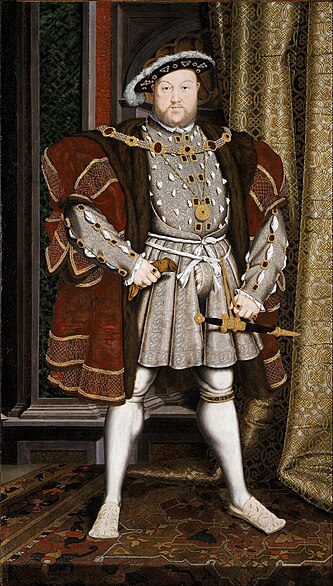
About Henry VIII of England
Henry VIII (June 28, 1491 – January 28, 1547) was King of England from 22 April 1509 until his death in 1547. Henry is best known for his six marriages, including his efforts to have his first marriage (to Catherine of Aragon) annulled. His disagreement with Pope Clement VII about such an annulment led Henry to initiate the English Reformation, separating the Church of England from papal authority. He appointed himself Supreme Head of the Church of England and dissolved convents and monasteries, for which he was excommunicated. Henry is also known as "the father of the Royal Navy," as he invested heavily in the navy, increasing its size from a few to more than 50 ships, and established the Navy Board.
View all quotes →