Henry L. Stimson, Statement in his Diary on the WWII Internment of Japanese Americans (10 February 1942)
“
The second generation Japanese can only be evacuated either as part of a total evacuation, giving access to the areas only by permits, or by frankly trying to put them out on the ground that their racial characteristics are such that we cannot understand or trust even the citizen Japanese. The latter is the fact but I am afraid it will make a tremendous hole in our constitutional system.
— Henry L. Stimson on Concentration camp
What It Means
This is a placeholder explanation generated by the low-overhead model. It interprets "The second generation Japanese can only be evacuated either as part of a total evacuation, giving access to the areas only by permits, or by frankly trying to put them out on the ground that their racial characteristics are such that we cannot understand or trust even the citizen Japanese. The latter is the fact but I am afraid it will make a tremendous hole in our constitutional system." in the context of "Henry L. Stimson, Statement in his Diary on the WWII Internment of Japanese Americans (10 February 1942)" to mean that wisdom is timeless.
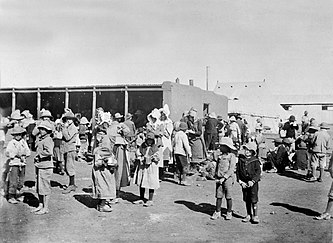
Source: Wikiquote: "Concentration camp" (Quotes)
The 'What it means' explanation text was generated by Google Gemini Flash (accessed January 18, 2026). https://gemini.google.com/app
Tags

About Henry L. Stimson
Henry Lewis Stimson (September 21, 1867 – October 20, 1950) was an American statesman, lawyer and Republican Party politician and spokesman on foreign policy. He served as Secretary of War (1911–1913) under Republican William Howard Taft, and as Governor-General of the Philippines (1927–1929). As Secretary of State (1929–1933) under Republican President Herbert Hoover, he articulated the Stimson Doctrine which announced American opposition to Japanese expansion in Asia. He again served as Secretary of War (1940–1945) under Democrats Franklin D. Roosevelt and Harry S. Truman, and was a leading hawk calling for war against Nazi Germany. During World War II he took charge of raising and training 13 million soldiers and airmen, supervised the spending of a third of the nation's GDP on the Army and the Air Forces, helped formulate military strategy, and oversaw the building and use of the atomic bomb.
View all quotes →