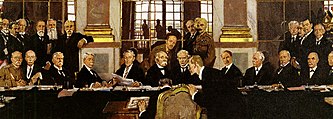
When American thinking on foreign policy and European diplomatic traditions encountered each other at the Paris Peace Conference of 1919, the differences in historical experience became dramatically evident. The European leaders sought to refurbish the existing system according to familiar methods; the American peacemakers believed that the Great War had resulted not from intractable geopolitical conflicts but from flawed European practices. In his famous Fourteen Points, Woodrow Wilson told the Europeans that, henceforth, the international system should be based not on the balance of power but on ethnic self-determination, that their security should depend not on military alliances but on collective security, and that their diplomacy should no longer be conducted secretly by experts but on the basis of “open agreements, openly arrived at.” Clearly, Wilson had come not so much to discuss the terms for ending a war or for restoring the existing international order, as he had to recast a whole system of international relations as it had been practiced for nearly three centuries.
What It Means
This is a placeholder explanation generated by the low-overhead model. It interprets "When American thinking on foreign policy and European diplomatic traditions encountered each other at the Paris Peace Conference of 1919, the differences in historical experience became dramatically evident. The European leaders sought to refurbish the existing system according to familiar methods; the American peacemakers believed that the Great War had resulted not from intractable geopolitical conflicts but from flawed European practices. In his famous Fourteen Points, Woodrow Wilson told the Europeans that, henceforth, the international system should be based not on the balance of power but on ethnic self-determination, that their security should depend not on military alliances but on collective security, and that their diplomacy should no longer be conducted secretly by experts but on the basis of “open agreements, openly arrived at.” Clearly, Wilson had come not so much to discuss the terms for ending a war or for restoring the existing international order, as he had to recast a whole system of international relations as it had been practiced for nearly three centuries." in the context of "Henry Kissinger, Diplomacy (1994), p. 19" to mean that wisdom is timeless.
Tags

About Henry Kissinger