Direct observation of the testimony of the earth ... is a matter of the laboratory, of the field naturalist, of indefatigable digging among the ancient archives of the earth's history. If Mr. Bryan, with an open heart and mind, would drop all his books and all the disputations among the doctors and study first hand the simple archives of Nature, all his doubts would disappear; he would not lose his religion; he would become an evolutionist.
What It Means
This is a placeholder explanation generated by the low-overhead model. It interprets "Direct observation of the testimony of the earth ... is a matter of the laboratory, of the field naturalist, of indefatigable digging among the ancient archives of the earth's history. If Mr. Bryan, with an open heart and mind, would drop all his books and all the disputations among the doctors and study first hand the simple archives of Nature, all his doubts would disappear; he would not lose his religion; he would become an evolutionist." in the context of "Henry Fairfield Osborn, in "Evolution and Religion", The New York Times (5 March 1922), p. 91; written in response to an article a few days earlier in which William Jennings Bryan challenged the theory of evolution as lacking proof." to mean that wisdom is timeless.
Tags
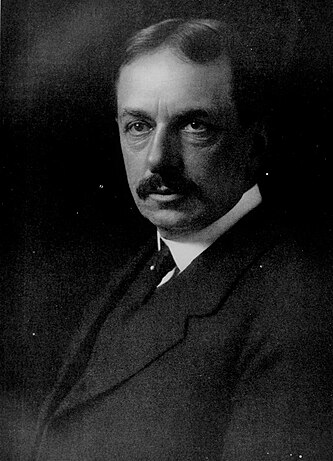
About Henry Fairfield Osborn