Not long since, a strolling Indian went to sell baskets at the house of a well-known lawyer in my neighborhood. "Do you wish to buy any baskets?" he asked. "No, we do not want any," was the reply. "What!" exclaimed the Indian as he went out the gate, "do you mean to starve us?" Having seen his industrious white neighbors so well off — that the lawyer had only to weave arguments, and, by some magic, wealth and standing followed — he had said to himself: I will go into business; I will weave baskets; it is a thing which I can do. Thinking that when he had made the baskets he would have done his part, and then it would be the white man's to buy them. He had not discovered that it was necessary for him to make it worth the other's while to buy them, or at least make him think that it was so, or to make something else which it would be worth his while to buy. I too had woven a kind of basket of a delicate texture, but I had not made it worth any one's while to buy them. Yet not the less, in my case, did I think it worth my while to weave them, and instead of studying how to make it worth men's while to buy my baskets, I studied rather how to avoid the necessity of selling them.
What It Means
This is a placeholder explanation generated by the low-overhead model. It interprets "Not long since, a strolling Indian went to sell baskets at the house of a well-known lawyer in my neighborhood. "Do you wish to buy any baskets?" he asked. "No, we do not want any," was the reply. "What!" exclaimed the Indian as he went out the gate, "do you mean to starve us?" Having seen his industrious white neighbors so well off — that the lawyer had only to weave arguments, and, by some magic, wealth and standing followed — he had said to himself: I will go into business; I will weave baskets; it is a thing which I can do. Thinking that when he had made the baskets he would have done his part, and then it would be the white man's to buy them. He had not discovered that it was necessary for him to make it worth the other's while to buy them, or at least make him think that it was so, or to make something else which it would be worth his while to buy. I too had woven a kind of basket of a delicate texture, but I had not made it worth any one's while to buy them. Yet not the less, in my case, did I think it worth my while to weave them, and instead of studying how to make it worth men's while to buy my baskets, I studied rather how to avoid the necessity of selling them." in the context of "Henry David Thoreau, Walden (1854), “Economy”" to mean that wisdom is timeless.
Tags
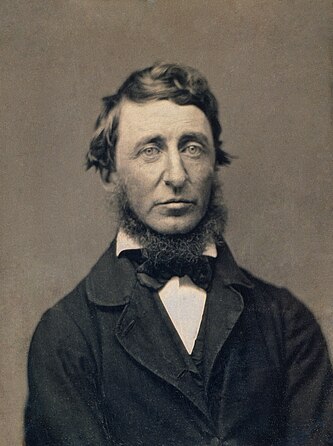
About Henry David Thoreau